27 Paver Patio Designs to Fit Any Budget and Yard (2026)
Your backyard should feel like an extra room, not an empty patch of grass you mow and forget. A paver patio is the easiest way to make that happen. It’s tough, it looks great, and it fits almost any budget or style. But here’s the catch: with so many paver patio designs out there, picking the right one can feel confusing fast.
This article breaks it all down in plain terms. You’ll see the most popular paver patterns, real design ideas for different yards, what everything costs in 2026, and the mistakes that trip up most homeowners. No fluff, no guesswork. Just what you need to plan a patio you’ll love for years.
What Is a Paver Patio?
A paver patio is an outdoor floor built from individual pieces of concrete, brick, or natural stone. Instead of one solid slab like poured concrete, pavers are laid piece by piece over a compacted base of gravel and sand. This makes them strong, and it also means small cracks or shifts in the ground won’t wreck the whole surface. If one paver gets damaged, you can pull it out and swap it without redoing the entire patio.
That’s a big reason paver patio designs have become so popular. They’re durable, they come in endless colors and shapes, and they hold their value when it’s time to sell your home.
How to Choose the Right Paver Patio Design for Your Yard
Before you fall in love with a photo online, think through a few basics. The best paver patio designs are the ones that actually fit your space and how you live.
- Yard size and shape: A long, narrow yard often looks better with a rectangular patio, while a wide, open yard can handle a bold circular or curved layout.
- How you’ll use it: A patio for quiet morning coffee needs less space than one built for grilling, dining, and hosting a crowd.
- Your home’s style: A modern home usually pairs well with large-format pavers and clean lines. Older or traditional homes often look better with brick or a herringbone pattern.
- Sun and shade: Walk your yard at different times of day. A patio placed in full afternoon sun might need a pergola or shade sail to actually get used.
- Drainage: Water should always slope away from your house. This matters more than color or pattern, so plan it early, not as an afterthought.
A good rule of thumb: leave at least 3 feet of open space around furniture so people can walk comfortably. For a dining set that seats six, aim for a patio that’s at least 12 by 12 feet.
Popular Paver Patterns to Know Before You Design
The pattern you choose changes the entire feel of your patio, even if you’re using the exact same paver. Here are the patterns that show up again and again in the best paver patio designs.
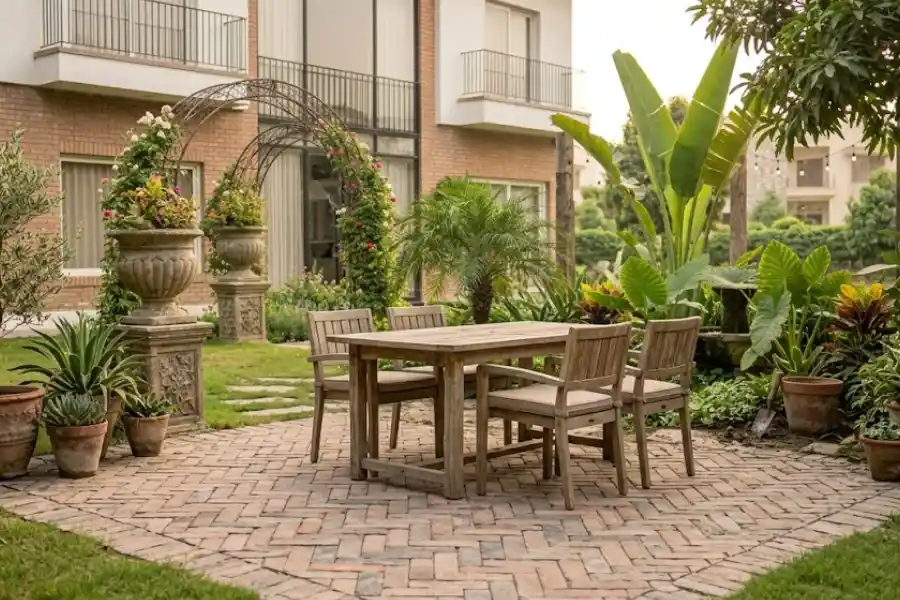
- Herringbone: Pavers are set at 45 or 90-degree angles, locking together like a zigzag. It’s strong, classic, and great for high-traffic areas.
- Running bond: Rows of pavers laid in a simple offset pattern, similar to brickwork. Clean and easy on the eyes.
- Basketweave: Pairs of pavers arranged to look like a woven basket. It has a traditional, cozy feel.
- Stack bond (grid): Pavers lined up in straight rows and columns. Simple and modern, though it shows dirt in the joints more than other patterns.
- Circular or fan pattern: Pavers curve around a center point, often used to build a focal area around a fire pit or fountain.
- Random or multi-size pattern: Mixes different paver sizes for a relaxed, natural look that hides small cuts and gaps well.
Pro tip: patterns with more angles and cuts, like herringbone or circular layouts, use more material and take longer to install. If you’re watching your budget, a running bond or stack bond pattern gives you a clean look for less labor cost.
Paver Patio Design Ideas by Style
1. Modern Minimalist Patio
Large, square pavers in one flat gray or charcoal tone, laid in a simple grid. Clean edges, no clutter, maybe one line of low outdoor grass between rows. This style works best with slim metal furniture and a small fire bowl.
2. Rustic Natural Stone Patio
Irregular flagstone pavers in warm tan, rust, or gray tones, fitted together with narrow gravel or moss joints. This look feels like it belongs in the woods, and it pairs beautifully with wood furniture, string lights, and a border of river rock landscaping to soften the edges.
3. Multi-Level Patio
For sloped yards, a multi-level paver patio uses low walls or steps to break the space into zones, such as a dining level up top and a relaxed lounge level below, ideal for an outdoor chaise lounge or two. This adds real depth and makes a small yard feel bigger.
4. Fire Pit Gathering Patio
A circular paver section built around a fire pit, often set apart from the main patio with a curved paver path. Add bench seating made from matching pavers, or bring in a wood outdoor garden bench for extra seats, and you’ve got a spot people won’t want to leave.
5. Outdoor Kitchen Patio
A larger, L-shaped paver layout that separates cooking, dining, and lounging areas. Heavy-duty pavers rated for vehicle traffic are a smart choice here since grills and outdoor kitchen units are heavy.
6. Pergola-Covered Patio
Pavers laid beneath a wood or aluminum pergola create instant shade and structure, and this design idea works well if your patio faces direct afternoon sun. Once the structure is up, our pergola decorating ideas post has plenty of ways to dress up the space above it.
7. Curved Patio With Planting Pockets
Instead of straight edges, the patio curves gently and leaves small gaps for plants, ornamental grass, or ground cover. It softens the hardscape and blends the patio into the yard instead of dropping it in as a hard rectangle.
8. Two-Tone Border Patio
One paver color fills the main field, while a contrasting color or paver size frames the border. It’s a small design choice that makes a patio look custom-built instead of ordinary.
How Much Does a Paver Patio Cost in 2026?
Cost is where most paver patio designs live or die. Here’s what homeowners are paying this year, based on current national pricing data.
- Concrete pavers: around $10 to $25 per square foot installed, the most budget-friendly option.
- Brick pavers: around $12 to $25 per square foot installed.
- Natural stone or flagstone: around $15 to $35 per square foot installed, the priciest but most upscale-looking choice.
- Small patio (about 100 to 150 square feet): roughly $1,200 to $4,000 total.
- Medium patio (around 300 square feet): roughly $3,600 to $9,000 total.
- Large patio (around 500 square feet): roughly $6,000 to $16,000 total.
Simple patterns like running bond or stack bond cost less because they need fewer cuts. Complex designs, curved edges, and multi-level layouts push the price up since they take more time and skill to install. Also remember: the base underneath your pavers matters more than the pavers themselves. A shallow, poorly compacted base is the number one reason paver patios fail early, so don’t let a contractor skip it to save money.
Mistakes to Avoid When Planning Your Paver Patio
- Skipping the base depth: Most patios need a compacted gravel base of at least 4 inches. Driveways need more. A thin base leads to sinking and shifting within a few years.
- Ignoring drainage slope: Your patio should slope slightly away from your house, usually about a quarter inch per foot, so water doesn’t pool against your foundation.
- Choosing a pattern before measuring the space: Some patterns need very specific room to look right. Measure first, then pick the pattern.
- Going too small: A patio that looks fine empty can feel cramped once furniture is added. Always plan around your furniture size, not just the empty yard.
- Forgetting edge restraints: Without proper edging, pavers slowly spread apart over time, even with a good base.
Frequently Asked Questions
What is the cheapest paver patio design?
A simple square or rectangular patio using concrete pavers in a running bond or stack bond pattern is usually the most affordable. Straight lines and fewer cuts mean lower labor costs.
How long does a paver patio last?
A properly installed paver patio can last 25 to 50 years. The pavers themselves rarely wear out. It’s almost always the base underneath that determines how long a patio holds up.
Can I install a paver patio myself?
Yes, for smaller patios under about 200 square feet, many homeowners handle it themselves over a weekend or two. Larger patios, sloped yards, or designs with curves and multiple levels are usually worth hiring a professional for.
What size pavers make a small patio look bigger?
Larger-format pavers, laid in a simple pattern, tend to make a small space feel bigger. Too many small pavers with a busy pattern can make a compact patio feel cluttered.
Do paver patios need to be sealed?
Sealing isn’t required, but it helps. A sealant protects against stains, keeps colors looking fresh longer, and makes weeds between joints less likely to take hold.
Final Thoughts
The best paver patio designs aren’t the flashiest ones online. They’re the ones built around how your yard really works and how you plan to use it. Start with your space, pick a pattern and material that fit your budget, and never cut corners on the base underneath. Get those three things right, and your patio will still look great decades from now.