Sunroom Furniture Ideas for Every Room, Style, and Budget
A sunroom should be the room you fight your family for. It should be the spot where you drink your coffee, read your book, or just sit and watch the rain. But if you fill it with the wrong furniture, that bright, happy room turns into a hot, faded, uncomfortable space within one summer.
Most sunroom furniture ideas you find online show pretty pictures but skip the real question: will this furniture survive the sun, the heat, and the swings in temperature that a sunroom deals with every single day? This article covers both sides. You will get furniture ideas that look amazing, and you will learn how to pick pieces that hold up for years.
Why Sunroom Furniture Needs Its Own Rules
A sunroom is not a normal room. It gets more direct sunlight than any other space in your house. It can also get hotter in summer and colder in winter, especially if it is not part of your home’s heating and cooling system.
This matters a lot for furniture. Regular fabric sofas can fade within a few months near a sunny window. Solid wood can crack or warp when the temperature keeps changing. Cheap plastic can turn brittle and crack in a single season. Good sunroom furniture ideas always start with one simple rule: pick pieces built to handle sun, heat, and humidity, rather than pieces that only look nice in a showroom.
Step 1: Know What Kind of Sunroom You Have
Before you buy anything, figure out which type of sunroom you own. This one step will save you money and save your furniture.
- Three-season room: This room has windows but usually no full heating or cooling. It gets hot in summer and cold in winter. Treat it like an outdoor patio and choose outdoor-grade furniture.
- Four-season room: This room is connected to your home’s heating and air conditioning. It stays close to room temperature all year, but it still gets strong sun through the glass. You can use furniture closer to regular indoor style, as long as the fabric resists fading.
- Solarium or glass room: This room has a glass or plastic roof, not only glass walls. It gets the most sun and the most heat of all three types. Furniture here needs the highest level of sun and heat resistance.
If your room sits somewhere in between, plan for the harshest condition, not the mildest day. That single choice shapes every sunroom furniture idea that follows.
Step 2: Choose Materials Before You Choose Style
Once you know your room type, materials come next. Style matters, but a beautiful chair that falls apart in six months is not a good deal.
- Wicker and rattan: Natural rattan looks warm and relaxed, but it can rot in a humid three-season room. Synthetic all-weather wicker gives you the same look and handles humidity and sun much better.
- Teak wood: Teak is one of the strongest woods for sun exposure. It naturally resists water and does not crack easily, which makes it a smart pick for tables and chairs.
- Aluminum and powder-coated metal: These frames are light, do not rust, and hold up well through temperature swings. They work great for chairs, side tables, and shelving units.
- Resin wicker: This synthetic material is built to resist cracking and fading. It is a popular, low-maintenance option for sunroom seating.
- Glass tops: Glass tables do not fade, warp, or absorb heat the way wood can. They also bounce light around the room, which keeps a sunroom feeling bright and open.
- Solution-dyed acrylic fabric: For cushions and pillows, this fabric type resists fading far better than regular cotton or polyester because the color is built into the fiber itself, not only sprayed on top.
A simple test before you buy: if a piece of furniture would survive on a covered porch, it will survive in most sunrooms. If it would ruin within a week outside, think twice before placing it near unfiltered glass.
Sunroom Furniture Ideas Based on How You Plan to Use the Room
The best sunroom furniture ideas depend on what you want to do in the space. Here are five popular ways to use a sunroom, along with furniture that fits each one.
A Cozy Reading Nook
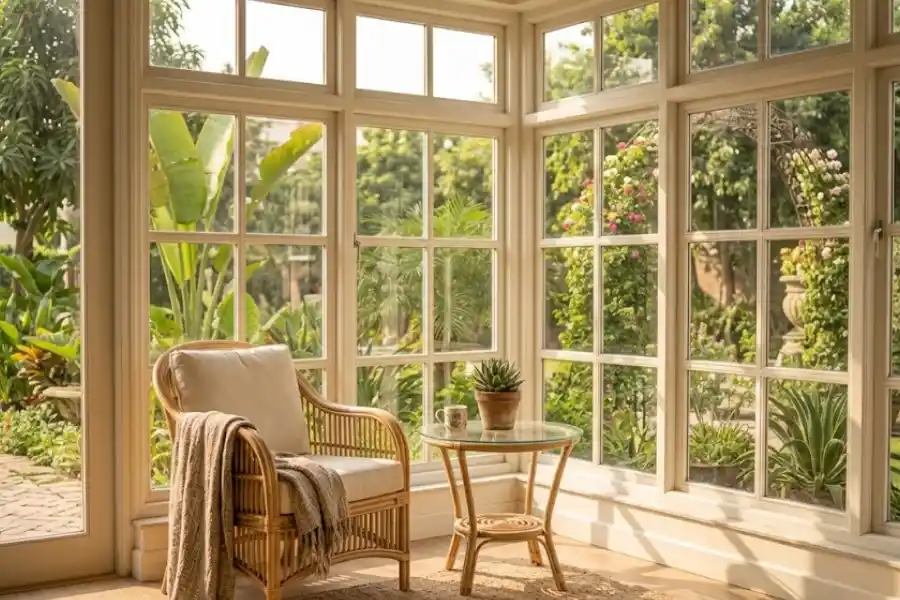
Keep this simple. One comfortable chair, one small side table for your drink, and a good reading lamp go a long way.
- A plush armchair with a washable, sun-resistant cushion
- A round side table small enough to fit next to the chair
- A low bookshelf or a few floating shelves for your favorite reads
- A soft throw blanket for cooler mornings
A Casual Dining Spot
Sunrooms make a wonderful breakfast or dinner spot because of the natural light.
- A round or oval table, which tends to fit sunroom corners better than a long rectangle
- Four lightweight chairs made from resin, aluminum, or teak
- A small bar cart for drinks and extra dishes during meals
A Home Office With a View
Working near natural light can lift your mood, as long as glare is under control.
- A slim desk positioned to the side of a window, not directly facing it, to avoid screen glare
- A supportive chair with breathable fabric so you stay comfortable in warmer months
- A small filing cabinet or storage bench to keep the space tidy
A Plant-Filled Retreat
If you love greenery, a sunroom is the perfect home for it.
- Sturdy plant stands at different heights to create layers
- A metal or teak bench along one wall for extra seating between plants
- Hanging planters near the ceiling to use space without crowding the floor
A Room for Entertaining
Larger sunrooms work well as a second living room for guests.
- A wicker or resin sectional built for both comfort and sun exposure
- A coffee table with a glass or resin top
- Extra stools or ottomans that can be pulled in when you have more guests than usual
Small Sunroom Furniture Ideas That Save Space
A small sunroom does not have to feel cramped. These sunroom furniture ideas focus on pieces that do more with less room.
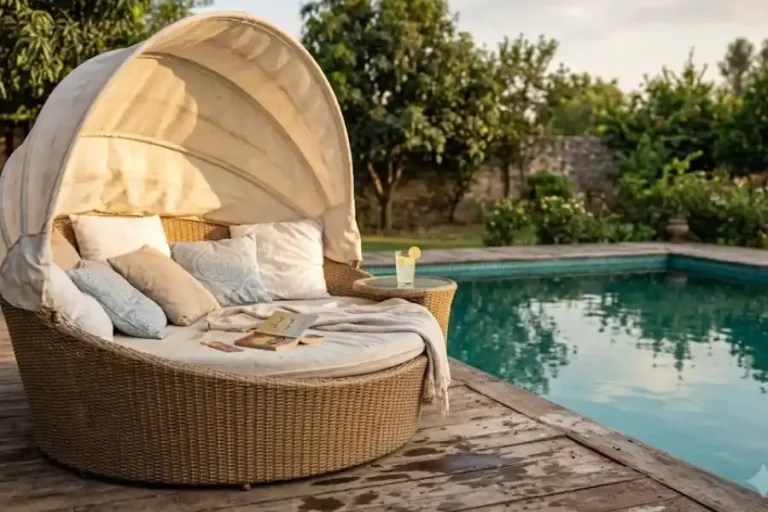
- Choose a daybed. It works as seating during the day and a guest bed at night, which saves you from buying two separate pieces.
- Pick modular seating. Small individual pieces can be rearranged into an L-shape, a straight line, or split apart depending on the day.
- Use furniture with visible legs. Chairs and sofas raised off the floor make a small room feel more open than furniture that sits flush with the ground.
- Go vertical. Floating shelves and wall-mounted storage keep your floor space clear for walking and moving around.
- Pick a round table over a rectangular one. Round edges make it easier to move around furniture in a tight room.
- Add a storage ottoman. It gives you a seat, a footrest, and hidden storage all in one piece.
Large Sunroom Furniture Ideas When You Have Room to Spare
A bigger sunroom gives you the freedom to create more than one zone.
- Split the room into a seating area and a dining area, using a rug to visually separate the two
- Add a U-shaped sectional if you regularly host groups of people
- Use an expandable dining table so the space adjusts for both quiet dinners and larger gatherings
- Place a bar cart or small credenza against a solid wall to add storage without blocking any windows
Match Your Furniture to the Direction Your Sunroom Faces
This is one detail most people miss, but it makes a real difference in how long your furniture lasts.
- South-facing rooms get the strongest sun for most of the day. Choose the most fade-resistant fabrics and materials you can find, and consider adding shades for the hottest hours.
- East-facing rooms get bright, gentle morning light and cooler afternoons. You have more freedom here to use richer colors without worrying much about fading.
- West-facing rooms heat up fast in the late afternoon. Lighter-colored furniture stays cooler to sit on than dark colors, which absorb heat.
- North-facing rooms get the softest, most even light. Fading is less of a concern here, so you can lean toward comfort and style first.
Budget-Friendly Sunroom Furniture Ideas
You do not need to spend a fortune to furnish a sunroom well. Here are some typical price ranges to help you plan.
- A single accent chair with sun-resistant fabric typically runs $150 to $500
- A full wicker or resin conversation set usually costs $800 to $2,500, depending on size and finish
- Glass-top side tables are often one of the more affordable additions, usually under $150
- Save money by mixing one or two higher-quality statement pieces with budget-friendly accents like stools, plant stands, or a rug
- Buy performance fabric cushions separately if the base furniture is solid but the original cushions feel thin or already look faded
Sunroom Furniture Mistakes to Avoid
- Using regular indoor furniture without checking fabric type. Standard cotton and polyester fade fast under direct sun.
- Placing dark leather near a sunny window. It absorbs heat and can crack or dry out over time.
- Choosing furniture that is too large for the room. Oversized pieces block walkways and make a bright room feel cramped.
- Skipping window treatments entirely. Even the best sunroom furniture ideas fail if the sun beats down on fabric all day with no relief.
- Forgetting about humidity. Natural rattan and untreated wood can warp or rot in a three-season room without climate control.
How to Keep Sunroom Furniture Looking New
- Wipe down frames regularly to prevent dust and pollen buildup, especially in rooms with open windows
- Rotate cushions every few weeks so one side does not fade faster than the other
- Use light-colored or UV-blocking shades during the hottest part of the day
- Store extra cushions indoors during long stretches when the sunroom is not in use
- Check warranty details before buying, since many performance fabrics come with coverage against fading and stains
Frequently Asked Questions
What is the best furniture for a sunroom?
Wicker, rattan, teak, resin, and aluminum are the most reliable choices because they resist fading, humidity, and temperature swings better than standard indoor furniture.
Can I use regular outdoor furniture in a sunroom?
Yes, outdoor furniture usually works well in a sunroom, especially in three-season rooms. In climate-controlled four-season rooms, you have more flexibility to mix in indoor-style pieces.
How do I stop my sunroom furniture from fading?
Choose solution-dyed acrylic fabric, add UV-blocking shades or window film, and rotate cushions regularly so sunlight does not hit the same spot every day.
What furniture should I avoid in a sunroom?
Avoid leather, suede, untreated wood, and standard cotton or polyester fabric. These materials tend to fade, crack, or break down quickly under constant sun exposure.
How do I arrange furniture in a small sunroom?
Keep pathways clear, choose furniture with raised legs, use a round table instead of a rectangular one, and consider a daybed or modular seating to save space.
Final Thoughts
The best sunroom furniture ideas always balance two things: how a piece looks and how well it holds up to sun, heat, and humidity. Start by figuring out what type of sunroom you have, choose materials built for light-filled spaces, then shape your furniture choices around how you plan to use the room. Get those basics right, and your sunroom will stay just as bright and comfortable years from now as it is on the day you finish decorating it.