Garden Shed With Porch: 7 Ideas, Costs, and Mistakes
A plain shed holds your tools. A garden shed with porch does much more. It gives you a shady seat, a dry place to pot plants, and a spot to enjoy your yard.
But many people rush this purchase. They pick a cute design, then find out the porch is too small, the ground is soggy, or the city has rules they missed. This article helps you avoid that. It covers the best uses, the right porch size, real price ranges, and the checks to make before you spend a dime.
What Is a Garden Shed With a Porch?
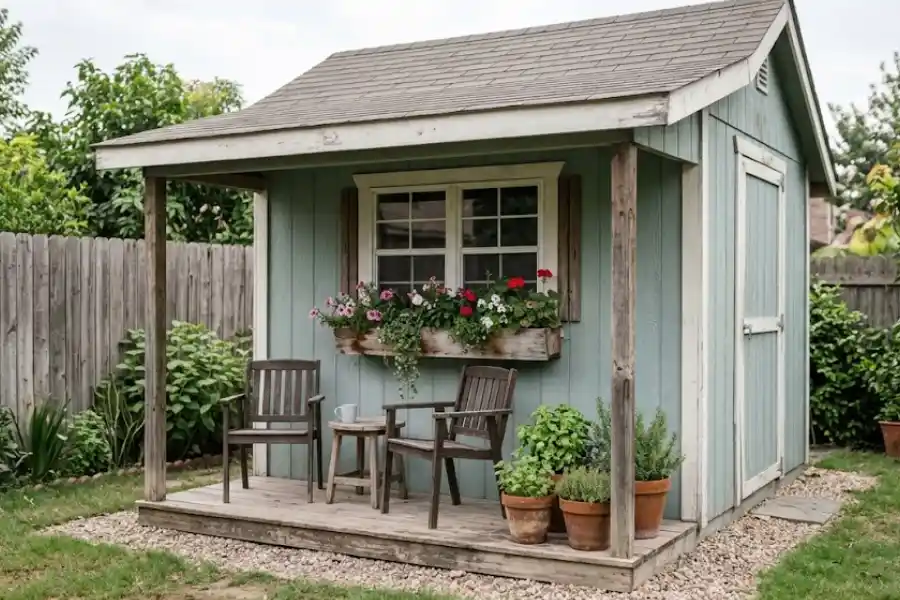
A garden shed with porch is a small outdoor building with a platform at the front. The shed part keeps tools, pots, and supplies safe. The porch part gives you a place to sit, work, or step out of the rain.
Think of the porch as a tiny outdoor room. Most shed porches stick out about 4 feet from the front wall. Some are much bigger. Many sit under the same roof as the shed, so you get shade and a dry doorway.
You can find these sheds in many styles. Cottage, barn, saltbox, and modern designs are the most common. You can buy one ready made, order a kit, or build from plans.
Why a Porch Makes a Shed Better
A porch does more than look nice. Here is what it really does:
- It protects the door. Rain and snow hit the porch first, not your door and wall.
- It gives you shade. You can pot plants or sip tea out of the hot sun.
- It adds usable space. You can work outside without paying for a bigger shed.
- It adds curb appeal. The shed looks like part of your garden, not a box in the corner.
- It feels welcoming. You are more likely to use a space that feels nice.
There are trade-offs, too. A porch costs more. It needs more yard space. It also needs a little more upkeep. For most gardeners who plan to spend time outside, the extra cost is worth it.
Is a Garden Shed With Porch Right for You?
Before you shop, be straight with yourself. Will you really sit out there? If the answer is yes, keep reading.
A porch is a good fit if:
- You garden often and want a shady work spot.
- You have enough room for the shed and a path to it.
- You want the shed to look good from your back window.
- You plan to use the space for hobbies, not only for storage.
You may want to skip the porch if:
- Your yard is very small.
- You only need a place for a mower and a few tools.
- Your local rules limit shed size, and a porch would push you over the limit.
Best Ways to Use a Garden Shed With Porch
This type of shed is more flexible than most people think. Here are the most popular uses:
- Potting shed. Keep soil, pots, and seeds inside. Set up a bench on the porch.
- Reading nook or quiet retreat. Add a chair, a small rug, and soft lighting.
- Home office or art studio. Natural light and fresh air can help you focus. A larger building, like these 12×16 garden sheds, leaves room for a desk, storage, and a porch.
- Craft or hobby space. Sewing, painting, and woodworking all fit well here.
- Small farm stand. The porch works as a little counter for eggs, flowers, or produce.
- Kids’ hideout. Children love a tiny house with its own front steps.
One safety tip: do not put a grill on or under a wooden porch. Sparks and heat can start a fire. Keep any grill well away from the shed.
How Big Should the Porch Be?
This is where many buyers go wrong. A porch that looks big in a photo can feel tiny in real life. Use these simple rules:
- 4 feet from front to back: Fits one chair and keeps rain off the door. Good for small yards.
- 6 feet from front to back: Fits two chairs and a small table. This is the sweet spot for most people.
- 8 feet or more from front to back: Feels like a real patio. You need a larger yard and a bigger budget.
Also check the door. If it swings outward, it needs room to open without hitting your chair or your plants. Leave at least 3 feet of clear walking space near the door.
7 Garden Shed With Porch Ideas to Steal
1. The Cottage Look
Pick a gentle roof, white trim, and window boxes full of flowers. It looks cozy and fits almost any yard. Soft, light paint works best, and a few garden shed colours go especially well with white trim.
2. The Potting Bench Porch
Build a waist-high bench along the porch wall. You can pot plants without bending over. Hang small tools on hooks above it. Set a few herb garden pots along the edge of the bench, so fresh basil or mint is always within reach.
3. The Saltbox Style
A saltbox has one long, sloped roof. It gives you a roomy porch and a roof that sheds rain well.
4. The Side-Porch Layout
Put the porch on the long side of the shed. This gives you more seating room, even in a narrow shed.
5. The Modern Minimalist
Choose clean lines, a flat or slanted roof, and slim posts. Dark paint and warm wood trim make it look stylish.
6. The Rain Barrel Porch
Add a small gutter on the porch roof. Let it drain into a rain barrel. You get free water for your plants.
7. The String Light Hideaway
Add solar string lights, a bench, and a few potted herbs. It becomes a lovely spot at sunset, and because solar garden lights charge during the day, you do not need to run any wires.
How Much Does a Garden Shed With Porch Cost?
Prices change a lot by size, material, and location. As a rough idea, a basic shed often costs between $600 and $4,300, and the national average is around $3,500. A garden shed with porch usually costs more, because it has more floor space and more roof.
Material also changes the price. Here are common ranges for sheds in general:
- Vinyl: about $200 to $5,000
- Metal: about $500 to $7,000
- Wood: about $3,000 to $15,000
Wood costs more, but many people choose it because it looks warm and natural. Always treat these numbers as estimates. Ask for local quotes before you set a budget.
Do not forget the extras. These often add up fast:
- Delivery and setup
- A gravel pad or other foundation
- Permit fees, which can start around $100 and go higher in some areas
- Paint, stain, or sealer
- Electric wiring or solar lights
- Locks and security lights
Buy, Use a Kit, or Build It Yourself?
Prebuilt Sheds
A company delivers the shed and sets it up. This is the fastest way and needs the least skill. You pay more for the convenience.
Shed Kits
A kit comes with the parts and a plan. It costs less than prebuilt, but you need time and basic tools. Most kits need two people and a free weekend or two.
Build From Plans
This gives you the most control. You choose the size, the style, and the porch depth. It also takes the most time and skill. If you have never built anything, start with a kit.
Check the Rules Before You Buy
This step takes ten minutes, and it can save you thousands. Call your city or county building office. Ask these questions:
- Do I need a permit for a shed this size?
- Does the porch count toward the total square footage?
- How far must the shed sit from fences, property lines, and my house?
- Is there a height limit?
- Do I need approval from my HOA?
The porch question matters most. In some places, a garden shed with porch counts as a bigger building than the shed alone. That could change whether you need a permit. Rules vary a lot, so always ask your local office.
Foundation, Roof, and Water Control
Water is the number one enemy of any shed. A good base and smart drainage will help your shed last for many years.
- Pick level ground. A shed on a slope will twist over time.
- Use a solid base. A gravel pad, concrete blocks, or a slab all work. Keep the wood off bare dirt.
- Slope the ground away. Rain should flow away from the shed, not toward it.
- Use a gutter if you can. Water from the porch roof should not drip onto the steps.
- Choose tough porch wood. Pressure-treated lumber or composite boards hold up well outdoors.
- Add airflow. Small vents help stop mold and musty smells inside.
7 Common Mistakes to Avoid
- A porch that is too shallow. If you cannot fit a chair, it is only a step.
- Ignoring door swing. A door that hits your furniture gets old fast.
- Poor drainage. Standing water rots floors and posts.
- Skipping the permit check. Fines and tear-down orders are costly.
- Putting a grill nearby. Wood and open flames do not mix.
- Forgetting security. Good locks and a motion light keep your tools safe.
- Picking the wrong spot. Heavy shade can stay damp. All-day sun can bake the inside. Aim for a balance.
Quick Checklist Before You Order
- Measure your yard and mark the shed and porch size with string.
- Call your local building office about rules and permits.
- Decide the main use: storage, hobby space, or relaxing.
- Set a total budget that includes the base, delivery, and extras.
- Pick a material that fits your climate and your time for upkeep.
- Compare at least three quotes or kits.
- Plan the base and drainage before the shed arrives.
Follow these steps, and your garden shed with porch will be a joy and not a headache.
Frequently Asked Questions
Do I need a permit for a garden shed with porch?
It depends on where you live and how big the building is. Many places allow small sheds without a permit, but the porch can change the total size. Call your local building office to be sure.
How much room does a shed porch need?
Four feet is the minimum for shelter and one chair. Six feet is better if you want two chairs and a small table.
Can I add a porch to a shed I already own?
Often, yes. Many people build a simple front platform and add a roof later. Check that the shed wall and roof can handle the extra weight and that your local rules allow it.
What is the best material for a garden shed with porch?
Wood looks the best and is easy to shape to your taste, but it needs sealing or painting. Vinyl and metal need less upkeep and often cost less. Pick the one that matches your budget and how much time you want to spend on maintenance.
Does a shed with a porch add value to my home?
It can make your yard more attractive and useful, which many buyers like. But no one can promise a set return, so build it mainly for your own enjoyment.
Can I use my shed as a year-round space?
Yes, with insulation, good sealing, and safe heating or cooling. Any electrical work should be done by a licensed electrician and checked by your local office.
Final Thoughts
A garden shed with porch turns a boring storage box into a place you want to be. Start by checking the local rules. Then choose a porch depth that fits real life, plan for good drainage, and set a realistic budget. Do those four things, and you will end up with a shed that works hard and looks great.