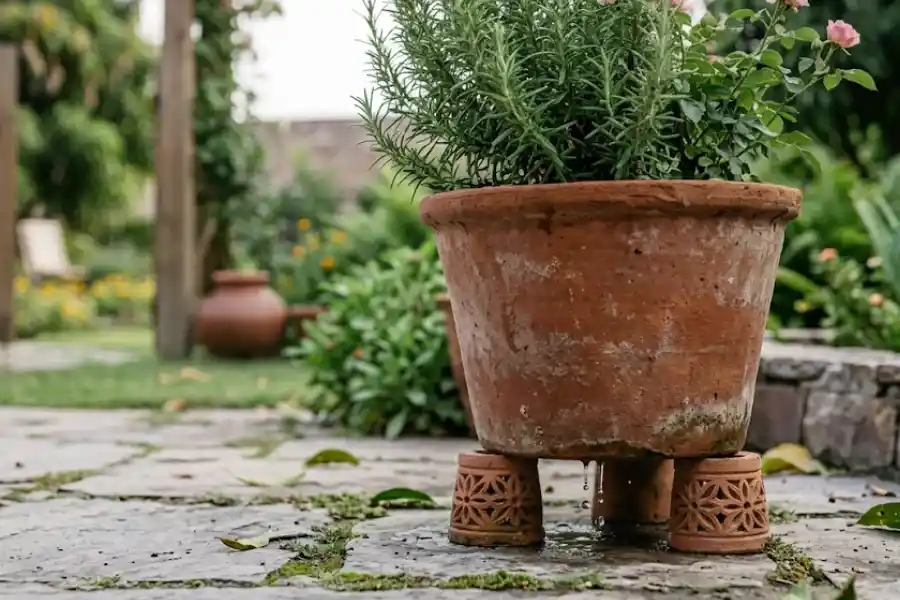
Garden Pot Feet: Benefits, Types, and How Many You Need
Ever lifted a heavy pot and found a soggy, dark ring underneath? Maybe slugs were hiding there. Or maybe a crack ran up the side after a cold night. Small problems like these add up fast. The good news is that one tiny add-on can stop most of them. Meet garden pot feet.
This article covers what garden pot feet are and how they work. It also shows how many you need, how to put them on, and which mistakes to skip. There are free DIY ideas too.
What Are Garden Pot Feet?
Garden pot feet are small risers that lift a pot about an inch off the ground. You may also see them called pot risers, planter feet, or pot toes. They sit under the base of a pot. The small gap lets water drain out and lets air move through.
They come in many styles. Some are plain rubber blocks that hide under the pot. Others are pretty ceramic feet shaped like daisies or paws. Both kinds do the same job.
Why Garden Pot Feet Are Worth Using
A pot that sits flat on the ground has a few problems. The drain holes can get blocked. Water can pool underneath. A small gap fixes most of this.
Better Drainage
Roots need water, but they also need to breathe. When a pot sits flat on stone, the holes can seal shut. The soil stays wet, and the roots can rot. Gardening experts quoted by Homes and Gardens say raised pots drain freely. That matters most in winter, when soggy soil leads to root rot.
Less Frost Damage
Water under a pot can freeze. Ice can glue the pot to the ground. Water stuck inside can swell and crack the pot, too. Donna Letier, co-founder of Gardenuity, told Homes and Gardens that lifting pots helps stop them from freezing to the ground. She also said it helps avoid sudden temperature swings at the base, which can hurt roots.
More Air Around the Pot
Air flow helps the base dry out. That lowers the risk of rot and mold. It matters a lot for succulents, which hate wet roots. The blogger behind Succulents and Sunshine explains that water must flow out easily and air must move so the soil can dry. She calls pot feet one of the best tips she got in a year.
Fewer Slugs and Snails
Slugs and snails crawl along the ground. A raised pot is harder for them to reach. Ideal Home shares this tip from garden experts, too. Pot feet will not stop every pest. But they take away a cozy, shady hiding spot.
Safer Decks and Patios
Pots that sit right on a wood deck can cause the wood to rot. On a patio, they can leave stains. The garden retailer Lee Valley points this out in its pot feet listing. A small gap lets the surface dry out and keeps ugly rings from forming. Balconies have the same problem, so pot feet help there too. If you are new to balcony gardening, our post on how to make a small balcony garden for beginners is a good place to start.
Easier Cleaning and Lifting
With a gap, you can sweep out leaves and dirt. You can also slide your fingers under the pot. That makes it easier to move later.
Do You Need Garden Pot Feet?
Not every pot needs them. A quick check can help you decide.
Use them if:
- Your pot sits on a wood deck, patio, or balcony.
- You live where winters bring hard freezes.
- Your pot has drain holes in the base.
- You grow succulents, or herbs like rosemary and thyme in outdoor herb pots. Both dislike wet roots.
- Water pools under your pots after rain.
You can skip them if:
- The pot has no drain hole, like a decorative outer pot.
- The pot sits on bare soil or gravel that drains well.
- It is a tall pot in a very windy spot. Tall outdoor planters can tip more easily in strong wind, so a low, wide base may be safer.
Think of garden pot feet as cheap insurance. They cost little and take minutes to set up. One cracked pot costs far more.
Types of Garden Pot Feet
Terracotta and Ceramic Feet
These look classic, and they match terracotta pots well. Glazed ceramic feet add a pop of color. Garden stores often sell them in sets of three. They are sturdy, but they can chip if dropped.
Resin and Stone Feet
These are made to handle the weather. Many are frost proof and come in fun shapes. One resin set listed by Homes and Gardens is made for pots 14 to 20 inches wide. Always match the feet to the size of your pot.
Rubber and Plastic Feet
These are cheap and almost invisible. Rubber ones grip well, so pots do not slide. Some plastic ones stack, which lets you add extra height.
Free DIY Options
You do not have to buy anything. Old bricks, tiles, slate, and flat stones all work. Ideal Home even shows leftover tiles and little cement cakes as budget feet. Lydia Beaumont of Gardeners’ Yards keeps it simple:
Gardening expert Lydia Beaumont says that “small bricks, wooden blocks, or bits of slate works just as well.”
For DIY feet, leave at least one inch of space under the pot. Wood blocks can rot over time, so check them each season.
How Many Garden Pot Feet Do You Need?
The answer depends on the shape and weight of your pot.
- Round pots: Three feet are usually enough, says the garden center Old Railway Line. Three points stay steady, even on uneven ground.
- Square or rectangle pots: Use four, one near each corner.
- Long troughs and window boxes: Add one or two in the middle so the base does not sag.
- Very heavy pots: Use more feet, and check the weight rating on the package.
Place the feet under the sturdy edge of the base, not the middle. Space them evenly. Wet soil is heavy, and a large pot can weigh well over 100 pounds.
How to Put Garden Pot Feet on Your Pots
Adding garden pot feet takes about five minutes per pot. The steps are short.
- Pick a flat spot. Choose firm ground. Soft soil or mulch lets the feet sink.
- Get help for big pots. The team at Old Railway Line advises asking someone to help with a large, planted container. Do not strain your back.
- Tilt and slide. Tilt one side of the pot up a little. Slide a foot under it, then lower it. Repeat with the other feet. If the pot is empty, set the feet on the ground first and lower the pot on top.
- Check that it is level. Press on the rim. The pot should not rock. If it wobbles, move a foot or put a flat stone under it.
- Clear the drain holes. Make sure nothing blocks them.
- Water and watch. Water slowly. The water should run out freely from the bottom.
Pot Feet or Plant Caddies?
A plant caddy is a low platform with wheels. Old Railway Line notes that caddies suit large or heavy pots. Always check the weight and size limits before you buy one.
So which is better? It depends on your goal. Garden pot feet keep a pot still, help with drainage, and look neat. Caddies let a big pot roll, which helps if you move it often, like when you shelter it before a frost.
Common Mistakes With Garden Pot Feet
- Using too few feet. A pot with only one or two can tilt or crack.
- Setting feet on soft ground. They sink over time. Put a flat stone under each foot.
- Letting a saucer hold water. A full saucer cancels out the gap. Empty it, or skip it outdoors.
- Blocking drain holes with wrap. When you wrap a pot for winter, Homes and Gardens advises keeping the holes clear so moisture can escape.
- Ignoring weight limits. Feet that are too weak can crush or crack.
- Forgetting DIY feet. Wood and soft stone wear out. Check them often.
Using Garden Pot Feet All Year
In Winter
Lift your pots before the first hard freeze. For extra care, wrap each pot with horticultural fleece, burlap, or bubble wrap. Tie it with twine so the wind cannot blow it off. Keep the drain holes open.
In Spring and Summer
Pot feet still help when the weather is warm. They improve air flow, cut down on pests, and keep your deck clean after heavy rain.
Indoors
Planter feet work inside, too. Pair them with a tray to protect floors and help the base dry between waterings.
Frequently Asked Questions
What can I use instead of pot feet?
Bricks, tiles, slate, flat stones, and small wood blocks all work. Make sure the pot sits at least one inch off the ground.
How tall should pot feet be?
One to two inches is common. Taller feet let in more air, but very tall ones can make a pot less steady.
Do I need a saucer with pot feet?
Outdoors, it is best to skip the saucer. If you need one to protect a deck, empty it after rain so the pot does not sit in water.
Are garden pot feet good for succulents?
Yes. Succulents need water to drain fast and soil to dry out. Garden pot feet help with both.
Will pot feet stop all pests?
No. A raised pot gives slugs and snails less cover, but you should still look under pots now and then.
Final Thoughts
Garden pot feet are small, cheap, and easy to use. They help water drain, protect pots from frost, and keep your deck or patio clean. You can buy a set or use free bricks and tiles from around your yard. If you want more ways to style and plant your pots, our container garden ideas are a good next read.
Start with your priciest pot or the one that always stays soggy. Add three feet, check that it sits level, and see the difference. Your plants will thank you.