White Stones for Garden: Types, Costs, and How to Use Them
White stones can make a plain yard look sharp in one weekend. They glow in the morning sun. They make green leaves look greener. They even keep your garden visible at dusk.
But there is a catch. Some white stones change your soil. Some get hot. Some get dirty fast. And the price can jump by a huge amount depending on how you buy them.
This article covers white stones for garden beds, paths, and borders in plain words. By the end, you will know which type to pick, how much you need, what it costs, and how to keep it bright for years.
Quick Answer: Are White Stones Good for a Garden?
Yes, in the right spot. White stones for garden borders, paths, and pots look clean and last a long time. They work best around sun-loving ornamental plants. They work poorly around acid-loving plants and inside vegetable beds.
Here are the key points at a glance:
- Best types: Marble chips for beds, pea gravel for paths, and larger white cobbles for pots and dry creek beds.
- Soil warning: Marble and limestone slowly make soil less acidic. Keep them away from blueberries and azaleas.
- Layer: About 2 inches thick covers the ground well.
- Money saver: Buying by the ton costs far less than buying bags.
- Upkeep: Lay fabric underneath and rinse the stones now and then.
Which White Stones for Garden Use Are Best?
Not all white rock is the same. Here are the main kinds you will find in the US, and what each one does best.
White Marble Chips
These are crushed marble. They are bright white, sometimes with faint gray lines. A common size is about 3/4 to 1 1/2 inches. The edges are sharp and angular, so the pieces lock together and stay in place better than smooth stones.
One large US supplier lists marble chips near $144 per ton, with a one-ton minimum. Your price will depend on where you live. Marble is white all the way through, so it will not fade.
White Pea Gravel
Pea gravel is small, smooth, and round. It is a popular pick for garden paths, small seating areas, and the gaps between stepping stones. Because it is smooth, it can shift under your feet. Good edging helps a lot.
White Limestone
Limestone comes as crushed gravel and as bigger decorative stone. It has a soft, pale look. In some areas it costs less than marble. Like marble, it can change your soil over time, so check your plants first.
Large White Cobbles and River Rock
These bigger, rounded stones are great for pot tops, dry creek beds, and around water features. They make a bold look with less work, because a few big stones cover more ground than many small ones. Many layouts used in river rock landscaping work just as well with white cobbles.
Small Polished White Pebbles
These tiny stones come in bags. They are made for succulent bowls, bonsai pots, and small accents. They are too small and too costly for large beds.
Glow-in-the-Dark Stones
These soak up light during the day and glow softly at night. Many gardeners mix a handful in with regular white stones along a path. It adds a little magic without any wiring.
The Good and the Bad of White Stones for Garden Beds
White stone looks great, but it is not perfect for every spot. Here is the fair picture.
What You Will Love
- It lasts. Stone can last 10 years or more. Wood mulch often needs to be refreshed in 1 to 3 years.
- It brightens dark corners. White stone reflects light, so shady and narrow areas look larger.
- It cuts down weeds. Stone laid over fabric blocks most weeds.
- It fits many styles. Modern, cottage, and Zen gardens all work with it.
- It is low effort. There is no mowing, no watering, and no yearly refill.
What to Watch Out For
- Soil changes. Marble and limestone are made of calcium carbonate. Over time they can raise your soil pH.
- Heat and glare. White stone reflects more light than dark rock, but it still holds and gives off heat. In a hot, sunny spot, it can stress shallow-rooted plants. The glare can also be harsh next to windows and patios.
- No soil benefits. Stone does not feed the soil or hold water the way mulch does.
- Dirt shows. Mud, leaves, and algae stand out on white.
- It will not fix drainage. Stone on top of a soggy yard is still a soggy yard. Drainage depends on the slope of the ground and a place for water to go.
Think of it this way: stone lasts longer, while mulch improves the soil. Many gardeners use mulch right around their plants and save white stone for paths, edges, and showy beds.
Best Plants to Pair With White Stones
Good Partners
These plants usually like drier, slightly sweeter (less acidic) soil:
- Lavender
- Clematis
- Succulents and cacti
- Palms
- Ornamental grasses
White stone beds work a lot like small rock gardens, so many rock garden plants can do well here too.
Plants to Keep Away
Skip marble and limestone near acid-loving plants. This list includes azaleas, rhododendrons, camellias, gardenias, and blueberries. Over months and years, the stone can push the soil out of their comfort zone.
Vegetables are tricky too. Many prefer soil that is slightly acidic to neutral. If you want white stone in a veggie bed at all, keep it to a thin top layer, or skip it.
Not sure about your soil? A cheap pH test kit will tell you. You can also ask your local county extension office about a soil test.
10 Ways to Use White Stones for Garden Design
- Garden paths. Use pea gravel or marble chips over a packed base. Add edging so the stones stay put.
- Crisp borders. Pair wood planks with white gravel for a clean, sharp edge.
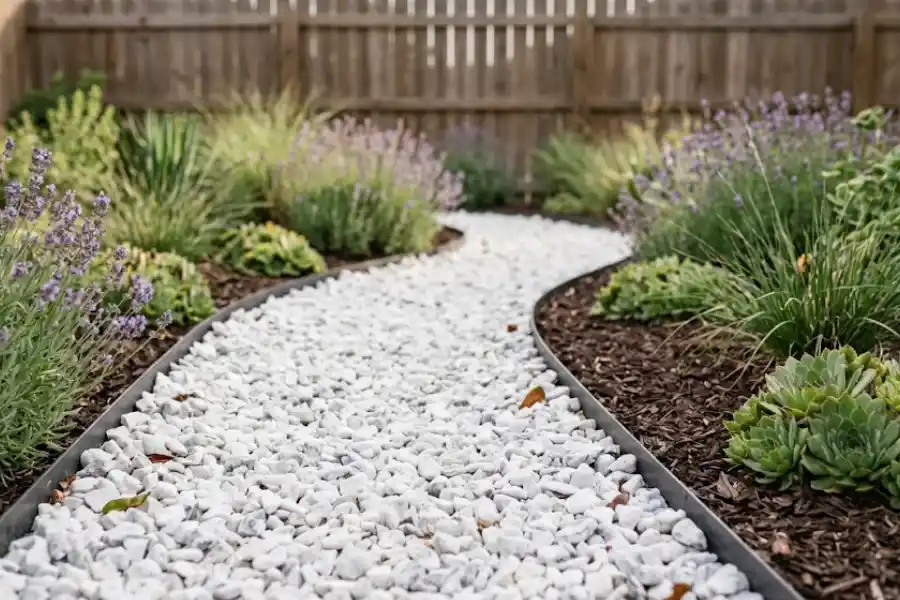
- Contrast with dark mulch. White stones for garden beds really pop next to dark mulch, and the line between them looks neat.
- Pot toppers. Spread small white stones on top of the soil in large pots. It looks tidy, and it keeps soil from splashing up.
- Dry creek beds. Lay white cobbles in a winding line to mimic a stream, with no water needed.
- A Zen corner. Use white gravel, a few large stones, some grasses, and a small rake for calm, simple style.
- Front yard accent. A white border along the front of your home adds instant curb appeal. Keep it away from windows if glare bothers you.
- A moon garden. Pair white stones with white flowers to create a moonlight garden. They catch dim light, so the space stays visible at dusk.
- A small seating spot. Pea gravel makes a soft, simple patio floor. Pack the base well first.
- A glowing night path. Mix glow-in-the-dark stones with regular white stones along a walkway.
How Much White Stone Do You Need?
Here is a simple rule for marble chips. One ton covers about 115 square feet when spread 2 inches thick. A cubic yard of this stone weighs around 2,800 pounds.
To plan white stones for garden projects, follow these steps:
- Multiply the length by the width to get square feet.
- Divide that number by 115 to get tons at 2 inches thick.
- Add a little extra for uneven ground.
Example: A bed that is 10 feet by 12 feet has 120 square feet. That needs a little over 1 ton.
Other stone types weigh differently. Check the supplier’s calculator before you order.
Bulk or Bags? The Price Gap Is Huge
Buying white stones for garden projects in bulk is much cheaper than buying bags. Here is a real example. A 20-pound bag of 1 to 2 inch white stones was listed at about $35 at a big US farm store. That is around $1.75 per pound. Bulk marble chips at about $144 per ton comes to roughly 7 cents per pound.
For that 120 square foot bed, bags would mean about 100 bags and a bill near $3,500. Bulk would be around $144 plus any delivery fee, depending on your area.
Bags still make sense for small jobs like pots and bowls. For beds and paths, get a quote for bulk delivery. A dump truck will drop the pile in your driveway, so pick a firm, flat spot with room for the truck. Prices change, so always check current quotes.
How to Install White Stones for Garden Beds and Paths
- Call 811 first. In the US, this free number helps you find buried utility lines before you dig.
- Mark the area. Use string, spray paint, or a garden hose to outline the shape.
- Clear the ground. Remove grass, weeds, and roots. Leftover roots will pop back up.
- Level and pack the soil. For a path or seating area, add a compacted gravel base.
- Set the edging. Metal, wood, or stone edging keeps the white stone from drifting into the lawn. Rust-colored corten steel garden edging is a good metal option, and it stands out nicely against white stone.
- Lay landscape fabric. Overlap the seams. This stops weeds and keeps soil from mixing into the stone. That matters more with white rock, because dirt shows.
- Spread the stone. Aim for about 2 inches thick. Rake it flat.
- Leave a gap near stems. Do not pile stone against tree trunks or plant stems.
- Rinse it. A quick spray washes off dust and makes the stone bright.
How to Keep White Stones Bright
White stones for garden spaces stay bright with a little care. Dirt, fallen leaves, and algae cause most of the dullness. Here is how to fight them:
- Use a leaf blower to clear leaves and light debris.
- Rinse the stones with a garden hose when they look dusty.
- Scrub stubborn spots with a soft brush, water, and a little mild soap.
- Be careful with vinegar on marble and limestone. Acid can dull the surface of these stones. Plain water is the safer first choice.
- Top up thin spots every few years so soil does not show through.
Common Mistakes to Avoid
- Skipping fabric and edging. Without them, weeds and soil take over fast.
- Piling stone against plants. This traps moisture against stems and trunks.
- Picking the wrong plants. Match your stone type to your plants’ soil needs.
- Using stone to fix drainage. Fix the slope and water flow first.
- Going too thin. A thin layer lets soil peek through and ruins the look.
- Covering a huge sunny area. Big white fields can feel hot and glaring.
- Buying bags for a big job. You may pay more than 20 times as much per pound.
Frequently Asked Questions
What are the best white stones for garden paths?
Pea gravel and marble chips are the top picks. Marble chips have sharp edges that lock together, so they stay put better. Pea gravel is smoother to walk on but shifts more. Either one needs a packed base and good edging.
Do white stones for garden beds get hot?
White stone reflects more sunlight than dark rock, so it often stays cooler. But it can still soak up and release heat. In hot, sunny spots, it may stress shallow-rooted plants. Organic mulch is a better choice around heat-sensitive plants.
Will white stones hurt my plants?
They are not poisonous. The two real risks are soil pH and heat. Marble and limestone can slowly make soil less acidic, which is a problem for blueberries, azaleas, and similar plants.
How thick should white landscape rock be?
About 2 inches is a good starting point. That thickness covers the ground fully and blocks most weeds when you use fabric underneath.
Do I need landscape fabric under white stones?
In most cases, yes. Fabric keeps weeds down and stops soil from mixing into the stone. Since dirt shows easily on white rock, this step saves a lot of cleaning.
Can I use white stones in a vegetable garden?
It is not ideal. Many vegetables prefer slightly acidic to neutral soil, and marble slowly raises pH. If you use any, keep it to a thin top layer, or choose another mulch.
How do I clean white garden stones?
Rinse them with a hose or clear them with a leaf blower. For stuck-on dirt, use a soft brush and mild soap. Marble will not fade, so a good rinse brings back the shine.
How much do white garden stones cost?
It depends on how you buy. Bulk marble chips can run near $144 per ton in some US markets. Small bags cost far more per pound. Get a delivered quote before you decide.
Final Thoughts
White stones for garden projects can give you a bright, clean, low-work yard. The trick is to match the right stone to the right spot. Pick marble chips for beds, pea gravel for paths, and big cobbles for bold accents. Check your plants and soil first. Buy in bulk when the job is big. And lay fabric underneath so your work stays sharp.
Start small if you are unsure. Try one border or a few pots. You will quickly see how the stone looks in your light, with your plants.