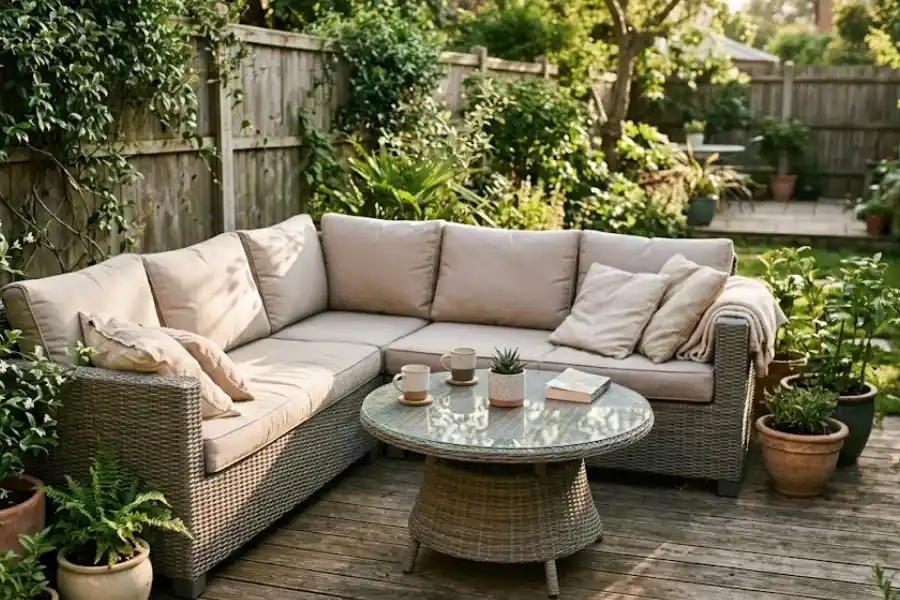
Garden Corner Couch: Sizes, Materials & Prices
A garden corner couch can turn an empty patio corner into your favorite spot in the house. It fits snugly against two walls or edges, seats more people than a straight sofa, and makes small spaces feel bigger. But picking the right one is not as simple as it looks. Material, size, and shape all matter more than most shoppers expect.
This article walks you through the main things to check before you buy: types of corner couches, how to measure your space, real price ranges, and care tips that work. No fluff, just what you need to make a smart choice.
What Is a Garden Corner Couch?
A garden corner couch is an outdoor sofa built in an L-shape or U-shape. It is made to sit in a corner of your patio, deck, or garden. Instead of two separate sofas facing each other, you get one connected piece that wraps around the space. This gives you more seating without using more floor room.
Most corner couches come as part of a set, often with a coffee table and sometimes a footstool. Some are modular, meaning you can rearrange the pieces into different shapes later.
Why Choose a Corner Couch for Your Garden
Corner couches solve a common problem: how to fit good seating into a space that is not perfectly square. Here is why people choose them:
- They use corners that would otherwise sit empty.
- They seat more guests than a two-seater or three-seater sofa.
- They create a defined lounge area, even in an open garden.
- Many modular versions let you change the layout as your needs change.
Quick tip: Before you shop, walk your patio with a tape measure and some painter’s tape. Mark out the footprint you have in mind. It sounds simple, but it stops more return requests than any product review ever will.
Types of Garden Corner Couches by Material
The material you choose affects comfort, price, and how long the couch lasts outdoors. Here is a breakdown of the main options.
Rattan and Wicker
Rattan is the most popular choice for garden corner couches. Synthetic (PE) rattan resists rain and sun much better than natural rattan, so check the label before you buy. It has a woven look that suits both modern and traditional gardens. Expect a lightweight frame, easy cleaning, and a mid-range price.
Aluminum
Aluminum frames are rust-resistant and lighter than wood or steel. They work well in coastal areas or humid climates where rust is a real concern. Aluminum couches often cost more upfront but need less upkeep over the years.
Teak and Solid Wood
Teak is a premium choice known for its natural strength. It ages into a soft silver-grey color if left untreated, or you can oil it to keep the original tone. Wood couches tend to feel heavier and more solid, but they usually cost more and need occasional treatment to fight moisture damage.
Fabric-Wrapped and Cushioned Frames
Some corner couches use fabric-covered cushions over a steel or aluminum frame, similar to indoor sofas. Look for Olefin or solution-dyed acrylic fabric, since these resist fading and mildew far better than standard upholstery. This style feels the most like indoor furniture but needs covers or storage during heavy rain.
How to Measure Your Space Before You Buy
Corner couches take up more room than you might expect once you add a coffee table and walking space. Follow these steps to avoid a couch that overwhelms your patio.
- Measure the full length of both walls or edges where the couch will sit.
- Subtract at least 24 inches from each side for walking room.
- Check the product listing for exact dimensions, not just “seats 5” or “seats 8,” since seat count varies a lot by brand.
- Leave 14 to 18 inches between the couch and the coffee table for comfortable legroom.
L-Shape vs U-Shape: Which One Fits Your Garden
L-shaped couches are the most common and the easiest to fit into a single corner. They work well for small to medium patios and still leave room for a table or planters nearby.
U-shaped couches wrap around three sides of a table, giving you more seats but needing a much larger footprint. These suit bigger gardens or families who host often. If your patio is under 120 square feet, an L-shape is usually the safer choice.
Modular vs Fixed Corner Sofas
A fixed corner sofa comes in one set shape and cannot be rearranged. It is often sturdier and simpler to assemble.
A modular sofa is built from separate sections you can rearrange into an L-shape, U-shape, or straight line. This gives you flexibility if you move house or want to change your layout later, though modular sets usually cost more per seat than fixed ones.
How Much Does a Garden Corner Couch Cost
Prices vary widely based on material and size. Here is a general guide for the US market:
- Budget (under $500): Small resin wicker or steel-frame sets, often 4 to 5 seats.
- Mid-range ($500 to $1,200): PE rattan or aluminum sets with thicker cushions, usually 5 to 6 seats.
- Premium ($1,200 and up): Teak, modular fabric sets, or large U-shaped sectionals with 7 or more seats.
Cushion quality often matters more than frame material when it comes to comfort. A cheaper frame with high-density foam cushions can feel better than an expensive frame with thin padding.
Placement Tips for Small and Large Gardens
For small patios, place the couch against a wall or a decorative Garden Border Fence line rather than floating it in open space. This frees up the center for movement and makes the area feel larger. A round or oval coffee table also saves space compared to a square one.
For larger gardens, a corner couch works well as a divider between a dining area and a lounge area. Angle it slightly toward a relaxing focal point, like a fire pit, a soothing Water Fountain Outdoor Garden setup, or a nice garden view, instead of squaring it off against the wall.
Caring for Your Garden Corner Couch
Outdoor furniture lasts much longer with a little routine care. These habits make the biggest difference:
- Bring cushions inside or use a waterproof storage box during heavy rain and winter months.
- Rinse woven frames with a hose and mild soap every few weeks to stop dirt buildup.
- Use a breathable furniture cover, not a fully sealed plastic one, to avoid trapping moisture and mildew.
- Check bolts and connectors on modular sets every season, since outdoor temperature swings can loosen them.
Common Mistakes to Avoid
- Buying based on seat count alone instead of checking actual dimensions.
- Choosing natural rattan for a rainy climate without a waterproof cover on hand.
- Skipping the corner measurement and assuming “L-shape” means it will fit any layout.
- Ignoring cushion fabric type, which affects both comfort and how fast colors fade.
Frequently Asked Questions
Can a garden corner couch stay outside all year?
Most frames, like aluminum, teak, and PE rattan, can stay outside year-round. Cushions and fabric covers usually need to come indoors or into storage during winter and heavy rain to avoid mildew and fading.
What is the best material for a rainy climate?
Aluminum frames with PE rattan or solution-dyed fabric cushions handle rain the best. They resist rust and dry quickly, which lowers the risk of mold.
How many people does a garden corner couch seat?
This depends on the size, but most L-shaped sets seat 4 to 6 people, while larger U-shaped sets can seat 7 or more. Always check the listed dimensions instead of relying on the seat count alone.
Is a modular corner sofa worth the extra cost?
If you expect to move, rearrange your outdoor space, or add seats later, a modular set is worth it. If your layout is permanent, a fixed corner sofa often gives better value.
How do I stop my cushions from fading in the sun?
Choose solution-dyed acrylic or Olefin fabric, since the color runs through the fibers instead of sitting on top. Rotating cushions occasionally and using a cover during peak sun hours also helps.