Tiered Plant Stand Outdoor: How to Choose One That Lasts
Let’s be honest. You searched for a tiered plant stand outdoor because your patio looks a little sad right now. Maybe your pots are just sitting on the ground in a messy row. Maybe you already bought one stand, and it rusted or fell apart after one rainy season. You are not alone. This happens to so many plant lovers.
I have set up patios, balconies, and small backyard corners for years, and I have made almost every mistake you can make with plant stands. I bought a cheap one that bent under a heavy pot. I bought a pretty wooden one that rotted after two summers. So this article is not theory pulled from nowhere. It comes from real trial and error, and it is what works when a tiered plant stand outdoor has to survive sun, rain, and wind, and still look nice in a photo.
By the end of this article, you will know what to look for, where to place it, and how to style it so your plants look like they belong in a magazine.
Why a Tiered Plant Stand Outdoor Is Worth the Space
A tiered plant stand does more than sit there and look pretty. It solves real problems.
- It saves floor space by stacking plants upward instead of spreading them across the ground.
- It lifts plants closer to sunlight, which many outdoor plants desperately need.
- It improves airflow around pots, which helps stop root rot and mold.
- It keeps plants away from crawling bugs and slugs that live at ground level.
- It instantly makes a plain patio or balcony look styled and intentional, especially if paired with DIY outdoor garden mirrors hung on the wall behind it to reflect the lush greenery and double the visual depth of your space.
If your plants have been struggling even though you water them well, low airflow and poor light could be the real reason. A good outdoor tiered plant stand fixes both problems at once.
The Material Matters More Than the Style
This is the part most buying guides skip, and it is the most important one. A tiered plant stand outdoor lives through sun, rain, frost, and wind. The material decides whether it survives one season or ten.
Metal Stands
Metal stands, especially powder-coated steel or wrought iron, are strong and hold heavy pots well. Look for the words “powder-coated” or “rust-resistant” on the label. Plain untreated metal will rust fast once it gets rained on again and again.
Wood Stands
Wood looks warm and natural, but not all wood survives outside. Cedar and teak resist rot naturally. Pine and basic softwood do not, unless they are sealed every year. If you love the wood look, cedar is usually the safest choice for a tiered plant stand outdoor.
Resin and Composite Stands
These are often the most low-maintenance option. They do not rust, rot, or fade quickly, and they are usually lighter to move around. The tradeoff is that very cheap resin can crack in extreme cold.
Quick tip from experience: if you live somewhere with real winters, avoid glazed ceramic or thin resin stands. They crack when water inside them freezes. Metal and treated wood handle freezing weather much better.
How Many Tiers and What Height Do You Need?
More tiers is not always better. It depends on your space and how many plants you own.
- 2-tier stands work best for small balconies or narrow spaces beside a door.
- 3-tier stands are the most popular choice because they fit most patios and hold a good variety of plant sizes.
- 4 to 5-tier stands are great for plant collectors who want a full display, but they need a sturdy base so they do not tip over.
Before buying, measure your space and also measure your tallest plant pot. A stand that is technically “3-tier” but too short for your biggest fern will not solve your problem.
Where to Place Your Outdoor Tiered Plant Stand
Placement changes everything, even with the best tiered plant stand outdoor money can buy.
- Check the sun path. A spot that looks sunny in the morning can be full shade by afternoon. Watch your space for a full day before deciding. Placing the stand in a bright, open area near a functional garden bird bath is often a great way to create a lively nature corner.
- Avoid pure concrete corners in hot climates. Concrete reflects heat and can dry out lower tiers fast.
- Think about wind. Tall stands with top-heavy plants can tip over in strong wind. If your area gets windy, choose a stand with a wide, heavy base or anchor it near a wall.
- Leave room for growth. Plants get bigger. Do not push your stand into the tightest possible corner.
This wind-safety point is something most buying guides never mention, but it is one of the most common reasons people end up replacing their stand after just one storm.
How to Arrange Plants So It Looks Good
A tiered plant stand outdoor can still look messy if the plants are arranged badly. Here is a simple rule that professional stylists use.
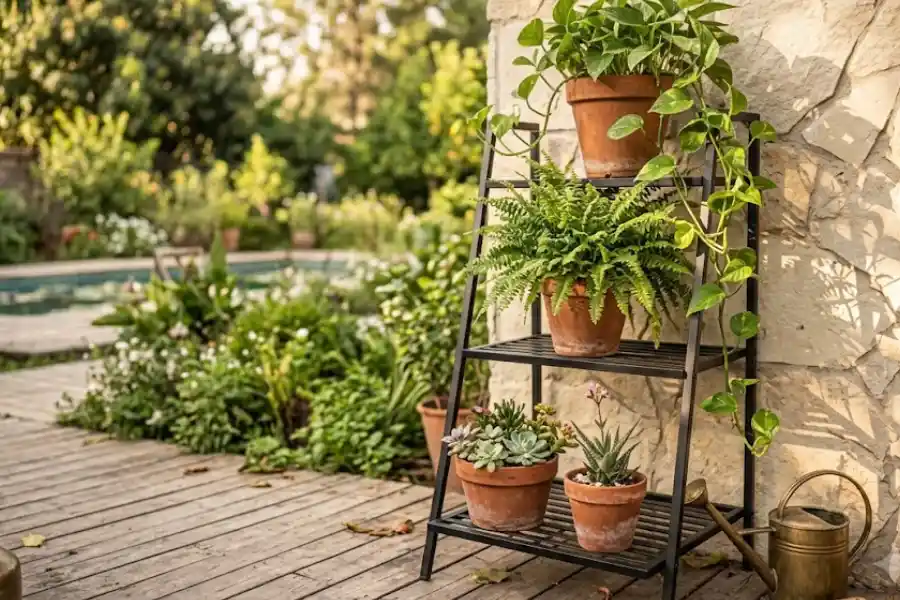
- Put your tallest or trailing plants on the top tier, so their leaves can spill downward.
- Put medium, bushy plants on the middle tier for a full, rounded look.
- Put small plants or trailing vines on the bottom tier, where they can spread outward.
Mixing leaf shapes and green shades, instead of using identical plants on every tier, makes the whole display look richer and more natural.
Keeping It Alive: Maintenance Tips People Forget
Buying the stand is the easy part. Keeping it looking great outdoors takes a little care.
- Use trays or saucers under each pot. Without them, water stains and rots the shelf underneath over time.
- Wipe metal joints every few months, especially after heavy rain, to stop early rust from forming.
- Rotate your pots occasionally so every plant gets even sunlight, not just the ones on the outer edge.
- Check screws and joints once a season. Outdoor temperature changes can loosen them slowly.
- Move lightweight stands indoors or against a wall before major storms.
These five habits alone can double the life of a cheap stand and keep an expensive one looking new for years.
Common Mistakes to Avoid
Before you buy, avoid these mistakes that trip up most first-time buyers.
- Choosing a stand based only on looks, without checking the weight limit per tier.
- Ignoring the material’s weather rating for your specific climate.
- Buying a stand too small for pots you already own.
- Placing it somewhere with no drainage plan, which leads to puddles and stains.
- Forgetting to check reviews for how easy the stand is to assemble.
Frequently Asked Questions
Is a tiered plant stand outdoor safe to leave outside all year?
It depends on the material. Powder-coated metal, treated wood, and quality resin can usually stay outside year-round. Untreated wood or thin plastic should be moved indoors during heavy rain or winter months.
How much weight can a tiered plant stand hold?
This varies by product, but most metal stands hold between 15 and 40 pounds per tier. Always check the listed weight limit before placing large ceramic pots on the upper tiers.
What is the best material for a rainy climate?
Powder-coated steel and sealed cedar wood handle frequent rain the best. Avoid plain iron or untreated pine, since both absorb moisture and damage quickly.
Can I use a tiered plant stand for vegetables or herbs instead of decorative plants?
Yes. Many gardeners use tiered stands for small herb gardens, since it keeps herbs off the ground and easy to reach for cooking. Just make sure each pot has proper drainage holes.
Final Thoughts
A tiered plant stand outdoor is one of the simplest upgrades you can make to a patio, balcony, or garden corner. The trick is not picking the prettiest one in the store. It is picking the right material for your weather, the right height for your plants, and a safe spot that can handle sun and wind. Get those three things right, and your stand will look just as good three years from now as it does on day one.