How to Make a Small Balcony Garden for Beginners (Step-by-Step)
The first time I tried to grow anything on my balcony, I killed three basil plants in two weeks. I had no plan. I just bought pretty pots and hoped for the best. If that sounds like you right now, take a breath. A small balcony garden is one of the easiest gardens to get right once you know the five or six things that matter. This article skips the fluff and gives you a clear path from empty balcony to your first harvest.
Step 1: Check What Your Building Allows
Before you buy a single pot, look into your building’s rules. Many apartments and condos limit how much weight your balcony floor can hold, and wet soil in containers is heavier than most people expect. A single large pot filled with soaked soil can weigh over 40 pounds.
- Ask your landlord or check your lease for weight limits and plant restrictions.
- Some buildings only allow flowers, not vegetables, because vegetables can attract pests or birds.
- If you’re unsure, keep containers lightweight and spread them out instead of clustering heavy pots in one spot.
Step 2: Study Your Sunlight Before You Buy Anything
This is the step most beginners skip, and it’s the reason most balcony gardens fail in the first month. For one full day, check your balcony every two hours and jot down whether it’s in direct sun or shade.
- Full sun (6+ hours direct light): tomatoes, peppers, strawberries, marigolds
- Partial sun (3 to 5 hours direct light): herbs like basil and mint, lettuce, pansies
- Low light (under 3 hours): spinach, kale, ferns, and most leafy greens
Matching plants to the light you really have, not the light you wish you had, is the single biggest factor in whether your balcony vegetable garden survives.
Step 3: Choose Containers That Work
You don’t need expensive planters to start container gardening for beginners. What matters is drainage and size.
- Every pot needs drainage holes at the bottom. Without them, roots sit in water and rot.
- Use a saucer underneath to catch runoff, or line larger planter bases with a bit of river rock landscaping stone for drainage, especially if you’re renting.
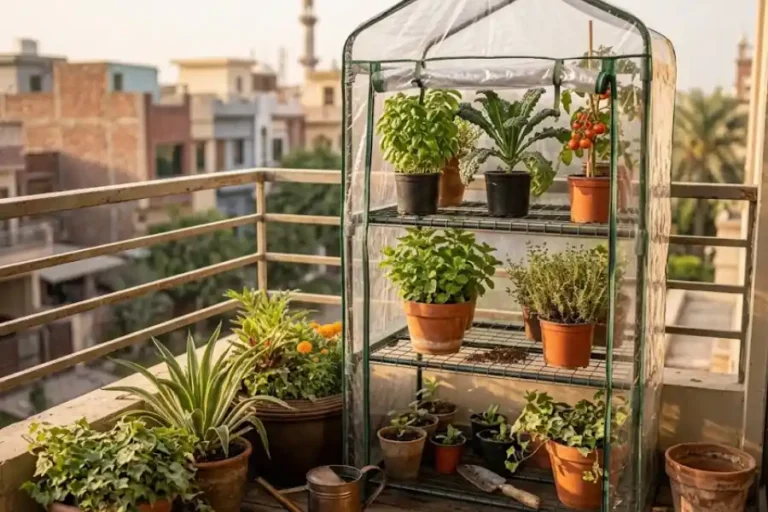
- Pick pots at least 8 inches deep for herbs and 12 inches deep for vegetables like tomatoes or peppers.
- Railing planters and hanging baskets are great if your floor space is tight.
Step 4: Get the Soil Right
Regular garden soil is too heavy and doesn’t drain well in containers. Buy a bag labeled “potting mix” instead of “garden soil.” A good basic mix for balcony pots is roughly 70% potting soil, 20% compost, and 10% perlite or coarse sand for drainage. This keeps roots happy without waterlogging them.
Step 5: Water on a Real Schedule, Not a Guess
Container plants dry out faster than plants in the ground, especially with wind exposure on higher floors. As a starting rule:
- Stick your finger one inch into the soil. If it’s dry, water.
- In hot weather, most balcony pots need water daily or every other day.
- Water in the early morning so plants aren’t stressed during peak sun.
- If you travel often, a self-watering pot or a simple watering globe can save your plants while you’re away.
A gardener I know puts it simply: “Overwatering kills more balcony plants than underwatering ever will.” Soggy roots rot fast, so when in doubt, check the soil before you reach for the watering can.
Step 6: Pick Beginner-Proof Plants
Start with plants that forgive mistakes. Once you’re confident, branch out into anything you like.
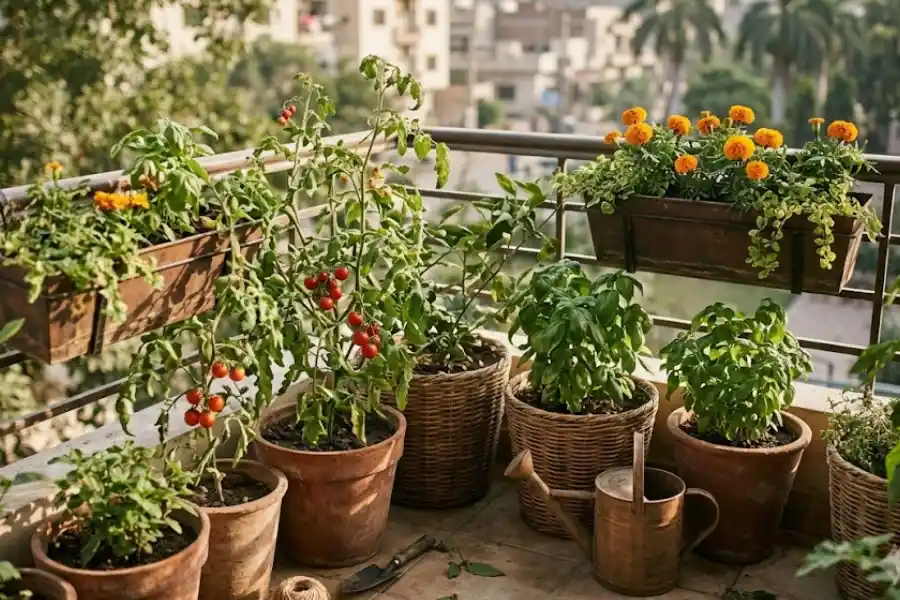
- Cherry tomatoes – fast growing and reward you quickly
- Mint and basil – nearly impossible to kill with a little water and sun
- Marigolds – bright flowers that also help repel some pests
- Lettuce and spinach – ready to harvest in under a month
- Radishes – one of the fastest vegetables you can grow, often ready in three weeks
Step 7: Plan a Realistic Starter Budget
You don’t need to spend a lot to start. A simple first setup usually looks like this:
- 3 to 5 containers with drainage: $20 to $40
- One bag of potting mix and compost: $10 to $15
- Seeds or starter plants: $10 to $20
- Basic watering can: $8 to $12
That puts a full small balcony garden setup at around $50 to $90 for your first season, which is far less than most people assume.
Step 8: Design for Small Spaces
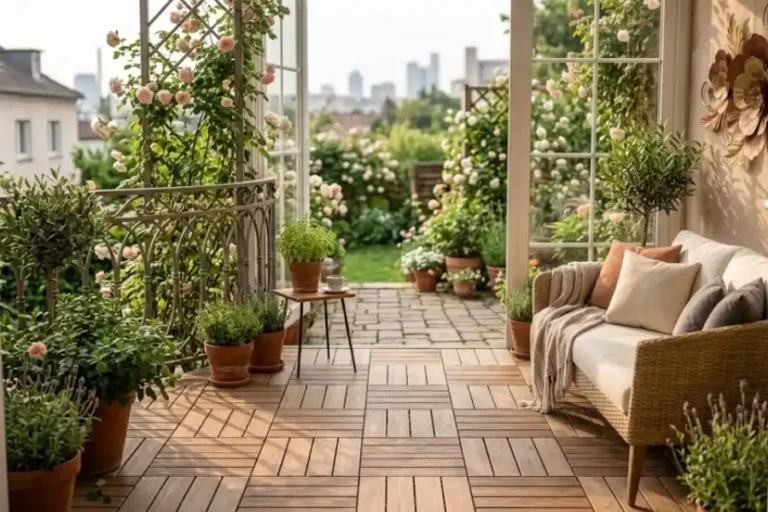
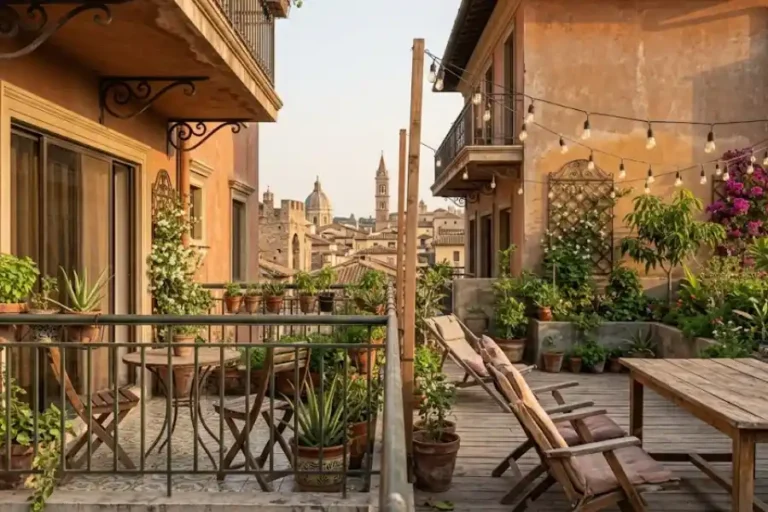
Once your basics are working, think about layout. Use vertical space by hanging weather-resistant outdoor garden wall art, or install wall-mounted planters and railing boxes so you’re not limited to floor space. Group plants with similar water needs together, and leave a little walking room so you can enjoy the space instead of only looking at it through a window.
Common Mistakes Beginners Make
- Buying too many plants at once. Start with three or four pots and expand once you understand your balcony’s conditions.
- Ignoring wind. Higher floors dry out soil faster and can knock over tall or top-heavy plants.
- Skipping drainage holes. This is the number one cause of root rot in balcony gardens.
- Planting the wrong crop for the light available. A sun-loving tomato in a shady corner will struggle no matter how much you water it.
Frequently Asked Questions
What is the easiest plant to grow on a small balcony?
Mint, basil, and radishes are some of the easiest choices. They grow quickly, tolerate small mistakes, and need very little space.
How much sunlight does a balcony garden need?
It depends on what you’re growing. Vegetables like tomatoes need six or more hours of direct sun, while leafy greens and many herbs can do well with three to five hours.
Do balcony pots really need drainage holes?
Yes. Without drainage, water collects at the bottom of the pot, and roots can rot within days. This is one of the most common reasons beginner balcony gardens fail.
Can I start a balcony garden with a small budget?
Absolutely. A basic setup with a few containers, potting mix, and starter plants can cost as little as $50, especially if you reuse containers you already own.
How often should I water a small balcony garden?
Check the soil daily during warm weather. If the top inch feels dry, water it. Most balcony pots need watering every one to two days in summer.
Your Balcony Garden Starts With One Small Step
You don’t need a big yard, years of experience, or a green thumb to grow something worthwhile. Start with one or two pots, match your plants to your light, water with a real schedule instead of a guess, and let the rest follow naturally. Every gardener with a jungle of a balcony today started with a single small pot, just like the one you’re about to fill.