Balcony Greenhouse Basics: Weight Limits, Types, and Costs
You don’t have a backyard. You have a balcony. That is still enough space to grow real food.
A balcony greenhouse turns that small space into a warm, sheltered spot for herbs, greens, and even small vegetables. It blocks wind. It holds in heat. It gives your plants a head start in spring and a longer season in fall.
This article skips the fluff. It gives you real numbers: how much weight your balcony can hold, what temperature starts to hurt your plants, and what a good balcony greenhouse really costs. By the end, you will know what to buy and how to set it up.
What Is a Balcony Greenhouse?
A balcony greenhouse is a small greenhouse built to fit on a balcony, patio, or terrace. It can be as simple as a zip-up plastic cover over a wire shelf. Or it can be a solid polycarbonate frame fixed to your wall.
The idea is the same either way. You trap warmth and block wind, so plants grow faster and survive weather they could not handle on their own. If you haven’t started growing on your balcony at all yet, our guide on how to make a small balcony garden for beginners walks through the basics before you add a greenhouse cover.
What a Balcony Greenhouse Does for You
- Blocks wind and hard rain, so leaves and stems don’t get shredded
- Traps heat, so you can start seeds weeks earlier than outdoors
- Keeps out many pests, since the cover works like a barrier
- Adds growing space without taking over your whole balcony
- Stretches your harvest into fall and early winter
Check These Three Things Before You Buy One
Most people covering this topic jump straight to product picks. That skips the part that matters most. Check these three things first, or you could end up with a damaged balcony, a landlord dispute, or a greenhouse full of dead plants.
Can Your Balcony Hold the Weight?
This is the step almost nobody checks, and it matters more than anything else here.
In the United States, the International Building Code sets a minimum live load of 60 pounds per square foot for most residential balconies. Older buildings, or smaller buildings of three stories or less, are sometimes built to a lower standard, closer to 40 pounds per square foot.
That sounds like plenty, but weight adds up fast. Wet soil, ceramic pots, a steel-frame greenhouse, and you standing there watering it can pile up quickly in one small corner of the floor.
A safe rule of thumb: keep your total plant and greenhouse weight under 15 to 20 pounds per square foot, spread evenly across the floor. Never stack heavy pots in a single corner.
To check your own balcony, measure the length and width in feet, multiply them together, then multiply that number by 60. That gives you a rough weight limit in pounds. Your building manager can confirm the exact figure for your unit.
What Does Your Lease or HOA Say?
Renters and condo owners often assume a balcony greenhouse is fine because it looks like a small tent. It is not always fine.
- Ask if anything attached to railings or walls needs approval first
- Ask if drilling or clamping into the balcony itself is allowed
- Check fire code rules about blocking exits, stairs, or walkways
- Get any weight limit or approval in writing, not just spoken
- Take photos before and after setup, in case a dispute ever comes up
Which Way Does Your Balcony Face?
Direction changes almost everything about how a balcony greenhouse performs.
- South-facing: the most sun and heat. Great for tomatoes and peppers, but you’ll need more ventilation to stop overheating.
- North-facing: cooler and shadier. Better suited to lettuce, mint, and other plants that struggle in strong heat.
- East-facing: gentle morning sun. A solid, forgiving choice for beginners.
- West-facing: strong afternoon heat that can overheat a small greenhouse fast.
Types of Balcony Greenhouses (And Which One Fits You)
Balcony greenhouses come in a few main styles. Your balcony’s size, and what your lease allows, will usually decide which one makes sense.
Wall-Mounted Lean-To
This style sits flat against your building wall and uses almost no floor space. It works best if you’re allowed to drill into the wall or railing. A good fit for narrow balconies where floor space is tight.
Tiered Mini Greenhouse
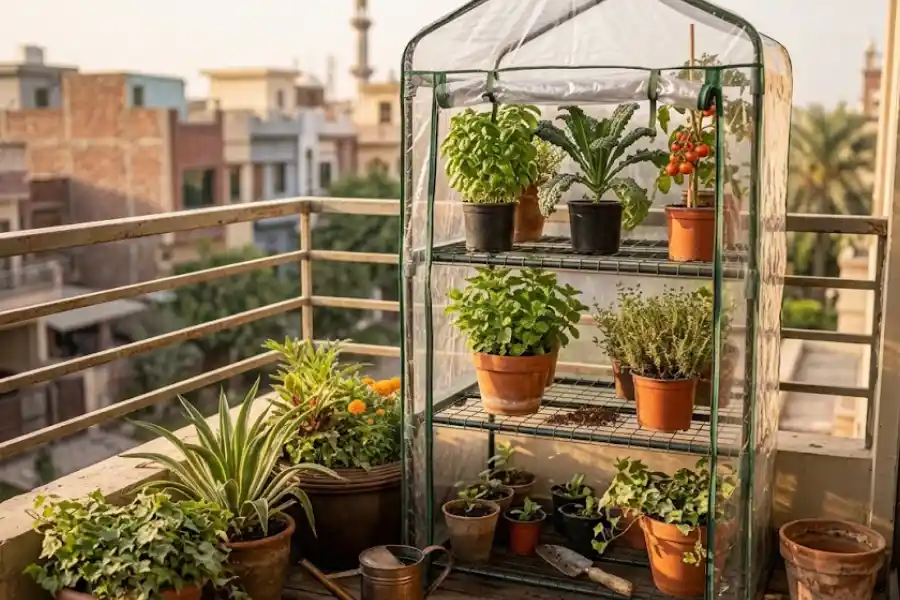
A tiered mini greenhouse looks like a small shelving unit wrapped in a clear, zip-up cover. It usually has two to four shelves and a light steel frame. This is the most common style on apartment balconies, since it’s light, affordable, and easy to move, and many people simply repurpose a tiered plant stand outdoor they already own by zipping a cover over it.
Walk-In Pop-Up Greenhouse
This is a larger, tent-style structure with a steel or PVC frame and a weather-resistant polyethylene cover. You can stand inside it. It needs more floor space, so it suits wider balconies, patios, or ground-floor terraces best.
DIY Shelf-and-Cover Setup
This is the budget route: a wire shelving unit with a clear plastic zip cover added over it. It costs less than a store-bought greenhouse and can be built in an afternoon, though it won’t last as many seasons as a purpose-built model.
How Much Does a Balcony Greenhouse Cost?
Prices vary a lot by size and material. Here’s roughly what to expect:
- Small tiered mini greenhouse (2 to 4 shelves): about $30 to $100
- Walk-in pop-up greenhouse: about $80 to $250
- Rigid polycarbonate or wall-mounted lean-to: about $250 to $700 or more
- DIY shelf-and-cover setup: about $25 to $60, depending on the shelf you already own
Cheaper models use a thin plastic cover. That’s fine for wind and light frost, but it won’t survive years of full sun without fading or tearing. Rigid polycarbonate panels cost more upfront but last much longer and handle wind better.
Best Plants for a Balcony Greenhouse
Not every plant suits a small, enclosed space. These groups tend to do well.
Herbs
- Basil
- Thyme
- Oregano
- Chives
- Parsley
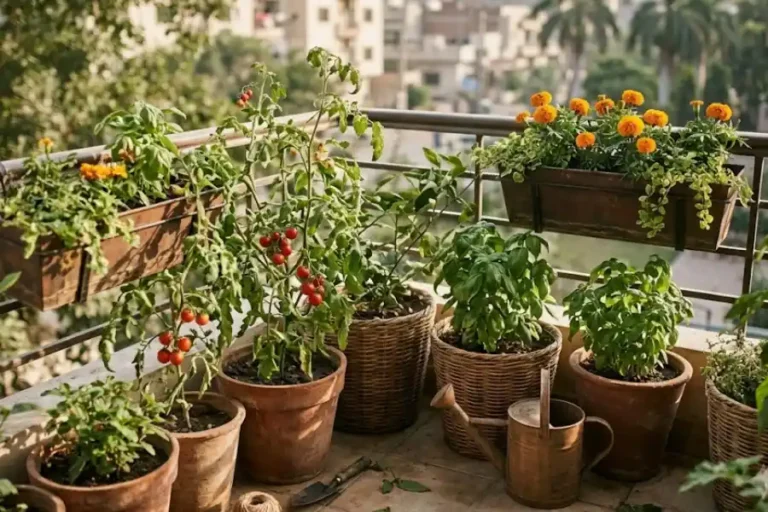
- Mint (mint spreads fast, so keep it in its own pot)
Basil, mint, and the rest of this list all settle in well once they’re under cover, and our guide on growing an herb garden on a balcony covers how to keep fast spreaders like mint from crowding their neighbors.
Quick Leafy Greens
- Lettuce
- Spinach
- Kale
- Arugula
- Swiss chard
Compact Fruiting Vegetables
- Dwarf or patio tomatoes
- Mini bell peppers
- Bush beans
- Strawberries
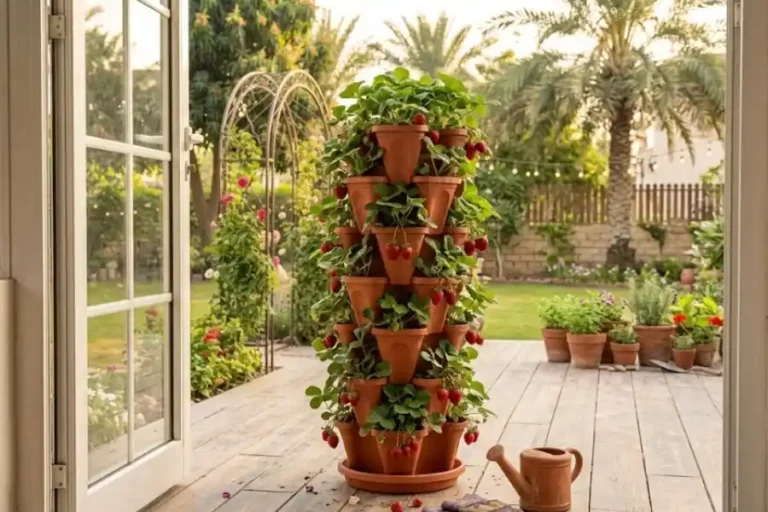
Strawberries are worth growing vertically here: a strawberry tower planter fits neatly on a single shelf without eating up floor space.
Flowers and Seedlings
A balcony greenhouse is also one of the best places to start seeds in early spring, weeks before it’s warm enough to plant outdoors. It works well for hardening off young seedlings, too, and for keeping tender flowers like geraniums alive over winter.
How to Set Up Your Balcony Greenhouse the Right Way
Anchor It So Wind Can’t Take It
Balconies catch stronger, more unpredictable wind than a yard at ground level, especially above the third floor.
- Strap the frame to the railing with ratchet straps or heavy zip ties
- Weigh down the base with sandbags or bricks (check your weight limit first)
- Face the open side away from the prevailing wind
- Avoid placing a tall greenhouse where wind can get under the base and lift it
Vent It Before It Cooks Your Plants
This step gets skipped more than any other, and it’s the one that kills plants the fastest.
A small, sealed balcony greenhouse can heat up 20 to 30 degrees Fahrenheit above the outside air within an hour of direct sun. Most vegetables start to struggle above 85°F, and growth slows sharply once it passes 95°F.
- On sunny days, open vents or the door mid-morning, before heat builds up
- Close everything back up in late afternoon to hold in warmth overnight
- In summer, add a light shade cloth over the sunniest side
- In winter, crack a vent for a few minutes even on cold days, to stop mold
Water Without Flooding the Neighbors Below
Balcony greenhouses drain, and that water has to go somewhere.
- Use trays under every pot to catch runoff
- Water in the morning, so leaves dry before evening. This also helps prevent mold
- Check soil moisture with a finger before watering. Overwatering, not underwatering, is the most common reason balcony plants die
Mistakes That Kill Balcony Greenhouse Plants
- Ignoring the weight limit: heavy pots stacked in one corner instead of spread out
- Skipping ventilation: trapped heat scorches leaves within a single afternoon
- Overwatering: soggy soil suffocates roots and invites mold
- Wrong plant for the direction: tomatoes on a shaded north balcony rarely fruit well
- Skipping the anchor: one strong gust can send a lightweight greenhouse over the railing
Running a Balcony Greenhouse Through Every Season
Spring: use it to start seeds weeks before outdoor soil has warmed up.
Summer: focus on shade and airflow, not warmth. Overheating is the bigger risk now.
Fall: this is where a balcony greenhouse earns its keep, stretching your harvest weeks past the first light frost.
Winter: keep cold-hardy greens going with lightweight insulation like bubble wrap or foam panels, and stay within your balcony’s weight limit, since wet soil and insulation add up fast.
Frequently Asked Questions
Do balcony greenhouses work?
Yes. A balcony greenhouse won’t turn a shaded corner into a jungle, but it reliably extends your growing season, protects plants from wind and light frost, and lets you start seeds earlier than an open balcony would allow.
Can I put a greenhouse on an apartment balcony?
Usually yes, but check your lease or HOA rules first, along with your balcony’s weight limit. Many buildings allow freestanding or strapped-down greenhouses but restrict anything drilled into the balcony itself.
How do I heat a balcony greenhouse in winter?
Insulate it with bubble wrap or foam panels, add a small heater rated for outdoor or enclosed use, and keep the whole setup lightweight so you stay within your balcony’s weight limit.
What is the best direction for a balcony greenhouse to face?
East-facing balconies are usually easiest for beginners. They get gentle morning sun without the intense afternoon heat of a west or south exposure.
How much does a good balcony greenhouse cost?
Small tiered models start around $30 to $50. Larger walk-in or rigid polycarbonate versions can run $200 to $700, depending on size and material.
Final Thoughts
A balcony greenhouse is one of the few upgrades that can give an apartment or condo something close to a real garden. Check your weight limit, check your lease, pick the type that fits your space, and vent it before the sun does the damage. Get those basics right, and a few square feet of balcony can grow far more than most people expect.