Strawberry Tower Planter: How to Grow Strawberries in a Small Space
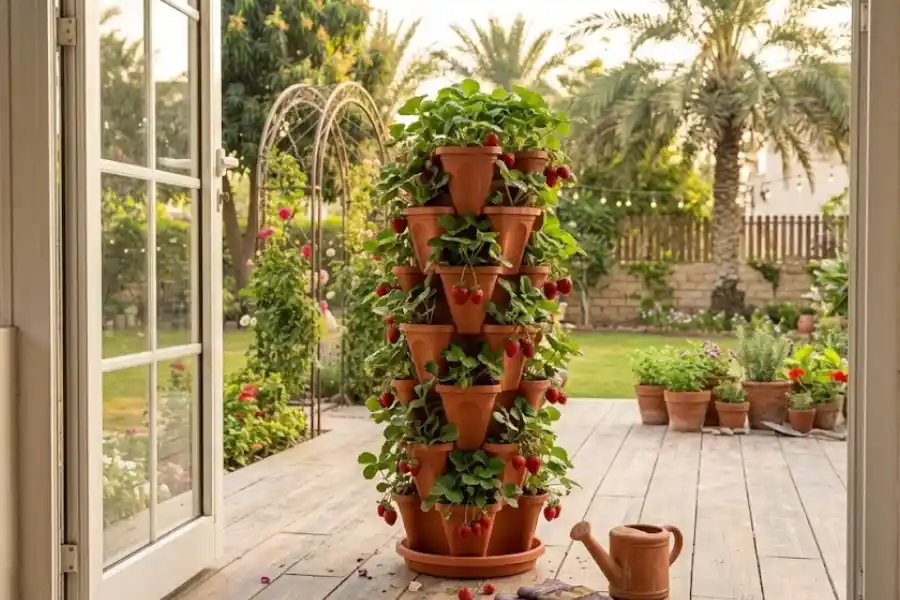
If your yard is small, or you only have a patio or balcony, you can still grow your own strawberries. A strawberry tower planter stacks pots on top of each other, so the plants grow up instead of out. One tower can hold ten, twenty, or even more strawberry plants in the same footprint as a single flower pot.
I started using one on my apartment balcony three summers ago, after I got tired of buying pale, half-ripe strawberries from the store. By the second season, I had more berries than my family could eat in a week, and I still only used about two square feet of floor space.
This post walks you through what this kind of planter is, which type fits your space, how to plant it, and how to keep it producing fruit all season. You’ll also find answers to the questions gardeners ask most.
What Is a Strawberry Tower Planter?
A strawberry tower planter is a tall container built with pockets or stacked layers along its sides and top. Instead of planting strawberries in one flat bed, you tuck them into openings that circle the tower from bottom to top. Water goes in at the top, and gravity carries it down through each layer, so every plant gets a drink.
Most towers stand between two and five feet tall. Some are made from stacked plastic pots with holes cut in the sides. Others are fabric grow bags with sewn-in pockets, or wooden barrel-style planters with side openings drilled into them. Whatever the material, the idea stays the same: use height, not width, to fit more plants into a small spot.
Why a Tower Planter Works So Well
A strawberry tower planter earns its spot on a patio for a few clear reasons.
- It fits tight spaces. A tower with twenty plants takes up the same floor space as one large pot.
- It keeps fruit off the ground. Strawberries grown flat often rot where they touch damp soil. A tower holds each berry up in the air, away from mud and standing water.
- It’s harder for slugs to reach. Slugs and snails have to climb the whole tower to reach fruit near the top, which many never manage.
- It gets more light. Because the plants ring the tower instead of sitting in one flat row, more leaves catch full sun through the day.
- It’s easier on your knees and back. A raised tower means you can pick berries standing up instead of bending over a low bed.
Types of Strawberry Planters to Fit Your Space
Garden shops and online stores sell a few common styles.
Stacked plastic pots: Round pots with side pockets, sized to snap or stack directly on top of each other. These are the most common, and usually the cheapest.
Fabric pocket towers: Tall felt or canvas bags with sewn-in pockets around the sides. They drain well and fold flat for winter storage, though they dry out faster in hot weather.
PVC pipe towers: A length of wide PVC pipe with holes drilled in a spiral pattern, then filled with soil. Many gardeners build these themselves for less than the cost of a store-bought version.
Wooden barrel planters: Barrel-shaped wood containers with holes cut into the sides. These look nice on a patio but weigh more and cost more up front.
Terracotta strawberry jars: Short, wide clay jars with pockets around the outside. They hold fewer plants than a full tower, but work well on a small table or step.
If you already grow other plants nearby, you might like pairing your tower with a tiered plant stand to show off potted herbs or flowers close by. And if this is one of your first attempts at growing your own food, our post on container garden ideas is a good place to pick up a few extra tips.
How to Pick the Right Planter for Your Space
Think through a few questions before you buy or build one.
- How much room do you have? A five-foot tower fits a corner of a yard, but a two-foot terracotta jar suits a small balcony rail or a step. If you’re still setting up your space, our post on starting a small balcony garden covers the basics of measuring and planning your layout.
- How much sun does that spot get? Strawberries need six or more hours of direct sun. Pick a spot first, then match the tower to it.
- Do you want a center watering tube? Some towers include a pipe with holes running down the middle, so you pour water in at the top and it reaches every layer without extra work. This costs a bit more but saves time later.
- Can you move it if needed? Wood and ceramic towers are heavy once filled with soil. If you may need to shift it for winter or bad weather, a plastic or fabric tower is easier to carry.
- What’s your budget? Plastic stacking towers usually cost the least. Wood and glazed ceramic cost more, but often last for many seasons.
How to Plant Strawberries in a Tower
Follow these steps to fill your tower and get your plants off to a good start.
- Pick a sunny spot. Set the empty tower where it will get at least six hours of sun, since moving it once it’s full of wet soil is hard.
- Add a layer of potting mix. Fill the bottom section with a light, well-draining potting mix made for containers, not heavy garden soil.
- Add plants at the lowest openings. Gently push the roots of a strawberry plant through the outside of each pocket, then pack soil around the roots from inside the tower.
- Keep filling and planting layer by layer. Add more soil, then plant the next ring of pockets, working your way up.
- Plant the top last. Once the tower is full, plant two or three strawberries directly in the open top.
- Water slowly from the top. Pour water in gently until it runs out of the drainage holes at the base, so every layer gets soaked.
- Check for gaps. Press soil down around any loose plants and top off with a bit more mix if the soil has settled.
Best Strawberry Varieties for a Tower Planter
Not every strawberry plant grows the same way, and some fit a tower better than others.
- Everbearing varieties, like Quinault or Ozark Beauty, give you two or three smaller harvests across spring, summer, and fall. This spread-out picking works well for a tower you walk past often.
- Day-neutral varieties, like Albion or Seascape, produce fruit steadily from late spring through fall, as long as temperatures stay mild. These suit anyone who wants a small, steady supply rather than one big harvest.
- June-bearing varieties, like Chandler or Earliglow, give one large harvest in early summer. They can still work in a tower, but you’ll get a big batch at once rather than fruit spread across the season.
- Alpine strawberries are smaller plants with tiny, sweet berries. They suit the top opening or upper pockets especially well, since they don’t spread as wide as standard strawberry plants.
Caring for Your Strawberry Tower
A strawberry tower planter needs a bit more attention than a plant sitting flat in the ground, mostly because it dries out faster.
- Water often. Check the soil in the top and middle sections daily during hot weather. Towers dry out faster than flat beds because water drains through several layers.
- Feed every few weeks. Use a fertilizer made for fruiting plants every two to four weeks during the growing season, following the amount listed on the package.
- Turn the tower now and then. If one side faces the sun more than the other, give the tower a quarter turn every week or two so all the plants get even light.
- Snip off runners. Strawberry plants send out long runners that try to root new plants. Cut these off unless you want to grow new plants, since runners pull energy away from fruit.
- Protect it in winter. In cold areas, move a lightweight tower into a garage or shed once temperatures drop below freezing, or wrap it in burlap if it must stay outside.
- Pair it with other edibles nearby. Many gardeners keep pots of mint, basil, or thyme close to a strawberry tower, since bees drawn to the herbs also help pollinate the berries. If you’d like ideas for that, our post on growing herbs on a balcony has a few good pairings.
Mistakes to Avoid With a Strawberry Tower
The first summer I grew strawberries in a tower, I planted three seedlings in every pocket because I wanted to fill the space fast. My berries came in small and pale that year, since the roots had no room to spread. The next year, I planted one seedling per pocket, and the fruit came in fuller and sweeter.
A few other habits cause more problems in a strawberry tower planter than anything else.
- Cramming too many plants into one pocket. One plant per pocket is usually enough.
- Using heavy garden soil. Garden soil packs down inside a tower and blocks drainage. Stick with a light potting mix made for containers.
- Letting the top layer dry out. Because water drains downward, the top section dries fastest. Check it first when you water.
- Placing the tower in part shade. Strawberries planted somewhere that gets less than six hours of sun rarely produce much fruit, no matter how good the tower is.
- Skipping drainage holes. A tower without enough drainage holes traps water at the base, which can rot the roots of the lowest plants.
- Forgetting to feed the plants. Because a tower holds less soil per plant than a garden bed, nutrients run out faster than most people expect.
Frequently Asked Questions
How many strawberry plants fit in a tower planter?
Most home towers hold between ten and thirty plants, depending on height and the number of pockets. A five-foot tower with six rows of pockets can often fit twenty-five plants or more.
Can a strawberry tower grow indoors?
A small tower can grow indoors near a bright, south-facing window, though most homes don’t get the six-plus hours of direct sun that strawberries need. A grow light aimed at the tower for a few hours each day makes indoor growing far more reliable.
How long do strawberry plants in a tower last?
Most strawberry plants stay productive for three to five years before they need to be replaced. Everbearing and day-neutral types often slow down sooner than June-bearing types, so check plant tags for the expected lifespan.
Is a strawberry tower hard to build myself?
A basic PVC pipe tower takes most people an afternoon to build, using a length of pipe, a drill, and potting mix. Store-bought stacking towers need no building at all, just assembly straight out of the box.
What is the best material for a strawberry tower planter?
Plastic towers are light, cheap, and easy to move, which suits renters or anyone who may need to shift the tower later. Wood and ceramic towers cost more and weigh more, but often last longer and hold moisture more evenly.
Ready to Start Your Own Strawberry Tower
A strawberry tower planter turns a few square feet of balcony, patio, or yard into a real strawberry patch. Pick a tower that matches your space and budget, fill it with a light potting mix, and give it plenty of sun and water. By next season, you could be picking a handful of ripe strawberries every few days, right outside your door.