Rustic Outdoor Garden Display Shelves: 9 Ideas That Last
A plain garden can look flat. Pots sit on the ground. Tools pile up in a corner. Pretty plants get lost in the grass.
Rustic outdoor garden display shelves fix all of that. They lift your plants to eye level. They give every pot a home. They also add a warm, weathered look that fits right in with nature.
But many shelves fall apart after one rainy season. Some tip over in the wind. Others rot at the feet. This article shows you how to pick, place, and protect your shelves so they last. You will get nine ideas, an easy way to check weight, and a care plan you can follow.
Quick answer: The best rustic outdoor garden display shelves are made from cedar, redwood, or well-sealed fir, with coated or sealed metal parts. Keep the feet off the ground. Leave 10 to 14 inches between tiers. Plan for twice the weight you expect.
What Makes Rustic Outdoor Garden Display Shelves Different?
Rustic means natural, simple, and a little rough. Think of visible wood grain, iron brackets, and worn paint. The look is not perfect, and that is the point.
Outdoor ready means something else. The shelf has to handle rain, sun, wind, and frost. The best rustic outdoor garden display shelves do both jobs. They look old and weathered, but they are built to stay strong.
Here is the key idea. Rustic is the style. Weatherproof is the build. You need both.
Pick a Material That Can Handle the Weather
Material decides how long your rustic outdoor garden display shelves will last. Here are the best choices.
Wood Options
- Cedar: It naturally fights rot and bugs. It is light and easy to cut. Over time, it fades to a soft silver-gray.
- Redwood: It is strong and resists rot well. It costs more, but it lasts a long time.
- Pressure-treated pine: It is cheap and tough against rot. It works well for legs and frames. Let it dry fully before you stain it.
- Fir: It is a good budget pick. It needs a good sealer to hold up outside.
- Reclaimed wood: Old barn boards and fence pickets give the best rustic look. Check each board for rot and old nails first.
Metal Options
- Wrought iron or steel: Strong enough for heavy pots. A powder-coated finish slows rust.
- Galvanized metal: It has a zinc coat that fights rust. It gives a clean, farmhouse feel.
- Raw steel: It rusts fast and can stain your patio. If you love the rusty look, seal it with a clear coat.
A great mix is a thick wood plank with black metal brackets. It looks classic, and the metal adds strength where the shelf needs it most.
Safety note: Pressure-treated wood made before 2004 may contain arsenic. Do not reuse old treated boards for shelves near herbs or vegetables.
9 Rustic Outdoor Garden Display Shelves Ideas You Can Copy
Each of these rustic outdoor garden display shelves works in a small yard or a big one. Pick the one that fits your space and your skill level.
1. The Leaning Ladder Shelf
This shelf leans on a fence or wall. The steps hold pots at different heights. It is perfect for small patios because it uses vertical space. Make sure the base cannot slide, and keep the angle steady.
2. The Wall-Mounted Plank and Bracket Shelf
Use a thick board and two iron brackets. Mount it on a shed, fence, or house wall. Screw into studs or use masonry anchors on brick. This is the easiest way to add display space without using floor space.
3. The Upright Pallet Shelf
Stand a pallet on its side and add a solid back. The slats become natural shelves. Look for the HT stamp, which means heat treated. Avoid pallets marked MB, because that means they were treated with a harsh chemical.
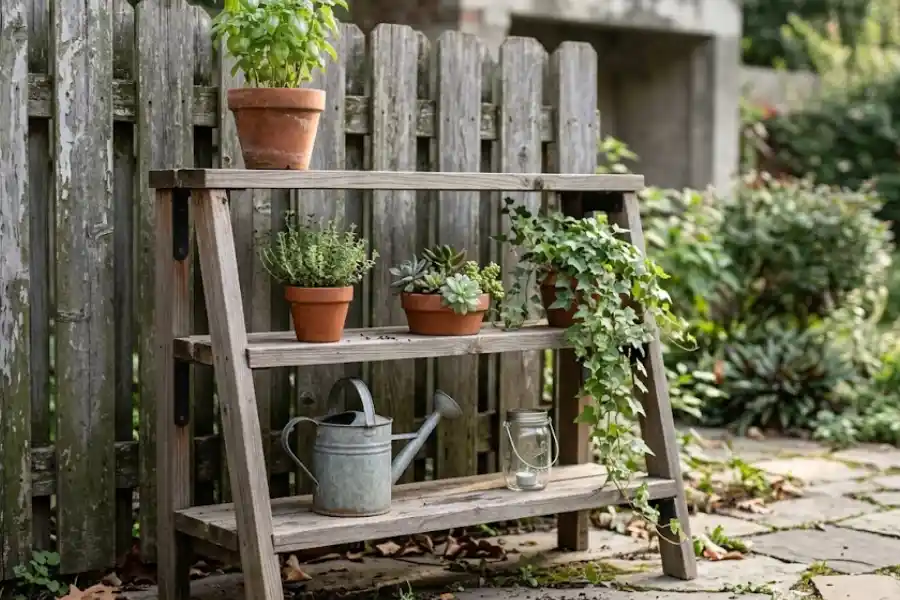
4. The Tiered A-Frame Plant Stand
This tiered plant stand steps back like a staircase. Every level gets sun. It stands on its own, so you can move it as the seasons change. Succulents and herbs look great on it.
5. The Potting Bench With a Display Shelf
You get a work table on the bottom and a shelf on top. Pot up your plants below, then show them off above. It is a smart pick if you want one piece that does two jobs.
6. The Stacked Crate Shelf
Turn wooden crates on their sides and stack them. Screw them together so they stay put. The open boxes hold small pots, jars, and garden finds. It is cheap, quick, and full of character.
7. The Corner Shelf
Corners are often empty. A triangle shelf or a tall corner stand fills the gap. It tucks plants away from foot traffic and makes a cozy nook.
8. The Shelf With a Small Roof
A slanted roof sends rain away from your plants and wood. It protects the shelf and keeps soil from washing out. This style is great for rainy areas and for plants that hate wet leaves.
9. The Hanging Rope Shelf
Hang a board from thick rope or chain. Tie it to a pergola, a tree branch, or a porch beam. It looks soft and charming. Keep the load light, and test the strength before you add pots.
How to Choose the Right Size and Spot
Where you put rustic outdoor garden display shelves matters as much as what they are made of. Use these simple rules.
- Match the light: Succulents and most herbs love 6 or more hours of sun. Ferns and hostas like shade. Put sun lovers on top and shade lovers below. Not sure what to grow on the lower tiers? See these garden plants for shade.
- Measure your pots: Leave 10 to 14 inches between tiers for most pots. Small herbs and succulents need only 8 to 10 inches. A shelf depth of 8 to 12 inches fits most pots.
- Find level ground: A tilted shelf will lean and may fall. Set it on pavers, gravel, or a deck. This also keeps the feet dry.
- Think about wind: Tall, narrow shelves can tip over. Anchor them to a wall or fence with a strap or an L-bracket. Put the heaviest pots on the bottom.
- Leave room to work: You need space to water, prune, and move pots. Keep at least 2 feet clear in front.
How Much Weight Can Your Shelf Hold?
Most people forget this part. Wet soil is heavy. One gallon of water weighs about 8 pounds. Rain makes pots even heavier.
Here are rough weights for planted pots with damp soil.
- A 4-inch pot weighs about 1 to 2 pounds.
- A 10-inch pot weighs about 10 to 15 pounds.
- A 14-inch pot can weigh 30 to 50 pounds.
Add up the weight on each shelf. Then double it. That gives you a safe load. If a store listing does not show a weight limit, ask before you buy. For wall shelves, always screw into studs or use the right anchors for brick or concrete.
What to Put on Your Rustic Outdoor Garden Display Shelves
Plants are the star, but they are not the only choice. A mix of items makes the display feel full and fun.
- Herbs: Basil, mint, thyme, and chives are easy and useful. Mint spreads fast, so give each herb its own pot. For more ideas, see these herb garden pots.
- Succulents: They need little water and look great in clay pots.
- Trailing plants: Ivy and string of pearls spill over the edge in a pretty way.
- Lanterns and solar lights: Mason jars with small lights glow at night.
- Vintage finds: Old watering cans, bird houses, and enamel pots add charm.
- Garden tools: A clean trowel and a pair of gloves make the shelf feel real and lived in.
Here is a simple styling trick. Group items in threes. Mix tall, medium, and short pieces. Repeat one color, like terracotta or white, so the shelf feels calm and not messy.
How to Make Your Shelves Last for Years
A little care keeps rustic outdoor garden display shelves strong. Follow these steps when you build or buy.
- Seal every side. Coat the top, bottom, and cut ends. Water soaks in fastest through the ends of the boards.
- Use an outdoor finish. Exterior stain, penetrating oil, or spar urethane all work well. Indoor paint will peel, so use outdoor garden furniture paint if you want color.
- Choose rust-proof screws. Stainless steel or coated screws will not leave black stains on the wood.
- Lift the feet. Set the shelf on pavers or add small plastic feet. Wood that sits in wet dirt will rot.
- Use saucers. They catch dirty water so it does not run down the boards.
- Reseal on a schedule. Check the finish once a year. Most shelves need a fresh coat every 1 to 2 years.
- Protect it in winter. Move the shelf under cover, or use a breathable cover. Do not wrap it in plastic, because trapped moisture can cause mold.
Pro tip: Do you like the gray, aged look of old wood? You can skip the stain and let cedar fade on its own. Just add a clear water-repellent sealer so it does not crack.
Buy or Build: Which Is Better?
You can buy rustic outdoor garden display shelves or build them. Both are good choices.
Build It If
- You want a custom size.
- You have scrap wood or old fence boards.
- You enjoy simple projects. A basic three-tier shelf is often a one-afternoon job.
Buy It If
- You are short on time or tools.
- You want a folding shelf or one with a roof already attached.
- You need a clean, finished look right away.
What to Check Before You Buy
- A listed weight limit for each shelf.
- Solid wood or metal, not thin pressed board.
- A weather-resistant finish, plus rust-resistant hardware.
- Clear care instructions.
Watch out for the words “indoor and outdoor.” On many products, this only means a covered porch. It may not survive rain and frost. If the listing does not say it is weatherproof, treat it as a covered-space shelf only.
7 Mistakes That Ruin Garden Shelves
Most problems with rustic outdoor garden display shelves come from a few simple errors.
- Skipping the sealer. Raw wood drinks water and splits.
- Building too tall. Tall shelves tip in strong wind. Keep them wide at the base or anchor them.
- Forgetting the weight. Wet pots can bend thin boards.
- Placing wood on bare soil. Wet ground causes rot at the feet.
- Using weak screws. Cheap screws rust and snap.
- Ignoring sun and shade. A shade plant on a sunny top shelf will burn.
- Overcrowding. Too many pots block airflow and invite mold and bugs.
Frequently Asked Questions
Can rustic outdoor garden display shelves stay outside all winter?
It depends on the build. Cedar, redwood, and coated metal often handle a mild winter well. In places with heavy snow, ice, or long freezes, it is safer to move the shelf under cover. Always empty the pots first, since frozen soil can crack both pots and wood.
What is the best wood for rustic outdoor garden display shelves?
Cedar and redwood are the top picks because they resist rot on their own. Pressure-treated pine is a strong, low-cost option for frames and legs. Whatever you choose, a good outdoor sealer will extend its life.
How do I make new wood look rustic fast?
You can rough up the surface with a wire brush to show the grain. Then apply a gray or brown wash stain. Light sanding on the edges adds a worn look. Finish with an outdoor sealer to protect it.
Will metal shelves rust outside?
Raw steel will rust. Powder-coated and galvanized metal resist it much longer. If you want a rusty look without the stains, brush on a clear sealer once the rust forms.
How high should I hang a wall shelf?
Hang it so the plants sit at eye level or just below. For most people, that is about 4 to 5 feet from the ground. Keep it away from walkways so no one bumps their head.
Can I use these shelves for vegetables and herbs?
Yes. Herbs and small salad greens grow well on shelves. Use new or food-safe wood, and avoid old treated boards. Make sure the shelf gets enough sun for the plants you pick.
Final Thoughts
Rustic outdoor garden display shelves do more than hold pots. They bring order to a messy corner. They show off your favorite plants. They give your yard a warm, lived-in feel.
The recipe is simple. Pick strong, weather-ready materials. Place the shelf on level ground in the right light. Respect the weight limit. Seal the wood and check it each year. Do these four things, and your rustic outdoor garden display shelves will look better with every season.
Start small. Build or buy one shelf, fill it with a few plants and a lantern, and see how it changes the space. Then add more as your garden grows.