Black Garden Rocks: 5 Types, Creative Ideas, Real Costs, and the One Mistake to Avoid
Black garden rocks can change the way your yard looks. Instantly. You add them in, and suddenly your garden has that clean, modern feel. Your plants pop against the dark background. Your flower beds look sharp and well-kept. It is the kind of upgrade that makes the neighbors stop and stare.
But here is the thing. A lot of people rush in, buy a few bags of black rocks, dump them around their plants, and then wonder why their garden starts looking sad two months later. There is a real reason for that, and we will get to it shortly.
This article covers everything. Types of black garden rocks, creative ideas, what they cost, which plants work best with them, how to install them properly, and yes, the one mistake that most gardening websites never talk about.
What Are Black Garden Rocks?
Black garden rocks are decorative stones used in outdoor spaces. They can be small pebbles or large boulders. They come in different textures and shapes. Some are smooth and shiny. Others are rough and jagged. You use them in flower beds, pathways, borders, water features, and more.
They are popular for one main reason. The dark color creates strong contrast. Against green plants or bright flowers, black rocks make everything else stand out. Your garden feels more alive and vibrant when you add them in the right spots.
5 Types of Black Garden Rocks (And What Each One Is Best For)
Not all black rocks are the same. Each type has its own look, feel, and best use. Here are the most common ones you will find at garden centers and landscape supply yards across the USA.
Black Lava Rock
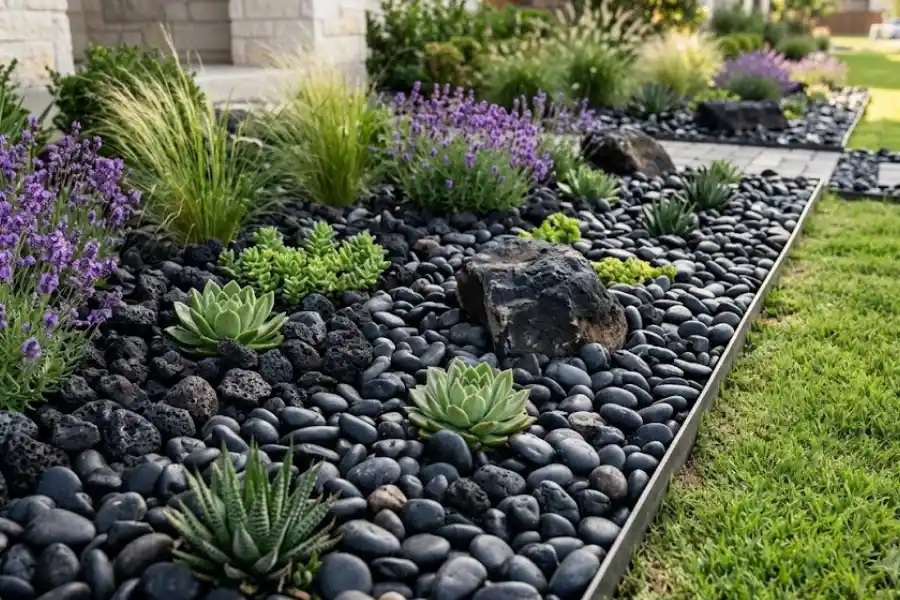
Lava rock is light in weight. It is full of tiny holes and has a rough, bumpy texture. It comes from real volcanic rock. Because it is porous, it drains water well. That makes it great for succulents, cacti, and other plants that do not like sitting in wet soil. It is also one of the most affordable types of black garden rock you can buy.
Black Polished Pebbles
These are smooth, shiny, and round. They have a glossy finish that gives any space a sleek, modern look. You will often see them in water features, around fountains, and in contemporary garden designs. They are beautiful up close and cost a bit more than lava rock.
Black Granite Chips
Granite chips are tough. They have sharp edges and are quite compact. They hold up well in high-traffic areas like driveways and walkways. The color is a deep black with a subtle matte finish. They are heavy, which means they stay in place and do not blow around in the wind.
Black River Rocks
River rocks are smooth and rounded because water shaped them over thousands of years. They come in different sizes. Small ones are perfect for garden beds and borders. Larger ones work great as accent pieces or for dry creek beds. They have a very natural look that fits into almost any garden style.
Black Slate Chips
Slate chips are flat and angular. They have a sleek, almost metallic look when wet. They work well in modern or Japanese-inspired garden designs. They can overlap slightly, creating a layered, interesting texture on the ground.
6 Real Benefits of Using Black Rocks in Your Garden
People love black garden rocks for very good reasons. Here is what they really do for your yard when used correctly.
- They block weeds. When you lay rocks over a weed barrier fabric, sunlight cannot reach the soil below. No sunlight means no weed growth. You spend less time pulling weeds and more time enjoying your yard.
- They last for years. Black rocks do not rot or break down like wood mulch does. You lay them once, and they keep looking good for a long time. That is a big win for busy homeowners.
- They look sharp all year long. Unlike mulch that fades or plants that die back in winter, black rocks keep your garden looking neat in every single season.
- They stop soil erosion. Heavy rain can wash your soil away, especially on slopes. Rocks hold the soil in place much better than mulch ever could.
- They make colors pop. Dark rocks create a bold background. Your red roses, purple lavender, and bright green ferns will look twice as vibrant against black stones.
- They are low maintenance. A quick rinse with a garden hose a couple of times a year is usually all they need to stay looking great.
The Heat Warning Most Garden Websites Skip
Here is the part most guides leave out. And this is the part that matters most in this whole article.
Black absorbs heat. That is basic science. When the summer sun hits your black garden rocks all day, they soak up that heat and hold it. Then they release it slowly, even after the sun goes down. This raises the soil temperature around your plants to levels that can be seriously harmful.
In fact, dark landscaping rocks can reach temperatures between 140 and 170 degrees Fahrenheit on a hot summer day. That is hot enough to stress plant roots and dry out the soil much faster than normal.
Signs of heat stress in your plants include wilting leaves, leaf rolling, dry brown tips, and slow or stunted growth. If you use black rocks in a sunny spot and you start seeing these signs, the rocks are likely the problem.
So does that mean you should avoid black rocks entirely? Not at all. You just need to use them in the right way.
- Use black rocks in shaded or partially shaded areas where direct sun is limited.
- Pair them with drought-tolerant and heat-resistant plants like succulents, ornamental grasses, lavender, and sedums.
- Avoid placing them directly around plants that need cool, moist soil in full sun areas.
- If you use them in sunny spots, water your plants more frequently than you normally would.
Knowing this one thing will save your plants and save you a lot of frustration. Most people only figure it out after their plants start struggling.
8 Creative Ways to Use Black Garden Rocks
Once you know the rules, the possibilities are exciting. Here are some ideas that work beautifully in real yards.
1. Modern Garden Bed Borders
Use black rocks to create a clean edge around your flower beds. It gives the whole garden a polished, professional look. You can pair them with steel or stone edging for an even sharper finish. This is one of the easiest upgrades you can make to your front yard.
2. Dry Creek Bed
You do not need a real stream to make this work. Lay out a winding path of black river rocks and larger boulders to create a dry creek bed. It looks completely natural, handles water drainage beautifully, and adds real visual interest to a plain yard.
3. Zen or Meditation Garden
Black rocks are perfect for Zen gardens. Pair them with sand, a few large stones, minimal plants, and a peaceful wood outdoor garden bench to sit on. The result is calm, simple, and striking.It is one of the most impressive garden styles you can create with very little effort.
4. Pathway with Stepping Stones
Lay a bed of small black rock gravel and place stepping stones through the middle. It creates a simple but eye-catching garden path. You can use flat stones, wood slabs, or decorative tiles as the steps.
5. Black and White Rock Contrast Design
This is one of the boldest design choices you can make in your yard. Use metal edging to separate sections of black rocks and white rocks in geometric patterns or sweeping curves. Add a few trimmed shrubs in between, and your front yard will look like something out of a home design magazine.
6. Water Feature Surround
Place black polished pebbles around a fountain, bird bath, or small pond. The dark stones make the shimmer of moving water really come alive. Add some soft outdoor lighting at night and the effect is genuinely stunning.
7. Rock Mulch Around Trees
Instead of wood mulch, use black rocks around the base of trees and large shrubs. They suppress weeds, retain some moisture, and look clean and tidy. Just make sure you do not pile rocks directly against the tree trunk, as that can cause rot.
8. Container Garden Display Base
Place a layer of black rocks under your outdoor planters, such as a row of sleek white outdoor garden pots, or across a patio area. It keeps the pots from sitting in pooled water, improves drainage, and makes even a small patio look intentional and designed rather than cluttered.
How to Install Black Garden Rocks the Right Way
Getting this right from the start saves you a lot of headaches later. Follow these steps and your black rock garden will look great for years.
- Clear the area first. Remove all existing grass, weeds, and debris. The cleaner your starting point, the better the end result will look.
- Level the ground. Make sure the surface is even. This helps water drain properly and keeps your rocks looking uniform across the whole area.
- Lay a weed barrier fabric. This is not optional. Use commercial-grade woven geotextile fabric, not cheap black plastic sheeting. Plastic sheeting traps moisture, blocks airflow, and can harm your plant roots. Overlap the fabric seams by at least 6 inches and pin it down every 12 inches.
- Add edging. Steel, stone, or plastic edging will keep your rocks from spreading into your lawn. Without edging, rocks creep into the grass over time, pushed by foot traffic and frost.
- Spread the rocks at the right depth. For most garden uses, 2 to 3 inches works well. For strong weed suppression, go for 3 to 4 inches. For dry creek beds, 4 to 6 inches gives the best look and function.
- Rinse and enjoy. Give the rocks a good rinse with a garden hose right after installation. This removes dust and brings out the true depth of the black color.
How Much Do Black Garden Rocks Cost?
Cost depends on the type of rock, the quantity you need, and where you buy from. Here is a quick look at current USA market prices.
- Black lava rock: Around $80 to $240 per ton in bulk. In store bags at places like Home Depot or Lowe’s, expect to pay about $20 to $50 per bag.
- Black polished pebbles: These are pricier. Premium Mexican beach pebbles run $475 to $800 per ton. Smaller bags are typically $25 to $60 each.
- Black granite chips: Around $75 to $100 per ton. Very cost-effective for covering large areas.
- Black river rocks: Generally $45 to $130 per ton when bought in bulk.
Here is a money tip most people do not know. Buying in bulk is almost always much cheaper. Bagged rocks from home improvement stores cost 3 to 5 times more per ton than bulk delivery from a local landscape supplier. For any project covering more than around 100 square feet, look into bulk delivery. The delivery fee is usually $50 to $150, and the savings on material costs more than cover it.
For small projects like a single garden bed or a decorative feature, bags from Home Depot or Lowe’s are perfectly fine and much more convenient than a bulk order.
The Best Plants to Pair with Black Garden Rocks
This is something most articles completely skip, and it makes a huge difference in how your garden turns out. Because black rocks absorb and hold heat, not every plant is a good match for them.
Plants that work great with black rocks:
- Succulents and cacti: They thrive in dry, warm conditions. Black rocks are a perfect match for them.
- Ornamental grasses: Tough, drought-tolerant, and they look stunning when the blades sway above a bed of dark stones.
- Lavender: Loves heat and well-drained soil. It is a natural pairing with black rocks.
- Sedum: A heat-tolerant ground cover that looks beautiful spreading naturally over dark stone beds.
- Agave and aloe: Bold, dramatic plants that pop beautifully against a black background.
- Dusty Miller: The silver-white leaves create a striking contrast that looks amazing against dark rocks.
Plants to keep away from black rocks in full sun areas:
- Hostas: They prefer cool, moist conditions. Black rocks in a sunny spot will stress them quickly.
- Impatiens: These are heat-sensitive flowers that need consistent soil moisture.
- Ferns: Most ferns need cool, shaded soil to thrive. Avoid black rocks around ferns in sun-exposed areas.
- Vegetable plants: Most vegetables need stable, moderate soil temperatures to produce well. Black rocks can overheat the root zone and hurt your harvest.
How to Keep Your Black Garden Rocks Looking Great
Black rocks are genuinely low maintenance. But they do need a little care now and then to stay looking sharp.
- Rinse them down with a garden hose a couple of times a year. Dust and dirt build up over time and can dull the color noticeably.
- Remove leaves and debris that gather on top of the rocks. A leaf blower on a low setting works perfectly for this.
- Pull the occasional weed that manages to push through. Even with good landscape fabric in place, a few stubborn weeds can appear, especially near edges.
- Apply a stone sealer to polished black pebbles once a year if you want to maintain that glossy finish. This is optional but makes a real difference in appearance over time as the sun breaks down the surface shine.
- Top up thin areas. Rocks can settle or shift over time. Add a fresh thin layer whenever any spots start to look sparse.
Frequently Asked Questions
Are black garden rocks bad for plants?
Not if you use them in the right spots. Black rocks absorb heat, which can stress plants in hot, sunny areas. But in shaded locations or with heat-tolerant plants like succulents and ornamental grasses, they work wonderfully. Match the rock to the right location and the right plant, and you will not have any problems.
Do black rocks fade over time?
Polished black pebbles can lose some of their shine after years of sun exposure. Using a stone sealer once a year helps preserve the color and gloss. Natural black lava rocks and granite chips tend to hold their dark color much better over time without any extra treatment needed.
How deep should I lay black garden rocks?
For decorative ground cover, 2 to 3 inches is ideal. For effective weed suppression, aim for 3 to 4 inches. For dry creek beds or drainage features, use 4 to 6 inches. Anything less than 2 inches will not do a good job of blocking weeds.
Do I need landscape fabric under black rocks?
Yes, absolutely. Without landscape fabric, weeds will grow right through your rocks within a season or two. Once weeds get established in a rock bed, they are very hard to remove. Always use commercial-grade woven geotextile fabric. Avoid cheap plastic sheeting, as it blocks air and water movement and can damage your soil and plant roots over time.
Where can I buy black garden rocks near me?
You can find them at Home Depot, Lowe’s, and most local garden centers. For bulk orders and better pricing, contact a local landscape supply yard in your area. You can also find specialty stones through online retailers. If you order online, always check reviews carefully and confirm the color, since photos can sometimes make rocks look darker or shinier than they truly are in person.
How many bags of black rocks do I need for my garden?
Measure your area in square feet first. A standard 50-pound bag typically covers about 3 to 5 square feet at a 2-inch depth. For larger projects, one ton of rock in bulk covers roughly 55 to 135 square feet depending on the rock type and how deep you go. For any area over 100 square feet, bulk delivery will almost certainly save you money compared to buying bags.
Final Thoughts
Black garden rocks are one of the smartest upgrades you can make to your outdoor space. They are beautiful, durable, low maintenance, and incredibly versatile. When you use them the right way, they can completely change how your garden looks and feels from one season to the next.
The most important thing to take away from this guide is the heat factor. Match your rocks to the right location and the right plants. Use them in shaded areas or pair them with drought-tolerant plants that can handle warm soil. Always lay them over good quality landscape fabric. Give them an occasional rinse to keep them looking their best.
Do all of that, and your black rock garden will be something you are genuinely proud of for many years to come.