Outdoor Loveseat: How to Pick One That Lasts
You want a cozy spot outside. A place to sit with someone you like. Maybe coffee in the morning. Maybe wine at night. That is what a good outdoor loveseat gives you.
But here is the problem. Walk into any store, or scroll any website, and you will see hundreds of choices. Wicker. Metal. Wood. Big ones. Small ones. Cheap ones that fall apart in a year. Expensive ones that just sit there looking fancy.
This article cuts through all of that noise. I will show you exactly what to look for, what to skip, and how to pick a piece that still looks good five summers from now.
What Is an Outdoor Loveseat?
An outdoor loveseat is a small sofa made for two people. It is built for patios, decks, porches, and balconies. Unlike your indoor couch, it can handle rain, sun, and wind without falling apart.
Think of it as a mini version of your living room sofa, just tougher. The frame resists rust or rot. The cushions dry fast or repel water completely. That is the whole point.
Why an Outdoor Loveseat Beats a Regular Bench or Chairs
A lot of people default to two chairs or a plain bench. That works, but it misses something.
- It saves space compared to a full outdoor sofa
- It fits two people close together, which chairs do not
- It looks more finished and intentional than mismatched chairs
- It works alone or paired with a larger patio set, complementing individual seating like a classic outdoor rocking chair on the porch.
If your patio or balcony is small, a loveseat often makes more sense than a full sectional. You still get comfort, without eating up your whole outdoor space.
Types of Outdoor Loveseats (And Which One Fits You)
Most patio loveseat options fall into a few main categories. Each one has real trade-offs. Here is what each one offers, in plain terms.
1. Wicker or Rattan
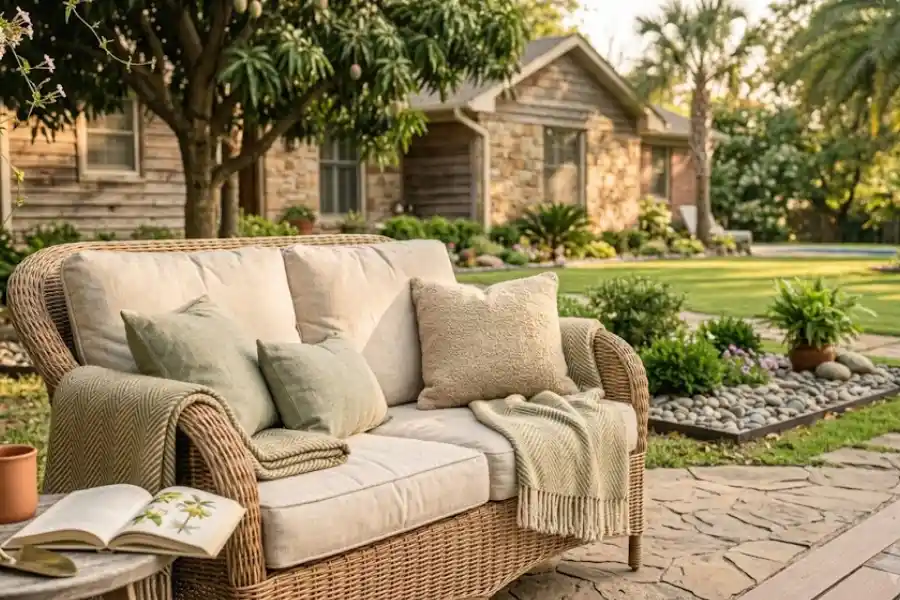
An all-weather wicker loveseat is the most popular pick right now. It looks warm and natural. It handles sun and rain well if it is made from synthetic PE wicker, not natural rattan. Natural rattan looks nice indoors but breaks down fast outside.
2. Metal (Aluminum or Steel)
Aluminum is light, rust-resistant, and easy to move around. Steel is heavier and sturdier but can rust over time unless it has a strong powder coating. Metal frames often come with a sleek, modern look.
3. Wood (Teak, Acacia, Eucalyptus)
Teak is the gold standard. It naturally resists rot and insects, even without much care. Acacia and eucalyptus cost less but need yearly oiling to stay strong. Wood gives that classic, warm patio feel.
4. HDPE Plastic
This is heavy-duty recycled plastic, made to look like painted wood. It will not crack, fade much, or rot. It is a smart, low-maintenance option, especially for humid or rainy climates.
How to Choose the Right Outdoor Loveseat
Do not just pick the one that looks best in a photo. Photos hide a lot. Check these things instead.
- Measure your space first. Most loveseats are 45 to 55 inches wide. Measure your patio or porch before you fall in love with a design.
- Check the cushion fabric. Look for solution-dyed acrylic or olefin fabric. These resist fading and mildew far better than regular polyester.
- Look at the frame joints. Welded metal joints last longer than screwed ones. Screws loosen over time from constant weather exposure.
- Ask about weight capacity. A good loveseat should hold at least 500 pounds combined for two adults, safely.
- Think about storage. If you live somewhere with harsh winters, lighter frames are easier to store away each season.
Outdoor Loveseat Set vs a Single Piece
You will often see an outdoor loveseat set, which pairs the loveseat with a coffee table or extra chairs. This is a smart move if you are furnishing a patio from scratch. Buying a matched set usually costs less than buying pieces separately, and everything is guaranteed to match in color and material.
But if you already have a table or chairs, a single loveseat gives you more freedom. You are not stuck matching a whole collection. You just add one comfortable piece where you need it.
Where to Place Your Outdoor Loveseat
Placement matters more than people think. A loveseat tucked in the wrong spot gets ignored. Here is where it works best:
- Against a covered porch wall, shielded from direct rain
- Near a fire pit or outdoor heater for cooler evenings
- Facing a garden view or a clean river rock landscaping feature that serves as a relaxing backyard focal point.
- On a small balcony, paired with one side table
Small space patio furniture works best when it has a clear purpose. Do not just place it in a random corner. Give it a reason to be there, like a view, a light source, or a conversation spot.
Caring for Your Outdoor Loveseat
A cheap loveseat with good care can outlast an expensive one with no care. Maintenance is not hard. It just needs to be consistent.
- Wipe the frame monthly with mild soap and water
- Air-dry cushions after rain instead of leaving them damp
- Use a breathable outdoor cover during long dry spells
- Bring cushions indoors during winter, if possible
- Oil wood frames once a year to prevent cracking
I have tested and reviewed outdoor furniture for over eight years, and the single biggest mistake I see is people ignoring the cushion fabric. The frame usually survives fine. The cushions are what fail first, and cheap fabric can mold within one rainy season.
Common Mistakes People Make
- Buying based on looks alone, without checking the frame material
- Ignoring weight limits, which shortens the lifespan fast
- Leaving cushions out all winter in wet climates
- Choosing a size too big for the actual patio space
- Skipping reviews from real buyers, not just the product photos
Frequently Asked Questions
Is an outdoor loveseat worth it for a small balcony?
Yes. A compact loveseat, around 45 inches wide, fits most balconies while still giving two people a real place to sit together.
Can I leave my patio loveseat outside all year?
It depends on the material. HDPE plastic and treated aluminum can usually stay outside year-round. Wood and wicker last longer with a cover or seasonal storage.
What is the most durable material for an outdoor loveseat?
Teak wood and HDPE plastic are the two most durable choices. Both resist rot, insects, and heavy weather with very little upkeep.
How much should I spend on a good outdoor loveseat?
A solid, long-lasting option usually falls between 300 and 700 dollars. Anything much cheaper often means thin cushions or weak frame joints.
Final Thoughts
Choosing an outdoor loveseat does not need to be complicated. Pick a material that fits your climate, check the frame and fabric quality, and measure your space before you buy. Do that, and you will end up with a spot you truly want to sit in, season after season.