3×3 Garden: How to Plant, Build, and Grow in a Small Space
You searched “3×3 garden” and got a strange mix of results. A garden game. A watering kit. A raised bed on Amazon. That mix is confusing, and it means most articles on this topic try to cover everything and end up explaining nothing well. This article is different. It focuses on the meaning most people want: a 3 feet by 3 feet raised garden bed, and how to plan, build, and plant one that works.
By the end, you will know if a 3×3 garden is big enough for you, what to plant in it, how to build one in a weekend, and the mistakes that trip up almost every first-time gardener.
What Is a 3×3 Garden?
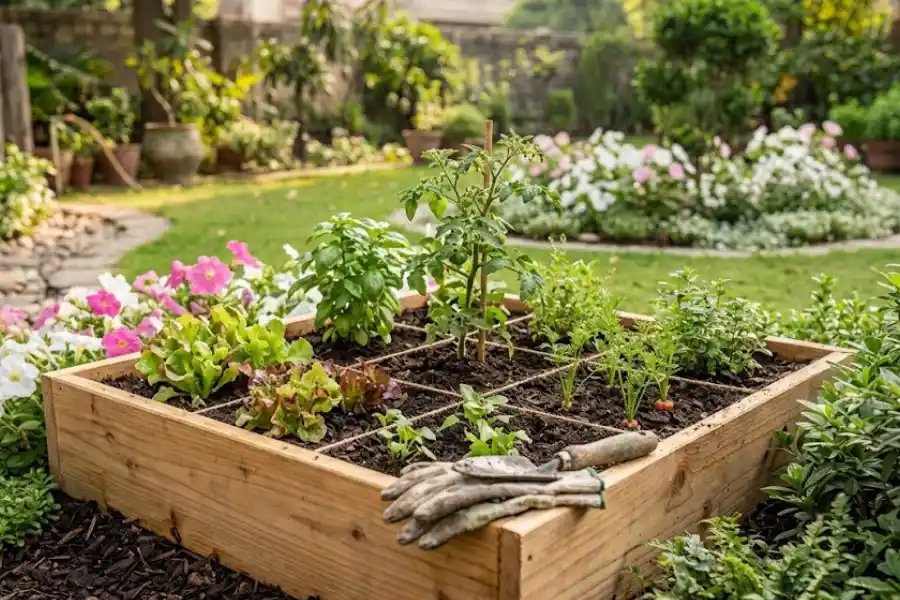
A 3×3 garden is a raised garden bed that measures three feet on each side. That gives you nine square feet of growing space. Most gardeners divide that space into nine smaller one-foot squares, using a method called square foot gardening. Each square holds its own crop, so instead of messy rows, you get a neat grid that is easy to plan and easy to manage.
Quick note: if you landed here looking for the multiplication learning game with the same name, or for a 3×3 outdoor shed, this article is not that. This one is about growing real vegetables and herbs in a small space.
Is a 3×3 Garden Big Enough?
Yes, for most beginners it is. Here is why.
The standard square foot garden size is 4×4 feet, which gives sixteen squares. A 3×3 bed gives you nine. That is fewer plants, but it comes with real advantages. A 3×3 bed is small enough to reach into from every side without ever stepping on the soil. That matters more than people expect, because stepping on garden soil packs it down and hurts root growth.
Nine square feet does not sound like much. But planted well, it can grow salad greens, herbs, peppers, and even a tomato plant, all at the same time, in a space smaller than a parking spot.
A 3×3 garden is a smart choice if any of these sound like you:
- You are gardening for the first time and want to start small
- You are building the bed with kids, since a smaller size is easier for short arms to reach
- You only have a patio or small yard corner
- You want to test a spot before committing to a bigger garden
If you have a large yard and want to grow enough vegetables to feed a family through summer, you will likely outgrow a 3×3 bed fast. In that case, two or three of them side by side often works better than one giant bed. And if a yard is not an option at all, it is worth reading up on how to make a small balcony garden work, since sun exposure and watering both behave a little differently up on a balcony than they do in a raised bed on the ground.
How Many Plants Fit in a 3×3 Garden?
This depends on the size of the plant at full growth, not the size of the seed. Square foot gardening solves this with a simple rule: bigger plants get their own square, smaller plants share.
- One per square: tomatoes, peppers, kale, broccoli, and eggplant
- Four per square: lettuce, basil, Swiss chard, and most herbs
- Nine per square: carrots, beets, onions, and spinach
- Sixteen per square: radishes
With nine total squares in a 3×3 bed, you can mix and match. For example, two squares of tomatoes, one square of basil, two squares of lettuce, and four squares of root vegetables like carrots and radishes. That single small bed can hold well over thirty plants once you count the crops that share a square.
Best Plants for a 3×3 Garden
Some plants are simply a better fit for a small bed than others. Here are strong picks for a first 3×3 garden, grouped by how much space they need.
Great for small spaces
- Lettuce and salad greens
- Bush beans
- Peppers
- Basil, thyme, and other herbs
- Carrots and beets
- Cherry tomatoes (with a stake or small cage)
Plants to skip or grow with caution
- Full-size winter squash and pumpkins, since their vines can take over the whole bed
- Corn, since it needs several plants together to pollinate well and takes up too much room
- Sprawling melons, unless you plan to grow them up a trellis
If you love a space-hungry plant like squash or cucumbers, grow them vertically on an arched garden trellis at the back of the bed. This keeps the vine growing up instead of sideways, so it does not choke out its neighbors.
How to Build a 3×3 Garden Bed in a Weekend
You do not need special tools or a big budget. Here is a simple, tested process.
- Pick your materials. Untreated cedar boards are the most popular choice because they resist rot without adding chemicals to your soil. A common setup uses four boards, cut to three feet each, to form a square frame. Wood is not your only option, though: browsing a few cinder block garden ideas is worth it if you want something that will not rot at all and costs less to put together.
- Choose a level, sunny spot. Most vegetables need at least six hours of direct sun each day. Avoid low spots where water pools after rain.
- Assemble the frame. Screw the corners together to form a square. A height of six to twelve inches works well for most plants.
- Line the bottom. Lay down cardboard or landscape fabric to block weeds and grass from growing up into your bed.
- Fill with good soil. A popular mix is equal parts compost, peat moss or coco coir, and coarse vermiculite. This blend drains well but still holds enough moisture for roots.
- Add your grid. Use string, thin wood strips, or even a marker on the soil to divide the bed into nine equal one-foot squares.
- Plant by square. Follow the spacing chart above so each square gets the right number of plants.
That is the whole process. Most people finish a 3×3 bed, start to finish, in a single afternoon.
Where to Put Your 3×3 Garden
Placement matters as much as the build itself. Keep these points in mind:
- Choose a spot with at least six hours of direct sunlight, more if you plan to grow tomatoes or peppers
- Keep it close to a water source, since small beds dry out faster than large in-ground gardens
- Leave at least two to three feet of clear space around the bed so you can walk around it comfortably
- Avoid placing it directly under trees, since roots and shade both compete with your plants
Common Mistakes People Make With a 3×3 Garden
These are the mistakes that come up again and again with new gardeners, and they are easy to avoid once you know about them.
- Planting too densely. Cramming extra seeds into a square feels efficient, but it leads to weak, overcrowded plants that compete for light and water.
- Ignoring mature size. A tomato seedling looks tiny in its square, but it will grow large by midsummer. Always plan for the full-grown size, not the size at planting time.
- Skipping the soil mix. Using plain garden dirt instead of a proper raised bed blend often leads to poor drainage and stunted growth.
- Forgetting to water consistently. Raised beds drain faster than ground soil, so a 3×3 bed may need water every day in hot weather.
- Placing tall plants in the wrong spot. Put your tallest crops, like staked tomatoes, on the north side of the bed so they do not shade the shorter plants.
Sample 3×3 Garden Layout for Beginners
If you are not sure where to start, here is a simple, tested layout using all nine squares.
- Back row (north side): one tomato plant, one pepper plant, one square of basil
- Middle row: one square of bush beans, one square of Swiss chard, one square of lettuce
- Front row (south side): one square of carrots, one square of radishes, one square of onions
This layout keeps the tallest plants at the back so nothing gets shaded, and it mixes fast-growing crops like radishes with slower ones like peppers, so you get something to harvest early while the rest keeps growing.
Frequently Asked Questions
Is a 3×3 garden the same as square foot gardening?
Close, but not quite the same thing. Square foot gardening is the method. A 3×3 garden is simply one possible size for that method, smaller than the more common 4×4 size.
Can you grow tomatoes in a 3×3 garden?
Yes. One tomato plant per square works well, as long as you give it a cage or stake for support and place it where it will not shade shorter plants.
How deep should a 3×3 garden bed be?
Six inches works for most shallow-rooted crops like lettuce and herbs. Twelve inches is better if you plan to grow root vegetables like carrots or larger plants like tomatoes.
How much soil do I need for a 3×3 garden?
For a bed that is nine square feet with a depth of twelve inches, you will need roughly nine cubic feet of soil mix, which is a little more than four standard bags of raised bed soil.
Is a 3×3 garden good for kids?
Yes, it is a popular size for children’s gardens, since kids can easily reach every square without stepping into the bed. Many families set up a children’s garden chair and table next to the bed as well, so kids have somewhere to sit while they sort seeds, sketch what they planted, or just watch things grow.
Final Thoughts
A 3×3 garden proves that you do not need a big yard to grow real food. Nine square feet, planned well, can hold herbs, salad greens, peppers, and even a tomato plant, all within arm’s reach. Start with the layout above, watch how your plants respond, and adjust next season based on what grew best. That is really all gardening is: small, steady improvements, one season at a time.