Apartment Balcony Privacy Screen: No-Drill Options for Renters
Last summer, I stepped onto my balcony with a cup of coffee. My neighbor across the courtyard waved at me from her kitchen window. I was in my pajamas. That was the day I bought my first balcony privacy screen, and I made almost every mistake you can make. I bought the wrong size. I picked a screen that caught wind like a sail. I did not check my lease first.
This article fixes all of that for you. By the end, you’ll know which screens hold up in real weather, and how to install one without losing your security deposit. No drilling required.
Why Your Balcony Feels So Exposed
Apartment balconies are built close together. Builders care about views and space, not privacy. That means your neighbors can often see straight into your balcony, and sometimes into your living room too. A good apartment balcony privacy screen fixes this fast. It blocks eye lines, cuts down noise, and makes your small outdoor space feel like your own room again. Many of the same principles carry over from general outdoor privacy screen ideas used on patios and decks, but apartment living adds a few extra rules worth knowing first.
But not every screen fits every balcony. The right choice depends on your railing type, your wind exposure, and your lease rules. Let’s walk through it.
Check Your Lease Before You Buy Anything
This is the step almost every article skips, and it is the one that can save you real money. Most leases have a clause about “exterior modifications.” That clause usually covers your balcony too.
Here is what to look for:
- Any rule about “attaching,” “affixing,” or “installing” items on the railing or wall
- Rules about visible color or material from outside the building
- Fire code language about keeping the balcony clear
That last point matters more than most renters realize. In many U.S. buildings, your balcony doubles as an emergency exit route during a fire. Local fire codes often require that balconies stay clear enough for someone to pass through or for firefighters to reach you. A screen that blocks the exit path, or one made from flammable material placed too close to a grill or heat source, can create a real safety problem. Always leave a clear path to the door, and never fully seal off a balcony that is also an escape route.
If your lease bans permanent changes, stick to screens that tie on, clip on, or stand freestanding. Nothing gets screwed into the building. Nothing leaves a mark.
Types of Balcony Privacy Screens (And Who Each One Is Best For)
Mesh Privacy Screens
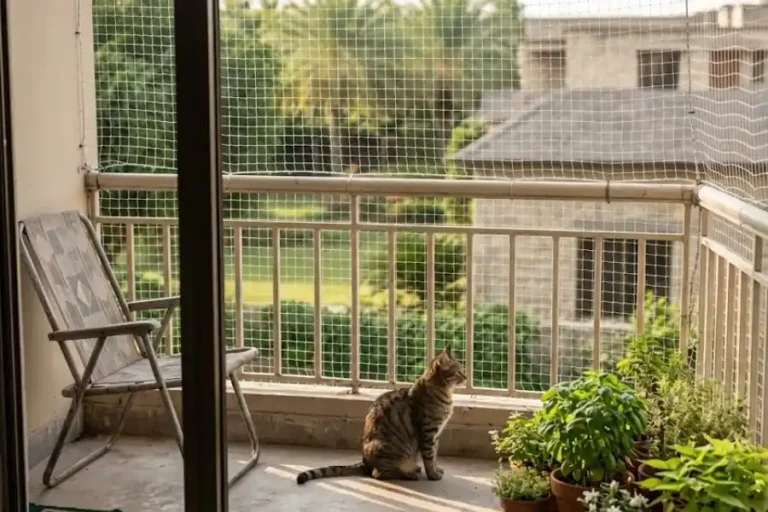
Mesh is the most common type, and for good reason. It is made from tightly woven polyethylene fabric, the same material used on job-site fencing. Most mesh screens block around 90 percent of the view while still letting air pass through. That airflow matters, because solid panels on a high floor can act like a sail in strong wind.
Mesh screens usually come with grommets, small metal rings along the edge. You loop zip ties or bungee cords through them and tie the screen straight onto your railing. No tools needed.
Best for: Long, budget-friendly coverage on standard railings.
Bamboo and Reed Rolls
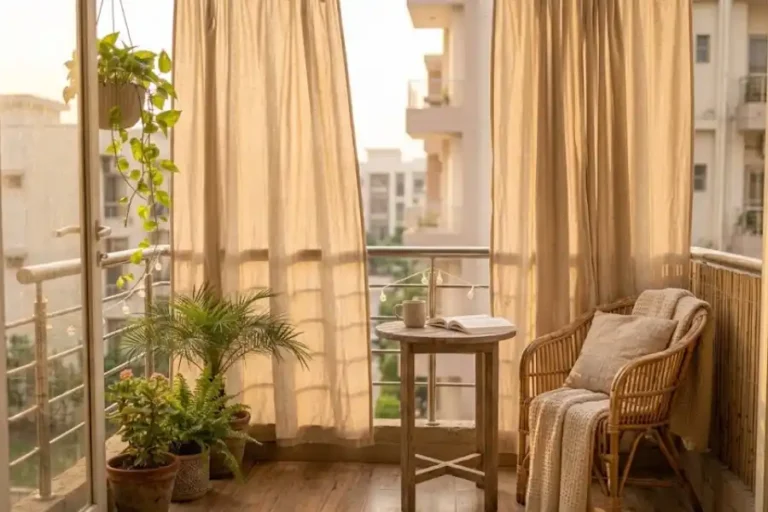
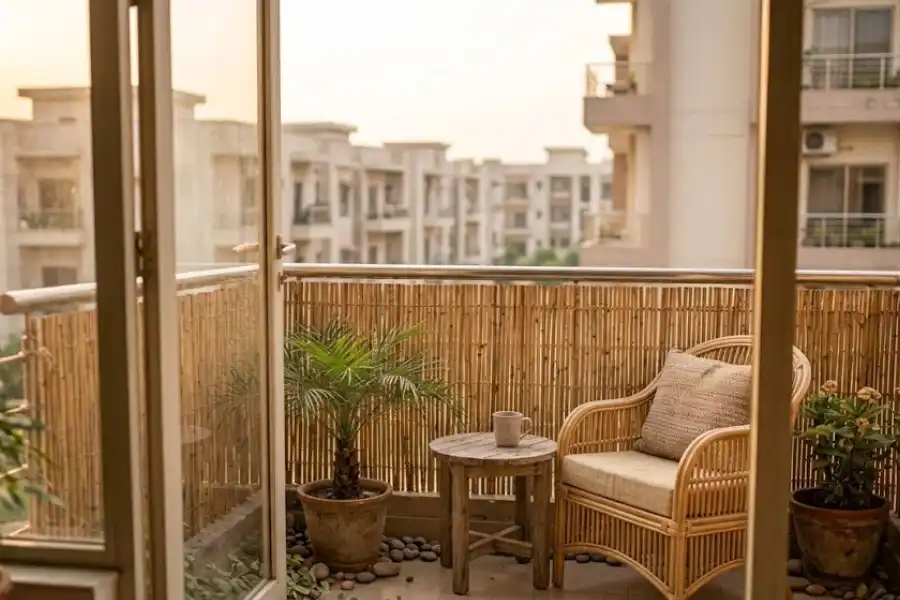
These rolls give your balcony a warm, resort-like look instead of a construction-site look. They are made of thin bamboo or reed strips woven together with wire or cord. You unroll them along your railing and secure the top and bottom with zip ties or cord.
Best for: Renters who want privacy without the “fenced-in” feeling.
Freestanding Folding Screens
These stand on their own, so you never touch the railing at all. They work well on wide, open balconies where you can angle a panel to block one specific sightline, like the neighbor directly across from you.
The catch is floor space. On a narrow balcony, a freestanding screen eats into your usable area fast. They also tip over easily in wind unless they have a heavy, weighted base.
Best for: Larger balconies and corner units where floor space is not tight.
Faux Ivy and Greenery Panels
These snap-together panels look like a living wall without any watering or upkeep. They clip onto railings the same way mesh does, and they blend in more naturally with building exteriors that require “neutral” or “natural” modifications.
Best for: Small balconies that need a soft, green look.
Outdoor Curtains on a Tension Rod
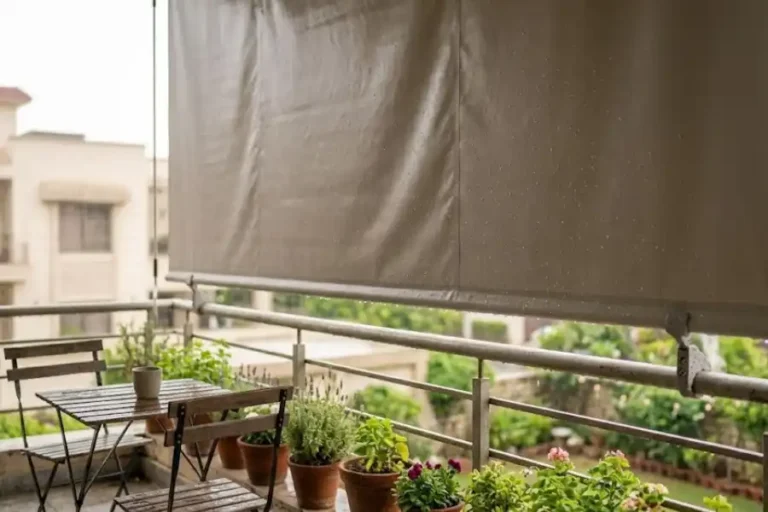
A tension rod needs no drilling at all. It wedges between two solid points, like the ceiling of a covered balcony, using spring pressure. Hang a weatherproof outdoor curtain from it, and you get privacy that opens and closes whenever you want. If your balcony doesn’t have a covered spot for a rod, waterproof outdoor balcony blinds make a solid substitute for curtains.
Best for: Covered balconies, and renters who only want privacy at certain times of day.
Retractable Shades
Retractable shades pull down and roll back up on command. They solve both privacy and afternoon glare, since most face-related privacy problems and sun problems happen at the same time of day, usually late morning through midafternoon. If your afternoons run especially hot, pairing this with dedicated balcony shade options can extend that coverage even further.
Best for: Balconies that get strong afternoon sun and need shade as much as privacy.
How to Install a Balcony Privacy Screen Without Drilling
Measuring wrong is the single most common mistake. Follow these steps and you will get it right the first time.
- Measure the full length of your railing, not just one section.
- Measure the height from the floor of the balcony to the top of the railing, not to the top of the wall behind it.
- Add two to four inches to your length measurement. A screen that is slightly too long can be trimmed. One that is too short cannot be fixed.
- Choose your attachment method: UV-resistant zip ties for metal railings, or heavy-duty hook-and-loop straps if your building bans zip ties.
- Attach the top edge first, working from one end to the other, keeping tension even.
- Secure the bottom edge the same way, then check for slack or sagging.
- Trim any excess material with sharp scissors, and melt the cut edge lightly with a lighter if it is synthetic mesh, so it does not fray.
Keep the zip ties or straps loose enough to remove with scissors in seconds. That is what makes this installation reversible, and reversible is what keeps your deposit safe.
The Wind Problem Nobody Warns You About
This is the gap in almost every article about this topic: wind ratings. A screen that looks sturdy in a product photo can rip loose in a real storm, especially above the third floor.
A few rules of thumb:
- Solid, non-perforated panels catch the most wind and are the riskiest choice above ground-floor units.
- Mesh and slatted designs let wind pass through, which puts far less strain on your ties or hardware.
- Freestanding screens need a weighted base, sandbags, or planters anchoring the feet if your balcony sees regular gusts.
- On a high floor, check your screen after any storm. A single loose zip tie can let the whole panel flap and tear.
If you live above the fifth floor or in a windy region, mesh or slatted styles are almost always the safer pick over solid fabric or solid panels.
What a Balcony Privacy Screen Costs
Prices vary by material and size, but here is a realistic range based on what is currently available:
- Basic mesh screens: roughly 20 to 40 dollars for a standard railing length
- Bamboo or reed rolls: roughly 25 to 60 dollars
- Faux ivy panels: roughly 15 to 30 dollars per panel, and most balconies need two to four
- Freestanding folding screens: roughly 60 to 150 dollars
- Custom-sized fabric screens: often 80 dollars and up, since they are made to your exact measurements
Custom sizing costs more, but it also solves the sizing mistake most renters make on their first try. If your balcony has an odd shape or a corner, it may be worth the extra cost.
Layering: The Part Most Balcony Advice Skips
Nobody, and no single screen, solves every privacy problem at once. The setups that work best usually combine two elements instead of relying on one.
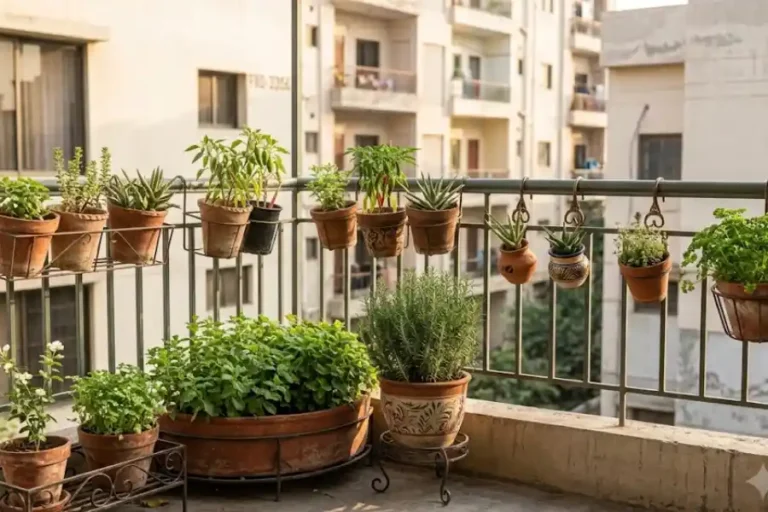
A common combination: mesh screen along the railing for the lower sightline, paired with a tall potted plant or two in the corners to block the sightline from a higher neighboring window. Another combination: a tension-rod curtain for the evening, left open during the day so the space still gets light and airflow. If you’re new to growing anything on a balcony, a simple walkthrough on how to make a small balcony garden for beginners can help you pick plants that double as privacy without much upkeep.
Think about where the actual exposure comes from, whether that is a balcony directly across from yours, a window above you, or the street below, and layer your solution toward that specific angle instead of just covering the whole railing evenly.
Caring for Your Screen So It Lasts
- Rinse mesh and fabric screens with a garden hose every few weeks to clear dust and pollen.
- Check zip ties and clips monthly for cracking or UV damage, especially in sunny climates.
- Take fabric screens down before major storms if you can, and reattach them after.
- Store bamboo or reed screens somewhere dry over winter if your area gets heavy snow or ice.
- Wipe faux greenery panels with a damp cloth to keep them from looking dusty or faded.
Quick Picks for Common Situations
- Small balcony, tight budget: Mesh screen with zip ties
- High floor, windy building: Slatted mesh or reed roll, never a solid freestanding panel
- Strict lease, no attachments allowed: Freestanding folding screen with a weighted base
- Covered balcony, want it stylish: Outdoor curtain on a tension rod
- Balcony gets strong afternoon sun: Retractable shade
Frequently Asked Questions
Is a balcony privacy screen legal for renters?
In most cases, yes. Zip-tied, tension-mounted, and freestanding screens are generally allowed because they do not damage the structure. Still, always check your lease for an “exterior modifications” clause before you install anything.
Will my landlord charge me for a privacy screen?
Usually not, as long as the screen leaves no holes, stains, or permanent marks when removed. Avoid adhesive hooks in direct sun, since the adhesive can soften and leave residue behind.
What is the best material for windy balconies?
Slatted or mesh materials perform best in wind because air passes through instead of pushing against a solid surface. Solid panels and heavy fabric are more likely to tear loose or blow over.
Can I still get airflow with a privacy screen up?
Yes, if you choose mesh, slatted, or reed styles instead of solid fabric or solid panels. These block sightlines while still letting a breeze through, which also reduces wind strain on the screen itself.
Do privacy screens block noise as well as sight?
They reduce noise slightly, mainly wind noise and street sound, but they are not true soundproofing. Dense mesh or layered fabric performs a little better than thin plastic screens.
Final Thoughts
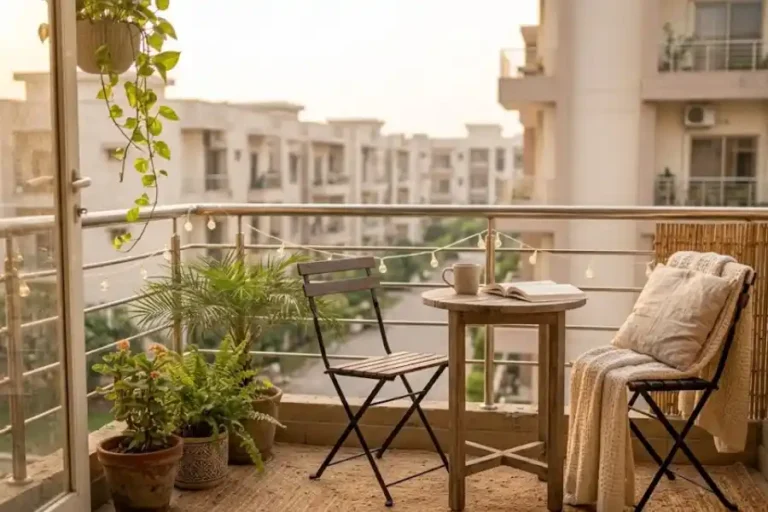
A good apartment balcony privacy screen turns an exposed, awkward space into somewhere you actually want to sit. The key is matching the screen to your building: check your lease, measure carefully, choose airflow-friendly material if you are above the third floor, and always leave your exit path clear.
Get those four things right, and your balcony stops being a space you avoid. It becomes the extra room your apartment never had.