Garden Bird Bath: Best Types, Placement Tips, and Year-Round Care
You added a bird feeder. Maybe some flowers. But something still feels missing from your garden. A bird bath might be the answer.
It sounds simple. A bowl of water. Stick it in the garden. Done.
But if you have ever bought one and then watched it sit empty for weeks, you already know it is not that simple. Birds can be picky. The wrong bath, in the wrong spot, with still water, and they will fly right past it every single time.
This article covers everything. It walks you through choosing the right bird bath, where to put it, how to get birds to use it, and how to stop it from turning into a mosquito pond. Whether you are buying your very first bird bath or trying to fix one that birds keep ignoring, this guide has you covered.
Why Your Garden Needs a Bird Bath
Here is something most people do not know. Birds need water even more than they need food. Every single bird species needs to drink every day. And they all need to bathe regularly to keep their feathers in good shape.
Clean feathers do more than make a bird look good. They help birds fly better, stay warm, and stay cool. When a bird bathes, it removes dirt, dust, and tiny parasites from its feathers. It also spreads natural oils across each feather. Those oils keep feathers waterproof and flexible. Without them, a bird cannot fly well or stay warm in cold weather.
Birds do not have sweat glands either. On a hot day, splashing in cool water is one of the few ways they can cool themselves down.
So when you add a bird bath to your garden, you are doing something far more useful than decorating. You are providing something birds genuinely need to survive.
It is not only birds that benefit either. Bees and butterflies will also visit your bird bath for water. They pollinate your flowers while they are nearby. Your bird bath can quietly turn your garden into a busy little ecosystem without you doing anything extra.
The Different Types of Garden Bird Baths
Bird baths come in several styles. Each one suits a different garden size, a different type of bird, and a different amount of outdoor space.
Pedestal Bird Baths
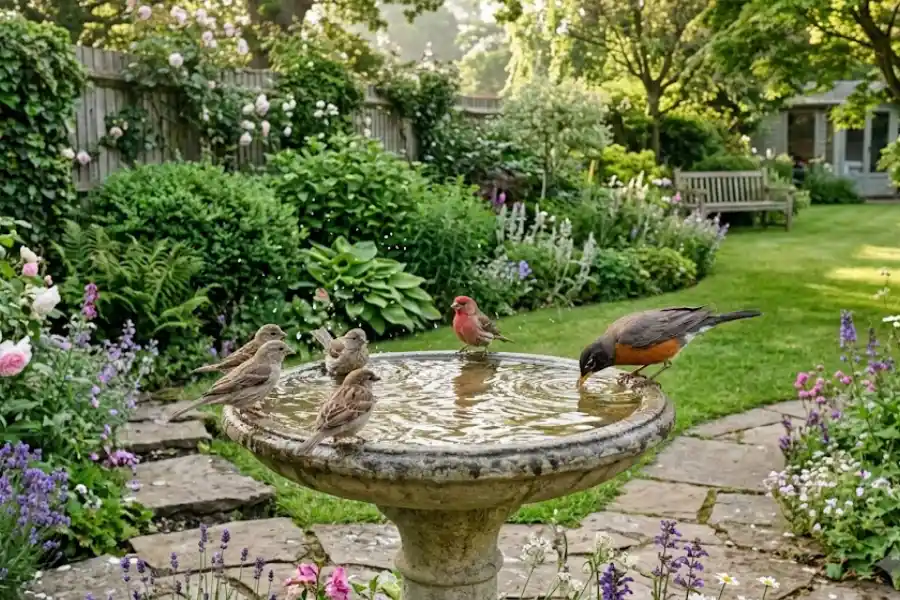
This is the classic style. A bowl sits on top of a tall post or base. These are great because they sit between 24 and 36 inches off the ground. That height keeps cats and other predators from sneaking up on bathing birds. It also gives you a clear view of all the visitors from inside your home.
Ground-Level Bird Baths
These sit right on the soil, like a shallow puddle. Since birds naturally drink from puddles and streams, they often feel comfortable with ground baths right away. The downside is that cats and other predators can get too close. If you have neighborhood cats, a ground bath is a higher-risk option.
Hanging Bird Baths
These hang from a tree branch or hook. They work well for small spaces like balconies or patios. However, they swing in the wind and can spill easily. Make sure you hang them from something solid and stable.
Deck-Mounted Bird Baths
These clamp right onto a fence, deck railing, or balcony edge. They are ideal if you have no yard at all. They take up almost no space and put birds right at eye level.
Solar-Powered Fountain Bird Baths
These are a newer option and a very good one. A solar panel fitted to the base powers a small pump that keeps the water moving. Moving water attracts far more birds than still water. It also helps stop mosquitoes from breeding. More on that later.
Which Material Is Best for a Garden Bird Bath?
This is where a lot of people go wrong. They pick a bird bath based on how it looks. But the material matters a great deal, both for the birds and for how long the bath will last.
Concrete and Cast Stone
This is the best choice for most gardens. Concrete has a rough texture that birds can grip easily. It keeps water cooler because it absorbs heat slowly. It lasts 10 to 20 years with basic care. The Audubon Society recommends rough-surfaced, stable basins like these. One thing to know: in cold climates with repeated freeze and thaw cycles, you need a factory-sealed concrete bath to prevent cracking.
Resin and Plastic
These are lightweight and affordable. They will not crack in freezing weather, which makes them a solid pick for cold regions in the northern United States. The trade-off is that plastic scratches over time. Those tiny scratches become hiding spots for algae and bacteria. After a few years, they get harder and harder to clean properly.
Ceramic
Beautiful to look at. But ceramic can shatter in a single hard frost. If you live in USDA Hardiness Zones 6 or colder, skip ceramic unless you plan to bring it inside every winter without fail.
Metal
Copper naturally slows algae growth, so it stays cleaner on its own. Stainless steel looks sharp in modern gardens. The downside is that metal can get very hot in direct afternoon sun. A hot bath is not one birds want to use. Place any metal bath in partial shade.
One tip that most guides miss: avoid bright white bird baths. White can startle or confuse birds. Neutral colors like gray, tan, brown, and green blend naturally into the garden and make birds feel much more at ease.
How to Pick the Right Size
The size of the bowl matters more than most people realize.
Depth is the most important factor. Most birds feel comfortable in water that is 1 to 2 inches deep near the edges and no more than 2 to 3 inches deep in the center. Small birds like sparrows, finches, and wrens need very shallow edges where they can stand safely. Deeper baths can feel frightening to them. A very deep, smooth-sided bath can even be dangerous for tiny birds.
If you already have a deep bird bath, do not worry. Place a few smooth stones, similar to the sizes you might use when landscaping with Black Garden Rocks, in the bottom. This raises the standing level and gives birds a safe, firm place to perch. Pollinators like bees will appreciate this too.
For width, a 15 to 24-inch basin is ideal for most backyards. It is wide enough for a few birds to use at once without fighting. Very small dishes dry out too quickly in warm weather.
Where to Place Your Garden Bird Bath
Placement is probably the biggest reason why bird baths get ignored. Even a great bird bath will sit empty if it is in the wrong spot.
- Keep it 5 to 10 feet from dense shrubs or hedges. Setting it near a sturdy Garden Trellis Planter Box can also work perfectly, as you want birds to see any danger coming while providing a quick escape route if needed.
- Keep it at least 10 to 15 feet from your bird feeder. Seed husks and bird droppings from feeders can contaminate the water very quickly.
- Put it in partial shade. Morning sun is fine. But afternoon shade keeps the water cooler and slows algae growth by a significant amount.
- Place it where you can see it. This sounds obvious, but it matters. If you can see it from your kitchen window or patio chair, you will be more motivated to top it up and keep it clean. And you will get to enjoy every single visitor.
- Avoid high-traffic areas. Birds will not use a bath that is near a door that opens and closes constantly, barking dogs, or children playing loudly nearby.
How to Get Birds to Use Your Bird Bath
You set it up. You filled it with fresh water. And then nothing. The birds seem completely unaware it exists.
This is totally normal. Do not be discouraged. Birds approach new things with caution. The first visitors usually show up within 3 to 7 days. But it can take 2 to 3 weeks before you start seeing regular activity. The boldest birds, like house sparrows and robins, typically arrive first. Once they show others it is safe, more species will follow.
Here are the best ways to speed things up.
Add moving water. This is the single most effective change you can make. Birds can see and hear moving water from a surprising distance. A small solar-powered fountain pump or a simple drip attachment creates gentle ripples and a soft trickling sound. That sound carries through the air and acts like a signal to birds nearby. A still, silent bath can go unnoticed for weeks. A moving one attracts birds much faster.
Add stones inside the bath. Place a couple of flat rocks or a short piece of branch inside the water. These give birds a safe place to perch before stepping in. It also makes the bath easier for smaller birds and for pollinators like bees to use without risk.
Keep it very clean. Birds will not use dirty water. A bath with green algae or murky water tells birds it is not safe to drink. Fresh, clear water sends the opposite message.
Try the Cornell Merlin Bird ID app. This is a free app from Cornell University. It identifies birds by sight or by the sounds they make. If you want to attract specific species you have spotted in your neighborhood, this app tells you which birds live in your area. You can then tailor your setup to match what those species prefer.
How to Clean Your Bird Bath
Cleaning a bird bath does not have to be a big task. But it does need to happen on a regular schedule.
- Every day or two: Empty the old water. Rinse the basin with a hose on the jet spray setting. Refill with fresh water. This alone prevents most problems from ever starting.
- Every week: Scrub the basin with a stiff brush. Use a simple solution of one part white vinegar to nine parts water. Rinse very thoroughly before refilling. The Audubon Society advises against synthetic soaps and detergents. They can strip the natural oils from bird feathers, which causes real harm.
- For stubborn algae: Use a solution of one part bleach to ten parts water. Scrub, then rinse extremely well. Let it air out for a few minutes before refilling. Never leave any bleach residue in the water.
One step most guides leave out: set your garden hose to jet spray when emptying the bath. The pressure flushes out old water and loosens built-up grime in one quick motion. Much faster than pouring by hand.
Seasonal Care Tips
Spring
Check the basin for cracks after winter. A concrete bath may need a fresh coat of pond-safe sealant if you see fine hairline cracks. Spring is when migrating birds arrive and start searching for reliable water. Keep the bath clean and full. This is one of the busiest seasons for bird activity.
Summer
Refill every day in hot weather. Water evaporates fast and heats up quickly in a sunny spot. Move the bath to partial shade if possible. Top up the water in the afternoon on very hot days. Birds visit most often in the early morning and late afternoon.
Fall
Clean the bath more often as leaves start to fall. Leaves decompose quickly in water and turn it brown and unpleasant. A leaf net or regular emptying keeps things tidy.
Winter
This is when a bird bath becomes most valuable of all. Natural water sources freeze over. Birds struggle to find anything to drink. A heated bird bath or a simple submersible bird bath heater keeps the water liquid and attracts more species during the coldest months than at any other time of year. If you cannot use a heater, break the ice each morning and top up with warm water. The birds will thank you for it.
What About Mosquitoes?
This is probably the number one worry people have about bird baths. And it is completely fair.
But here is the key fact most people do not know: mosquito eggs take 7 to 10 days to hatch into adults. If you change the water every 2 to 3 days, you break that cycle completely. No hatching. No mosquitoes. It really is that straightforward.
If you want an extra layer of protection, add moving water. Mosquitoes cannot lay eggs on water that is in motion. A solar fountain or water dripper solves the problem almost entirely. And it happens to attract more birds at the same time.
For areas with a heavy mosquito problem, look for mosquito dunks at your local garden center or hardware store. These small tablet-shaped discs contain a natural bacteria called BTI. It kills mosquito larvae without harming birds, bees, or any other wildlife. One dunk lasts about 30 days.
Common Mistakes to Avoid
- Choosing a bath that is too deep. Birds feel unsafe in deep water. Shallow is always better. Add stones if needed.
- Picking a slippery surface. Smooth glazed ceramic or polished glass is hard for birds to grip. They will not stay long. Choose rough or textured surfaces.
- Placing it in full sun all day. This heats the water, speeds up algae growth, and makes the bath much less inviting to birds.
- Putting it right next to dense bushes. Cats can hide in there. Birds know it. They will avoid any bath that feels like a trap.
- Choosing a bright white bath. White can startle birds. Stick to neutral, natural tones.
- Not cleaning it often enough. A dirty bird bath is worse than no bird bath. Dirty water spreads disease among birds. Clean it regularly.
- Giving up too soon. Birds take time to notice and trust a new water source. Give it at least two to three weeks before making any changes.
Frequently Asked Questions
How deep should a garden bird bath be?
Keep the edges 1 to 2 inches deep and the center no deeper than 2 to 3 inches. Add flat rocks or smooth stones if your basin is deeper than that.
How often should I change the water in my bird bath?
Every 1 to 2 days in summer. Every 2 to 3 days in cooler weather. Frequent water changes are the single best way to keep the bath clean and prevent mosquitoes.
How long before birds find my bird bath?
Usually 3 to 7 days for the first visitors. Regular daily activity typically builds over 2 to 3 weeks. Adding moving water speeds this up significantly.
Where is the best place to put a bird bath?
In partial shade, 5 to 10 feet from dense cover plants, well away from bird feeders, and somewhere clearly visible from inside your home.
Will a bird bath attract mosquitoes?
Not if you change the water every 2 to 3 days. Mosquitoes need 7 to 10 days of still water to complete their life cycle. Regular water changes stop that cycle before it starts.
What is the best material for a bird bath?
Concrete or cast stone is the best choice for most gardens. Resin or plastic works better in very cold northern climates where repeated freezing would crack an unsealed concrete basin.
Do I need to use soap to clean a bird bath?
No. White vinegar diluted in water is better for weekly cleaning. Synthetic soaps can strip the protective oils from bird feathers. For a thorough scrub, use diluted bleach and rinse very thoroughly.
Can other animals use my bird bath?
Yes, and that is a good thing. Bees, butterflies, and other beneficial insects will also use your bird bath for water. Bees that stop for a drink will then pollinate nearby flowers. Your bird bath quietly supports the whole garden ecosystem.
Final Thoughts
A garden bird bath is one of the most rewarding things you can add to an outdoor space. It does not take much effort. A shallow basin, some fresh water, a good spot in partial shade, and a little patience.
The birds will find it. Once they do, they will keep coming back every day, all year long. And on a quiet morning, watching a robin splash around in a bowl you set out for it, you will understand why so many people say their bird bath is their favorite thing in the garden.
Start simple. Keep the water fresh. And enjoy every visitor that shows up.