Garden Shed Colours: 12 Ideas (And a Costly Mistake to Avoid)
Your shed sits in your backyard every single day. Rain or shine, it’s there. Yet most people pick a colour for it in about five minutes, right at the paint store, with almost no thought at all.
That is a mistake. The right garden shed colours can make your whole backyard look pulled together. The wrong ones can clash with your house, fade fast in the sun, or even break your neighbourhood’s rules. One wrong choice can also quietly lower your home’s value.
This article walks through what to know before you pick up a paintbrush. It covers the most popular garden shed colours for 2026, how colour affects heat inside your shed, what your HOA might require, and the one mistake that trips up more homeowners than any other.
Why Your Shed Colour Matters More Than You Think
A shed is more than a storage box. It is something people see every time they look out a window or walk through the yard. Real estate research backs this up. One large study of over 50,000 home sales found that smart colour choices on outdoor buildings, including sheds, could add real dollars to a sale price. Buyers, on the other hand, tend to offer less money for homes with colour combinations that feel off or unplanned.
In short, a thoughtful shed colour goes beyond looks. It can protect your investment too.
How to Choose the Right Shed Colour
There are three main paths homeowners take. None of them is wrong. It just depends on the look you want.
1. Match Your House
This is the safest choice. Use the same or a very close shade to your home’s siding and trim. The shed will look like it was always meant to be there, almost like a small extension of the house. The same idea works if your yard already has a pergola: picking colours that echo each other, rather than compete, keeps the whole backyard feeling like one connected space. A few of these pergola decorating ideas show how that balance comes together.
2. Blend Into the Garden
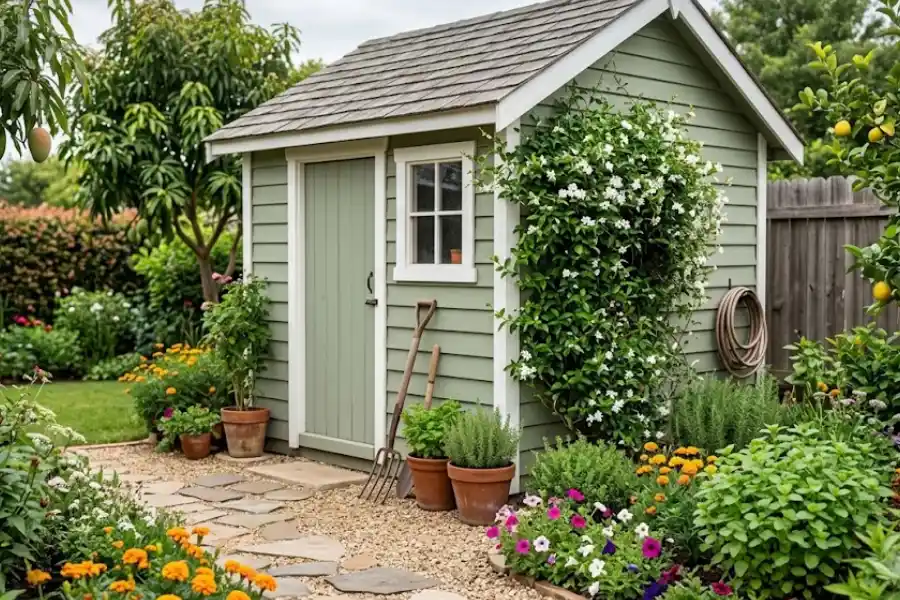
If you want your shed to disappear a little, choose earthy, natural tones. Sage green, olive, and soft brown all work beautifully here. These garden shed colours are especially popular with homeowners who use their shed as a potting station or garden workspace, since the colour feels like a natural extension of the plants around it. Pairing these shades with textures already in your yard, like a path lined with river rock landscaping, helps the shed disappear into the garden even more.
3. Make a Bold Statement
Some homeowners want the opposite. They want the shed to be a focal point, not a background piece. Dark navy, black, or even a bright coastal blue can turn a plain storage shed into the prettiest spot in the yard.
A simple rule that professional painters swear by: if your house is a light colour, your shed can go bold. If your house is already bold, keep the shed a shade calmer so the two do not compete.
The Best Garden Shed Colours to Try
Here are the shades homeowners are choosing most often right now, along with what each one says about your style.
- Sage green: soft, calming, and works with almost any garden. This is currently one of the most requested garden shed colours in the country.
- Charcoal grey: modern and sleek, especially with white or black trim.
- Navy blue: classic and bold, but never feels too loud. Pairs beautifully with tan or beige homes.
- Soft white or cream: bright and clean, great for small yards that need to feel more open.
- Warm wood stain: shows off natural grain instead of hiding it under paint.
- Teal: rich and a little unexpected, pairs well with brass or gold hardware.
- Pastel pink or baby blue: playful and charming, popular for cottage-style gardens.
- Black: bold and modern, especially striking with a metal roof or black window frames.
Whichever shade you pick, remember your shed does not need to match everything in the yard perfectly. It just needs to feel like it belongs.
Does Shed Colour Affect the Temperature Inside?
Here is something most shed articles skip completely, and it matters a lot if you use your shed as a workshop, office, or hobby space.
Dark colours absorb more sunlight. In fact, a dark exterior can soak up as much as 90 percent of the sunlight that hits it, and that energy turns into heat inside the shed. Light colours, on the other hand, reflect most of that sunlight away.
So if your shed sits in direct sun and you plan to spend time inside it, a lighter shade will keep it noticeably cooler. If your shed is mostly used for storage and sits in shade, a darker colour is much less of a problem.
Check Your HOA Rules Before You Pick a Colour
This step gets skipped more than any other, and it is often the costly mistake mentioned earlier. Many neighbourhoods have a homeowners association, or HOA, with strict rules about outdoor buildings. Painting your shed the wrong colour without checking first can lead to fines, or even a demand to repaint it at your own cost.
Before you buy paint, check for these common HOA requirements:
- Whether the shed colour must match or closely complement your house
- Whether bright or unconventional colours are restricted
- Whether trim, roof, and window colours also need approval
- Whether you need written pre-approval before painting
- Whether there are separate rules for sheds visible from the street
If you are unsure, a quick call to your HOA management company can save you a lot of hassle later. It is a five minute conversation that can prevent a very expensive redo.
Choosing a Colour That Actually Lasts
A beautiful shed colour is only worth it if it stays beautiful. A few helpful tips make a big difference here.
- Think about your climate. Homes in very sunny areas should expect darker paint to fade faster, especially on the side that gets afternoon sun.
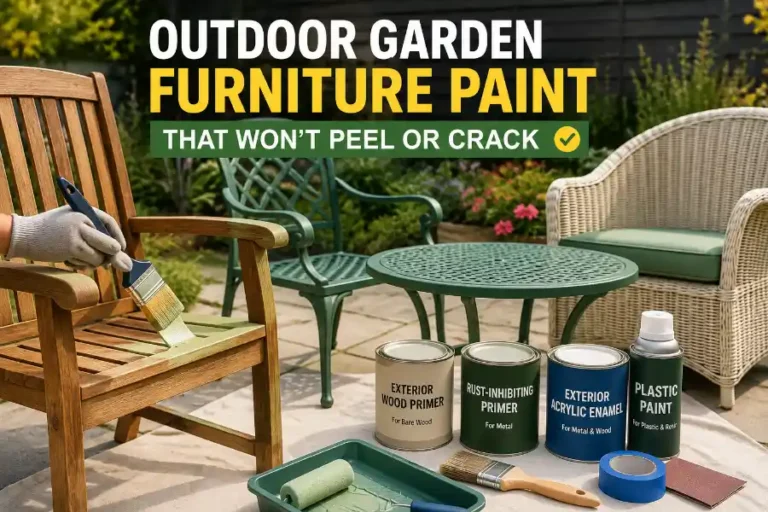
- Choose quality paint with UV protection. A good exterior paint with UV inhibitors mixed into the formula will hold its colour far longer than a basic option, and the same logic applies to any outdoor garden furniture paint you use nearby, since a bench or table sitting in the same sun needs the same kind of protection.
- Plan to repaint every few years. Most wooden sheds need a fresh coat every three to five years to protect against moisture and sun damage.
- Remember maintenance. Very light colours like white show dirt, pollen, and grass stains more easily and need cleaning more often.
Quick Colour Picks by Shed Use
Not sure where to start? Match your colour to how you use the shed.
- Storage shed: choose a lighter, neutral shade to help keep the inside cooler and to reduce fading.
- Workshop or she-shed: darker, moody tones like charcoal or rich green create a cosy, focused feel, and are worth the slightly higher maintenance.
- Garden retreat: soft pastels or sage green tie the space naturally into your plants and flowers.
- Street-facing shed: match your house closely for a polished, planned look that also keeps most HOAs happy. A garden border fence in a complementary colour finishes off that same front-of-house look.
Frequently Asked Questions
Should my shed match my house?
It does not have to, but it often looks best when it does, especially if the shed is visible from the street. Matching creates a clean, planned look. If your shed is tucked away in the backyard, you have more freedom to try a bold or contrasting colour.
What shed colour adds the most value to a home?
Neutral and classic shades like sage green, soft grey, and navy blue tend to appeal to the widest range of buyers. Very bright or unusual colours can be beautiful, but they may not appeal to everyone if you plan to sell your home soon.
Do dark coloured sheds get hotter inside?
Yes. Dark colours absorb far more heat from the sun than light colours do. If you spend time inside your shed, especially in a sunny yard, a lighter colour will keep it more comfortable.
How often should I repaint my garden shed?
Most wooden sheds need repainting every three to five years. Sheds in very sunny or harsh climates may need it sooner, especially if a dark colour was used.
What is the most popular garden shed colour right now?
Sage green currently tops the list for many homeowners, thanks to how naturally it blends with gardens and landscaping. Charcoal grey and navy blue are close behind as popular, more dramatic choices.
Final Thoughts
Picking the right garden shed colours is about more than grabbing whatever looks nice on the shelf. It is about thinking through your house, your climate, your HOA rules, and how you plan to use the space. Take a little extra time before you paint. Your future self, and your backyard, will thank you.