Copper Poppy Sways: Placement, Care, and Buying Tips
If you have ever walked past a garden and noticed a little flash of copper catching the sun, you have probably seen copper poppy sways in action. These are decorative garden stakes shaped like poppy flowers, made from copper-plated steel, and designed to bend and sway in the wind. They look simple, but they do a lot of work in a small space. This article covers what they are, where they work best, how to care for them, and the small details most product pages leave out.
What Are Copper Poppy Sways?
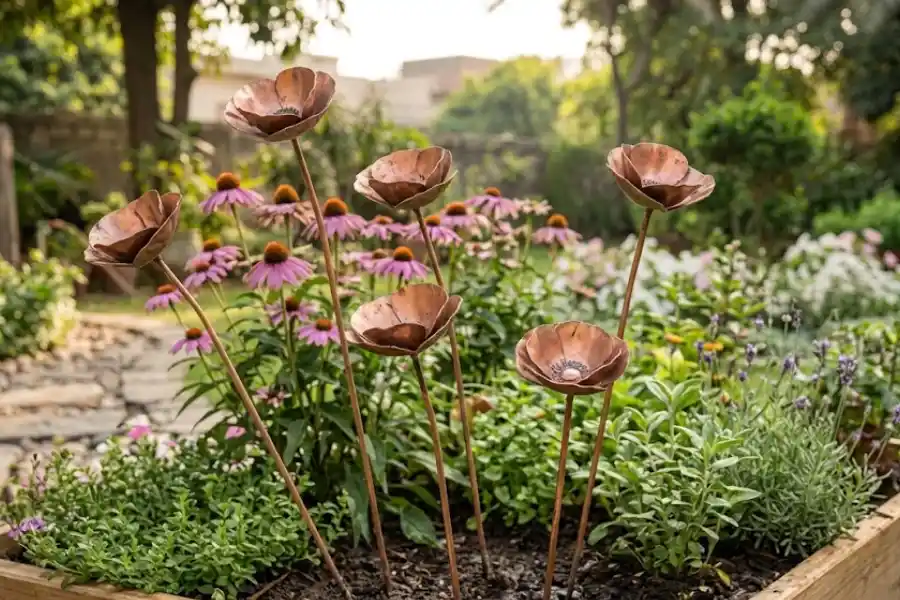
Copper poppy sways are garden stakes with a slim metal pole and a wide, shallow cup at the top shaped like an open poppy flower. The pole has a natural bend built into it, so the “flower” moves and dips whenever there is even a light breeze. Most sets, including the popular one from Gardener’s Supply Company, come as a group of five stakes at slightly different heights, usually around 30 inches tall, with cups about 4 inches across.
They are not real flowers, of course. They are yard art. But the design copies the way a real poppy nods on its stem, which is part of why they feel so alive next to actual plants instead of looking like a static ornament stuck in the dirt.
Why Gardeners Keep Buying Them
There are a few reasons this specific piece of garden decor keeps showing up in yards, patios, and flower beds across the country.
- Movement. Most garden decor sits still. Copper poppy sways move with the wind, which draws the eye in a way a stationary statue cannot.
- Light. The copper finish catches sunlight and reflects it back, adding a small sparkle to the garden on clear days.
- Height variety. Because a set includes stakes of different heights, they add layers to a flower bed that might otherwise look flat.
- A tiny water source. The cup shape collects rainwater, working almost like a mini garden bird bath built right into the stake, and often becomes a quick stop for birds, including hummingbirds looking for a shallow spot to sip or cool off.
None of this requires digging, planting, or waiting for something to grow. You place them, and the effect is immediate.
Where to Place Copper Poppy Sways for the Best Effect
This is the part most product descriptions skip, and it matters more than people expect. Placement changes how much impact these stakes actually have.
Group Them in Odd Numbers
Gardens tend to look more natural when things are grouped in odd numbers, like three or five, rather than lined up evenly. Cluster the stakes at slightly different heights instead of spacing them out in a straight row. This mimics how real poppies grow in a wild patch.
Use Them Where Plants Have Gaps
Early spring and late fall are when flower beds often look bare. Copper poppy sways fill that gap in color and height until your actual flowers catch up, then they simply sit among the blooms once everything else fills in.
Try Them Along Walkways
Placed along the edge of a path, they add a bit of charm without blocking foot traffic the way taller statues might. The swaying motion also makes a walkway feel more inviting as you approach.
Pots and Containers Work Too
You do not need a full garden bed. A single stake or a small cluster works just as well in a large planter, which makes copper poppy sways a nice fit for container garden ideas on a patio or balcony where ground space is limited.
A quick tip that gets overlooked: push the stake in at a slight angle instead of straight up and down. It looks less like a stake was “installed” and more like the poppy grew there naturally.
Copper Poppy Sways vs. Other Garden Stakes
Copper poppy sways are usually made from steel with a copper plating, not solid copper. This matters for two reasons. First, they cost less than a hand-forged garden art sculpture made from solid copper, which makes them an easier choice for covering a larger area. Second, because the copper is a plating rather than solid metal, they typically will not develop the same rich green patina that solid copper pieces slowly build up over many years outdoors. Expect a subtle, gradual dulling of the shine over time rather than a dramatic color change.
Compared to painted metal garden stakes, copper poppy sways tend to hold their look longer, since paint can chip or fade in strong sun while a metal plating wears more evenly.
Caring for Your Copper Poppy Sways
These stakes are low maintenance, but a little care keeps them looking good and working the way they should.
- Empty the cups regularly. Standing water sitting in the cup for more than a few days can attract mosquitoes. Give the cups a quick rinse and dump every few days during warm, wet weather.
- Push stakes far enough into the soil. Soft or loose soil, especially after heavy rain, can let a tall stake lean or tip in strong wind. Push each pole in firmly, and if your soil is sandy or loose, consider anchoring the base with a small rock or packed soil around it.
- Bring them in before major storms. They can handle normal wind and rain fine, but very high winds or hail are harder on thin metal stakes than on sturdier garden statues.
- Wipe down occasionally. A soft cloth wipe a few times a season keeps dust and water spots from dulling the shine.
- Consider storing them in freezing climates. If your ground freezes and thaws repeatedly in winter, pulling the stakes and storing them indoors can prevent the metal from loosening in the soil over time.
Are Copper Poppy Sways Worth Buying?
For anyone who wants a garden that feels a little more alive without adding more plants to care for, copper poppy sways are a reasonable, low-effort choice. They work best in small to mid-sized flower beds, along garden paths, or grouped in large planters. They are not a good fit if you live somewhere with frequent hail or very strong storms, since thin metal stakes take more damage than heavier stone or ceramic decor in those conditions.
If you want to see current pricing and availability, the original Gardener’s Supply Company listing is a useful place to check the product details directly.
Frequently Asked Questions
Do copper poppy sways rust?
Because the core material is steel with a copper plating, rust can eventually appear if the plating gets scratched or worn through, exposing the metal underneath. Keeping them clean and avoiding rough handling helps slow this down.
Will they attract bees or wasps?
Since they are not real flowers and produce no nectar or pollen, they do not attract bees or wasps the way actual poppies would. Standing water in the cups can occasionally interest other insects, which is another good reason to empty the cups regularly.
How many should I buy for one flower bed?
A single set of five is usually enough for a small to medium bed. For a larger space, two sets grouped at different spots in the bed tends to look more natural than lining up ten stakes in a row.
Can they be used in pots or containers?
Yes. A single stake or a small group works well in a large planter, especially on patios, balconies, or entryways where there is no open ground bed.
Will they tip over in windy conditions?
Normal wind is what they are designed for, and the swaying motion is part of the appeal. Very strong gusts can tip a poorly anchored stake, so pushing them firmly into the soil helps keep them upright.
Copper poppy sways are a small addition, but they change how a garden feels almost instantly. The trick is placing them the way real poppies would grow, not lining them up like fence posts, and giving them a little basic care so they keep catching the light season after season.