Decorative Outdoor Garden Totem Poles: 9 Styles + Setup Tips
Some gardens look nice. Others make people stop and stare. The difference is often one tall, bold piece in the right spot. Decorative outdoor garden totem poles can be that piece.
They add height, color, and a little story to flower beds, patios, and paths. You can buy one, build one, or do a bit of both. This article helps you choose a style, pick a material that lasts, set it up so it stays upright, and care for it through every season. It also shows how to enjoy garden totems while showing respect for the real totem poles that inspired them.
What Are Decorative Outdoor Garden Totem Poles?
A garden totem is a tall, slim piece of art that stands in your yard. It can be carved, painted, stacked, or built from clay, glass, metal, or concrete. Some are only two feet tall. Others reach ten feet or more.
Garden writers often group them with art poles and peace poles. They all share one job. They pull the eye upward.
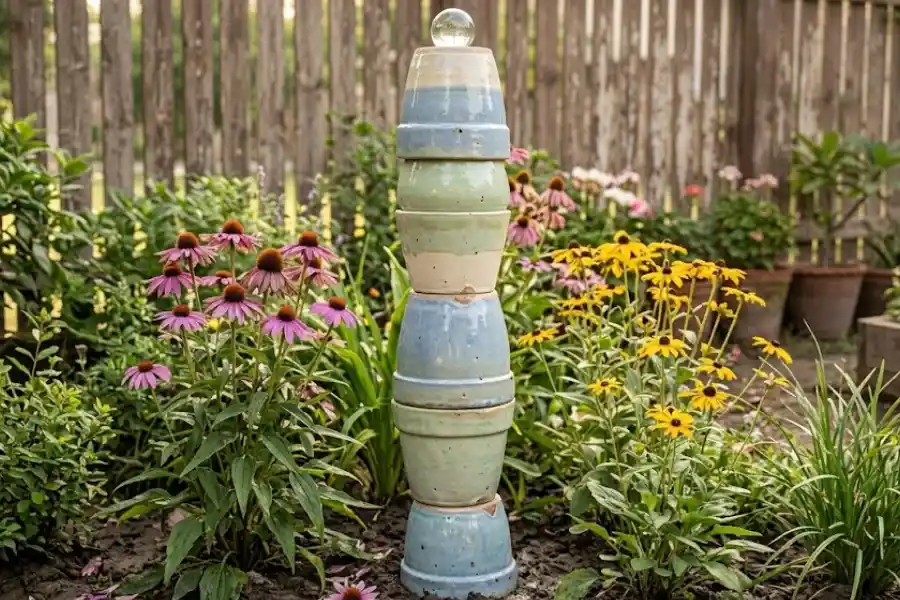
Many modern garden totems are made from everyday things. Flower pots, teapots, canning jars, and even gourds can be stacked into a column. Many makers also add a topper, such as a small bird or one of the shiny gazing balls for the garden, the way you would put a star on a tree. Longtime gardening writer Neil Sperry points out that these poles give a garden a focal point even in winter, when most plants are asleep.
In this article, decorative outdoor garden totem poles means art pieces made for yards, patios, and flower beds. It does not mean the sacred poles carved by Indigenous nations.
A Quick Note on Respect Before You Buy or Build
Real totem poles come from nations on the Pacific Northwest Coast. Those poles tell stories and record family lines and important events. The images on them belong to specific families and clans. Indigenous writers say that copying those designs without permission is a form of taking something that is not yours. They also say that cheap souvenir copies hurt working Native artists. You can read one First Nations view on this topic from Simon Fraser University.
The good news is that it is easy to do this the right way. Try these steps:
- Skip designs that copy Northwest Coast formline art, animal crests, or clan symbols.
- Do not call a stack of pots a Native totem. Call it a garden totem or an art pole.
- If you love the real art form, buy directly from Indigenous artists or their galleries.
- Build your own story into the piece. Use your pets, your favorite flowers, the seasons, or your family.
This also makes your piece more original. A totem that tells your own story will always beat a copy.
Why Add Decorative Outdoor Garden Totem Poles to Your Yard?
A totem earns its spot. It solves real design problems.
- They add height. Most flower beds are low and flat. One tall piece gives the eye somewhere to land.
- They work all year. When perennials rest, a totem still gives you something to look at.
- They lead the eye. Place one at the end of a path and people will walk toward it.
- They fit most budgets. You can spend a lot on a ceramic sculpture or almost nothing on a stack of thrifted pots.
- They show your style. No two yards end up with the same totem.
9 Styles of Garden Totems to Consider
Here are nine popular styles. Each one gives a different mood, so think about the look you want before you shop.
1. Stacked Pot and Teapot Totems
This is the easiest style to make at home. You slide old pots, bowls, or teapots onto a metal rod. The result is playful and full of charm. It also costs very little.
2. Mosaic Totems
Mosaic totems are covered in bits of tile, glass, or stone. They catch the light and add bright color. They look best in shady spots where a pop of color is needed.
3. Ceramic Totems
Ceramic totems are made from glazed clay. Each shaped piece supports the one above it. They feel handmade and artistic. Many are sold by individual artists, and they sit well beside other garden art sculpture in the same bed.
4. Glass Totems
Glass totems shine in the sun and glow at dusk. They suit modern gardens and sunny beds. Look for thick glass made for outdoor use.
5. Carved or Painted Wood Totems
Wood gives a warm, natural look. You can paint it in bold colors or leave it simple. Choose a wood that stands up to rain and bugs, and seal it well.
6. Metal Totems
Steel and iron totems look clean and sharp. Some are made to rust on purpose for an earthy look. Keep in mind that rust can stain stone or concrete below it.
7. Concrete and Resin Totems
These are heavy, steady, and tough. Many come in tiki or animal shapes. Concrete is very stable in wind. Resin is lighter but may fade in strong sun.
8. Solar Light Totems
These carry a small solar light that turns on at night. They are great for patios and walkways. Place them where they get plenty of direct sun during the day. For more ways to light a path, see our post on solar garden lights outdoor.
9. Peace Poles and Word Poles
A peace pole shows a message of peace, often in several languages. A word pole can show a family name, a welcome message, or a favorite saying. These are a meaningful choice for front yards and community gardens.
How to Pick the Right Size and Number
Size is where most people go wrong. A pole that is too short gets lost. One that is too tall can look odd.
Use these simple rules:
- Check how tall nearby plants will be when fully grown. Your pole should still rise above them.
- Put tall poles at the back of a bed or in a corner. Put short ones near the front, or fill the gaps with decorative garden stakes.
- Try a group of three in different heights. Groups of odd numbers tend to look natural.
- In a small yard, choose one slim piece instead of many small ones. Decorative outdoor garden totem poles work well in small spaces because they take up height, not ground.
Which Material Lasts Longest Outside?
Weather is hard on garden art. Sun fades color. Rain causes rot. Freezing water can crack clay. Common materials hold up like this.
- Cedar and other rot-resistant wood: A good choice for carved or painted poles. Seal the wood and re-seal it every year or two.
- Ceramic and pottery: Beautiful, but it can crack if water gets inside and freezes. Choose frost-safe pieces or bring hollow ones indoors for winter.
- Glass: Holds color well. It can break if hit, so keep it away from mowers and balls.
- Metal: Strong and long-lasting. Powder-coated or stainless pieces resist rust best.
- Concrete: Very sturdy and heavy. It can chip at the edges over time.
- Resin: Light and easy to move. Look for UV protection on the label.
Best Places to Put Decorative Outdoor Garden Totem Poles
Where you place a totem changes how it feels. Try one of these spots:
- In the middle of a round flower bed, where it becomes the star
- At the corner of a border, to frame the planting
- At the end of a path, to pull people forward
- Beside a patio chair, where you can enjoy it up close
- Near a small pond or fountain, where it adds a second layer of interest
- In a large container with flowers around the base
Stand in the spot first and look at it from your window, your door, and your seat. A totem should look good from the places where you spend time.
How to Set Up a Garden Totem So It Stays Upright
A tall pole needs a solid base. Wind, rain, and soft soil can tip it over. Follow these steps for a stacked or hollow totem.
- Pick a firm, level spot. Avoid places where water collects after rain.
- Call 811 before you dig. In the United States this free number helps you find buried utility lines.
- Choose a support rod. A strong metal rod or rebar works well. It should be longer than the finished pole.
- Drive the rod far into the ground. Taller poles need more depth. Bury at least a third of the rod length for tall pieces.
- Slide on or stack your pieces. Place the heaviest and widest ones at the bottom.
- Secure the parts. Use an outdoor-safe adhesive between pieces that could slip or spin.
- Add the topper. Make sure it is fixed firmly in place.
- Do a wobble test. Push gently from all sides. If it moves, add more depth or a gravel base.
If you have small children or pets, take extra care. Make sure tall pieces cannot be pulled over.
Build Your Own in One Afternoon
Making your own is fun, and it lets you build a story into the piece. Try this simple plan.
You will need:
- A metal rod or rebar
- Six to ten pots, bowls, jars, or ceramic pieces in different sizes
- Outdoor adhesive
- A drill with a ceramic and glass bit, if your pieces have no center hole
- Safety glasses and gloves
- A topper, such as a glass float or a small statue
Do it like this:
- Lay out your pieces on the grass and try different orders. Mix shapes and colors until it looks right.
- If a piece has no hole, drill one slowly. Keep the bit cool with a little water and wear eye protection.
- Drive the rod into the ground at your chosen spot.
- Stack the pieces from biggest to smallest.
- Glue the top pieces and add your topper.
Homemade decorative outdoor garden totem poles often become the favorite thing in a yard. They cost less and mean more.
How to Care for Decorative Outdoor Garden Totem Poles Through the Seasons
- Spring: Check for cracks, loose parts, and leaning. Clean with mild soap and water.
- Summer: Wipe off dust and bird droppings. Re-seal painted wood if the finish looks dull.
- Fall: Clear fallen leaves from the base. Fix any small cracks before cold weather.
- Winter: Bring in hollow ceramic or glass pieces if you live where it freezes. Brush off heavy snow from tall poles.
Fifteen minutes each season can add years to the life of your totem.
7 Mistakes to Avoid
- Buying a pole that looks tall online but is much shorter in real life
- Skipping a proper base or support rod
- Placing a solar totem in deep shade
- Leaving frost-sensitive clay outside all winter
- Choosing a style that clashes with your house or plants
- Copying sacred Northwest Coast designs
- Putting too many totems in one small space
Buyer Checklist for Decorative Outdoor Garden Totem Poles
Before you click the buy button, check these points.
- Exact height and width: Compare the numbers, not just the photo.
- Weight and base type: Does it come with a stake or a flat base?
- Weather rating: Look for words like weatherproof, frost-safe, or UV-resistant.
- Material details: Be careful with vague words like “stone look.” That can mean light resin.
- Maker information: Handmade pieces from artists often last longer and have more character.
- Return policy: Tall, heavy items can arrive damaged, so check the terms.
Shoppers will find a wide range of prices. Simple resin and concrete pieces cost less. Hand-glazed ceramic sculptures from artists cost more. Pick what fits your budget and your yard.
Frequently Asked Questions
How tall should a garden totem pole be?
Most people choose a height between three and six feet. The right size depends on your plants and your space. In a small garden, a slim pole around three to four feet is often enough. In a large bed, you can go taller.
Can garden totems stay outside in winter?
Many can. Wood, metal, and concrete usually do fine if they are well sealed. Hollow ceramic and glass pieces can crack in freezing weather, so bring them inside if you can.
Is it okay to put a totem pole in my garden?
Yes, if you choose your own design and do not copy sacred Native art. Use shapes, colors, and stories that are personal to you. If you want real Northwest Coast art, buy from Indigenous artists.
What is the cheapest way to get a garden totem?
Make one. Thrift stores and yard sales are full of pots, plates, and teapots. A metal rod and a little glue are all you need to turn them into art.
How do I keep a totem from tipping over?
Use a long support rod and a firm base. Add gravel at the bottom if the soil is soft. Do a wobble test after heavy rain.
Do solar totems work in shade?
Not well. Solar lights need several hours of direct sun to charge. Place them where they get strong light during the day.
Final Thoughts
A garden does not need a big budget to feel special. It needs a focal point, and a tall piece of art does that job well. Decorative outdoor garden totem poles give you height, color, and personality in a small footprint.
Start with the spot in your yard that feels a little empty. Pick a style that fits your space, set it on a firm base, and care for it each season. Whether you buy one or build one, make it yours, and let it tell your own story.