Slate Sculpture for Garden: 9 Ideas, Sizes and Winter Tips
A plain garden can feel flat. Flowers bloom and fade, but nothing holds your eye all year. That is where a slate sculpture for garden spaces does its best work.
Slate is dark, calm, and layered. It looks good in the sun. It looks even better in the rain, because wet slate turns a darker color. A Scottish artist who builds slate sculptures for his own cottage garden says you can never repeat the way rain falls across them.
This article gives you nine ideas, shows you how to pick the right size, and covers one check most others skip: whether the slate can survive your winters. By the end, you will know what to buy, where to put it, and how to keep it looking great.
What Is a Slate Sculpture for Garden Use?
A slate garden sculpture is a type of garden art sculpture made from slate rock. Some pieces are carved. Many are built by stacking thin slate pieces in layers, like a tiny dry stone wall. Others are simply tall slabs set upright in the soil.
Slate forms when clay is squeezed and heated far below the ground. It splits into flat sheets, which is why people have used it on roofs for centuries. That same trait makes it a great material for sculpture.
Why Slate Works So Well in a Garden
- It changes with the weather. Dry slate looks soft and matte. Wet slate looks rich and dark.
- Layers create shadows. The gaps between stacked pieces catch light and shade. The artist mentioned above says those dark gaps matter as much as the stone itself.
- It suits small yards. A big, solid stone statue can feel heavy in a tiny garden. Layered slate looks lighter and more natural.
- The colors blend in. Slate comes in gray, blue, green, and purple tones. Almost any plant looks good next to it.
- It is tough. Slate is strong enough to be used on roofs that last for generations.
9 Slate Sculpture Ideas for Your Garden
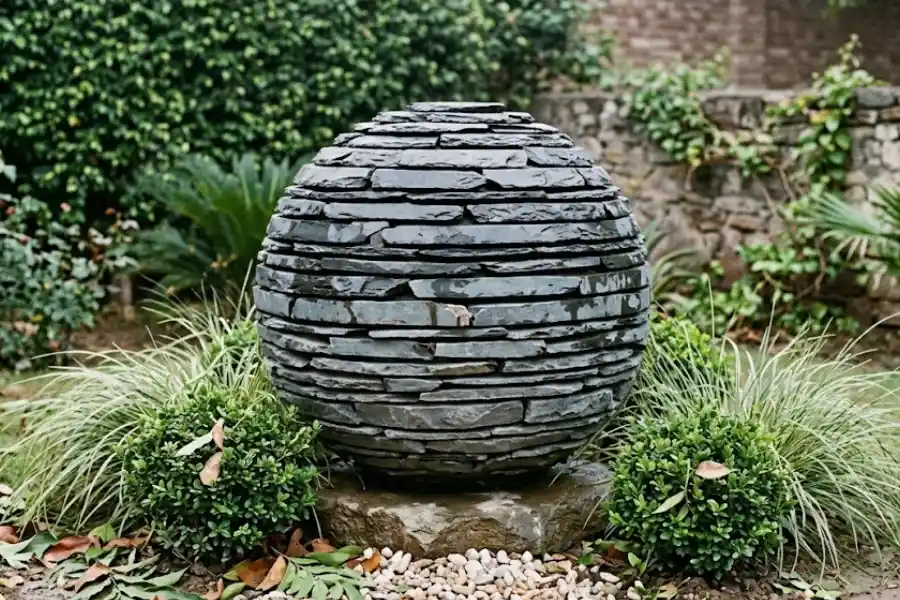
1. A Layered Slate Sphere
Hand-stacked slate balls are one of the most popular choices. One UK maker sells them from about 8 inches wide up to about 36 inches wide. The smallest weighs around 15 pounds. Prices there run from under 30 pounds to nearly 800 pounds, depending on size.
Place one beside a path, or group three sizes together. Spheres look sharp next to boxwood or ornamental grasses.
2. Tall Standing Stones
Thin slate slabs, often about 3 feet tall, give a garden bold shape fast. Quarries sell them in many sizes and colors, and they cost far less than a finished sculpture. Group them in odd numbers, such as three or five. They look best in gravel beds and dry gardens.
3. A Stacked Slate Cairn
A cairn is a balanced tower of flat stones. It feels calm and a little bit magical. Use wide stones at the bottom and smaller ones on top. If you have kids, pets, or strong winds, glue the stack together with an outdoor stone adhesive so it cannot topple.
4. Woven-Look Layered Art
When slate is layered tightly, it can look like woven cloth. Skilled makers shape it into fruit, curves, and flowing forms. Tuck these pieces behind shrubs so visitors find them by surprise. A hidden piece feels more special than one that shouts from the lawn.
5. A Slate Water Feature
Water running over slate looks shiny and sounds soft. It can also cover up traffic or street noise. Most slate fountains work like any other outdoor water fountain, with a small tank and pump hidden below the stone. Keep the power cord and plug safe from rain and standing water.
6. A Bird Feeder Column
Art can do a job, too. The Scottish artist built a curved slate column topped with a small slate roof and a bird table. Place yours where you can see it from a window, but away from your patio, since birds can be messy.
7. A Gravel or Zen-Style Corner
Rake a patch of gravel and add just one or two slate pieces. Empty space is part of the design here. Less is more, and the stone gets all the attention.
8. A Lit Slate Piece
Slate looks dramatic at night. A small, low-voltage spotlight aimed from the side is a simple form of architectural lighting that shows off every layer and shadow. Choose warm light, and keep cables tucked out of the way.
9. Slate Wall Art
You do not need floor space to use slate. Flat slate panels work as outdoor garden wall art on a fence or garden wall. Use fixings made for outdoor use, and check them once a year.
How to Choose the Right Size
The biggest mistake is buying a piece that is too small. Outdoor spaces swallow up objects. A sculpture that looks huge in a shop can look tiny next to a tree.
Here is a simple test. Make a cardboard box the same size as the piece you want. Put it in the spot where it will go and leave it there for a day or two. Look at it from the house, the patio, and the walkway. This costs almost nothing and saves you from a pricey mistake.
On a small lot, avoid a piece that fills most of the space. Garden designers also suggest keeping art near eye level, so it feels part of the garden and not stuck on top of it.
Where to Put a Slate Sculpture in Your Garden
- At the end of a path, so it pulls people forward
- Inside a flower bed, with plants growing around its base
- In a quiet corner, where it feels like a happy find
- Next to water, where the reflection doubles the effect
- Where sunlight hits it in the morning or evening
Think about the backdrop, too. Dark slate against a dark hedge fades away. Put it in front of lighter gravel, a pale wall, or bright green leaves, and it pops.
Best Plants to Grow Around Slate
Soft plants make hard stone look natural. Good partners include ornamental grasses, boxwood, ferns, hostas, and lavender. Plant in groups, and keep the plants low enough that they do not hide the sculpture. Smaller plants around the base work best.
The Winter Check Most Buyers Skip
Slate is tough, but not all slate is the same. Dense slate soaks up very little water. Porous slate can drink water into its tiny gaps. When that water freezes, it expands and can crack or flake the stone. This is called freeze-thaw damage.
If your winters bring lots of freezing and thawing, ask the seller these three questions:
- Where was the slate quarried?
- Is it dense and low in water absorption?
- Is it meant for outdoor use in cold weather?
Shape matters, too. Stone pros say upright slate often handles weather better than flat slate, because water runs off instead of sitting on top. A standing stone or sphere is a safer bet than a flat slate table in a cold state. In milder climates, you have far less to worry about.
Quick tip: If a seller cannot tell you where the slate came from, treat that as a warning sign.
How to Set It Up Safely
- Pick a level spot. A leaning base makes a heavy piece unsafe.
- Build a firm base. For heavy pieces, dig out the soil and add packed gravel so the stone does not sink or tilt.
- Sink standing stones well into the ground. A common rule is to put about one third of the stone below ground.
- Get help lifting. Slate is heavy, and sharp edges can cut. Wear gloves.
- Check it after storms. Make sure nothing has shifted.
How Much Does a Slate Garden Sculpture Cost?
The price depends on size and how much hand work went into it. Raw standing stones from a quarry cost the least. Hand-built spheres, towers, and fountains cost more. As the example above shows, one maker’s range goes from under 30 pounds to nearly 800 pounds.
Set your budget first. Remember that slate is heavy, so delivery can add a lot. Compare the full price with delivery, not only the sticker price.
How to Care for Slate in Your Garden
Slate needs very little care. A few habits keep it looking good for years:
- Clean it gently. Use a soft brush and plain water. Skip acid cleaners, because they can damage the stone.
- Clear the gaps. On layered pieces, remove leaves and dirt so water can drain.
- Seal only if needed. Dense slate often does not need it. If you do seal, pick a breathable sealer made for outdoor stone, and test a small hidden spot first, since some sealers darken the color.
- Check it each spring. Look for cracks, flaking, or loose layers after winter.
5 Common Mistakes to Avoid
- Buying too small
- Skipping the cardboard test
- Placing dark slate against a dark background
- Ignoring the freeze-thaw risk in cold areas
- Setting a heavy piece on soft, uneven soil
Can You Make Your Own?
Yes, and a simple project is a good place to start. Try a small stacked cairn or a low, layered mound using slate offcuts from a local stone yard. Wear gloves and eye protection, because slate chips can be sharp. Start small and enjoy the process. Each piece comes out different, and that is part of the charm.
Frequently Asked Questions
Is slate good for garden sculptures?
Yes. Dense slate is strong, handles rain well, and ages nicely. In cold areas, make sure the slate is a dense, low-absorption type so it does not flake in winter.
Does slate need sealing outside?
Not always. Dense slate often does fine without it. If you choose to seal, use a breathable sealer made for outdoor stone and test it first.
How heavy is a slate garden sculpture?
It depends on the size. A small sphere about 8 inches wide weighs around 15 pounds. Larger pieces weigh far more, so plan for help and a firm base.
Will slate fade in the sun?
Most slate holds its color well. Some types slowly weather to a lighter shade over time. Many gardeners enjoy this natural aging.
Where can I buy a slate sculpture for garden use?
Try local stone yards, quarries, garden centers, art fairs, and independent makers online. Wherever you buy, ask where the slate came from and whether it suits freezing weather.
Final Thoughts
A slate sculpture for garden spaces is one of the simplest ways to add depth, color, and calm. It looks different at noon, at dusk, and after a storm. It needs little care. It suits big yards and small ones.
Start with the cardboard test. Check that the slate can handle your winters. Set it on a firm base, surround it with soft plants, and let the weather do the rest. Your garden will have a new focal point that gets better with time.