Water Loving Garden Plants: 20 Best Picks for Soggy Soil
Do you have a spot in your yard that stays wet for days after rain? Most people see a muddy problem. Smart gardeners see a chance.
The right water loving garden plants can turn that soggy corner into the best part of your yard. They bring color, attract butterflies, and soak up extra water so your lawn stays drier.
This article covers 20 water loving garden plants that grow well across the United States. Read on to find out how to size up your wet spot, choose the right plant for it, and keep it healthy. We also cover the mistakes that kill many “water lovers” every year. Most articles skip those.
What Are Water Loving Garden Plants?
Water loving garden plants are plants that grow well in wet or always-moist soil. Some also grow in a few inches of water at the edge of a pond. Their roots can handle low oxygen, which would rot most regular garden plants.
Here is the key point. “Water loving” does not mean the same thing for every plant. Some like soil that stays damp. Some can stand in a few inches of water. A few need to be in the water all season. Matching the plant to your exact wet spot is what makes the garden work.
Step One: Find Out What Kind of Wet Spot You Have
Before you buy anything, test your soil. It takes about ten minutes and can save you a lot of money.
- Wait until a day after a heavy rain, or soak the spot with a hose.
- Dig a hole about a foot wide and a foot down.
- Fill the hole with water and watch how fast it drains.
- Check again after 24 hours.
Now match your result to one of these three types.
- Moist soil: The water drains in a few hours. The ground stays damp but not swampy. Many perennials and ferns do well here.
- Soggy soil: The water drains slowly and the ground stays wet for days. Choose plants sold for bog gardens or wet soil.
- Standing water: Water is still in the hole after a full day, or it pools on top of the ground. Choose true pond-edge plants.
Next, count the hours of direct sun. Full sun means six or more hours. Part shade means about three to six hours. Shade means less than three.
Quick tip: Test the spot in spring, when the ground is at its wettest. A spot that looks fine in August may be a swamp in April.
The Best Water Loving Garden Plants for Every Wet Spot
The plants below are grouped by how you can use them. Hardiness zones come from the USDA map. You can find your zone by ZIP code on the USDA Plant Hardiness Zone Map.
Flowering Perennials for Wet Soil
These plants bring color from late spring to fall. Most do best in full sun to part shade.
- Siberian iris (Iris sibirica), zones 3 to 9. It has tall, grass-like leaves and violet-blue flowers in late spring. It likes moist soil and is very easy to grow.
- Louisiana iris (Iris hybrids), zones 5 to 9. This is one of the few irises that can grow in shallow water. The flowers come in rich purple, red, yellow, and white.
- Swamp milkweed (Asclepias incarnata), zones 3 to 9. Pink flower clusters bloom in summer. It is a host plant for monarch caterpillars, and bees and butterflies love it.
- Joe Pye weed (Eutrochium), zones 4 to 9. This giant can top six feet and has fluffy pink-purple flowers in late summer. Short types like Little Joe stay around three to four feet.
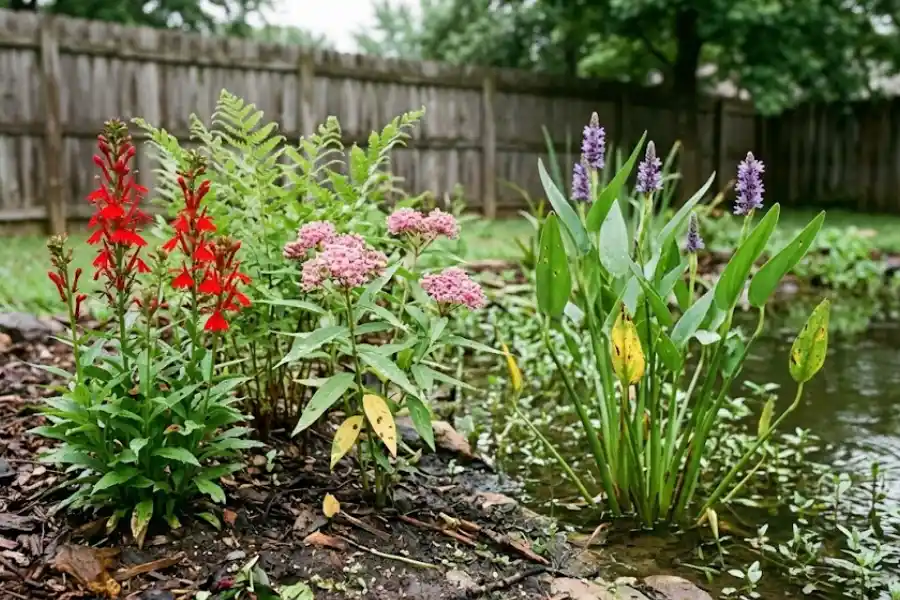
- Cardinal flower (Lobelia cardinalis), zones 3 to 9. Bright red spikes make it one of the best hummingbird garden plants for wet soil. It needs steady moisture. It is short-lived, so let it drop seed.
- Swamp hibiscus (Hibiscus moscheutos), zones 4 to 9. The flowers can be as wide as a dinner plate. It sprouts late in spring, so do not dig it up by mistake.
- Turtlehead (Chelone glabra), zones 3 to 8. White to pink flowers open in late summer, when many gardens look tired. It handles part shade well.
- Canna (Canna hybrids), zones 7 to 10. Big leaves and bold flowers give a tropical look. In colder areas, dig up the roots after frost and store them indoors.
Ferns and Foliage Plants for Shady, Wet Areas
Shade and wet soil often go together. These plants turn a dark, damp corner into a lush green space.
- Royal fern (Osmunda regalis), zones 3 to 9. It grows two to four feet tall and looks great beside a pond or stream. It handles wet shade better than most ferns.
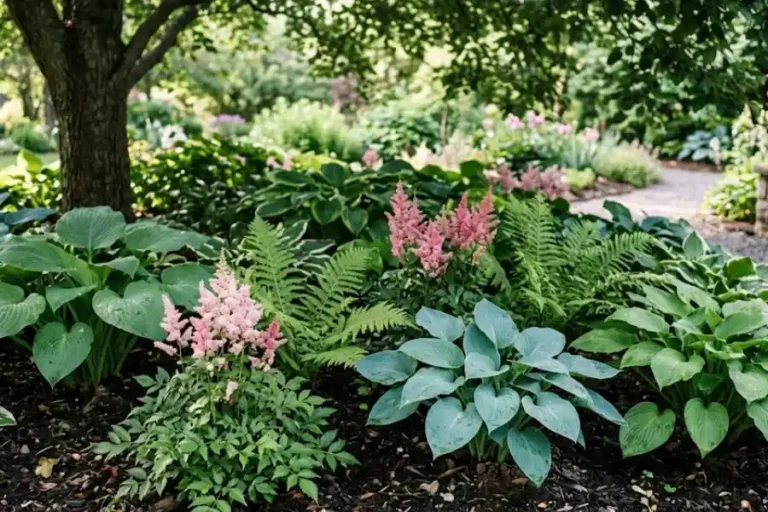
- Astilbe (Astilbe), zones 3 to 8. Feathery pink, red, or white plumes show up in early summer. It loves moisture but does not like standing water.
- Ligularia (Ligularia), zones 4 to 8. It has huge, bold leaves and yellow flower spikes. The leaves may droop in afternoon sun, so give it shade.
- Elephant ear (Colocasia), zones 8 to 11. Giant leaves add a jungle feel. In parts of the Southeast, wild taro spreads fast, so check your state’s invasive plant list first.
Shrubs That Handle Soggy Soil
Shrubs give a wet garden height and winter interest. They also hold soil in place on slopes.
- Buttonbush (Cephalanthus occidentalis), zones 5 to 10. Round, white, ball-shaped flowers appear in summer. Bees and butterflies swarm them. It can even grow in standing water.
- Red twig dogwood (Cornus sericea), zones 3 to 8. The bright red stems stand out against winter snow. It grows six to nine feet tall.
- Summersweet (Clethra alnifolia), zones 3 to 9. White flower spikes smell sweet in mid to late summer. It stays tidy and grows well in part shade.
Plants for Pond Edges and Shallow Water
Pond edges are where water loving garden plants face their biggest test. These three are made for the job. For a longer list, see our best aquatic plants for garden ponds.
- Pickerelweed (Pontederia cordata), zones 3 to 10. Purple flower spikes bloom all summer. It grows well in water up to about 12 inches in depth.
- Arrowhead (Sagittaria latifolia), zones 3 to 10. It has arrow-shaped leaves and small white flowers. It grows in shallow water and feeds wildlife.
- Hardy water lily (Nymphaea), zones 3 to 10. It needs still water and at least six hours of sun. The roots survive winter as long as they do not freeze solid.
Herbs That Love Wet Feet
Not all water loving garden plants are flowers. Two herbs love moisture, and you can eat them.
- Mint (Mentha), zones 3 to 8. It grows fast in damp soil. It also spreads fast, so plant it in a pot and sink the pot into the ground.
- Watercress (Nasturtium officinale), zones 4 to 9. It grows in cool, shallow, clean water. Only eat it if the water source is safe.
How to Plant Water Loving Garden Plants
Good planting makes a big difference. Follow these steps for the best start.
- Plant in spring or early fall, when the weather is mild.
- Dig a hole twice as wide as the pot and the same depth.
- Loosen the roots gently if they circle the pot.
- Set the plant so the crown (where stems meet roots) sits at the right level. Most perennials want the crown at soil level. Pond plants may sit lower in the water.
- Fill with soil and press it down lightly.
- Water well, even if the ground is already wet.
- Add two to three inches of mulch, and keep it away from the stems.
How to Care for Water Loving Garden Plants
Even water loving garden plants need some attention. The good news is that the job is simple.
- Water during dry spells. Wet spots can dry out in summer heat. Aim for about one inch of water a week if rain is missing.
- Go easy on fertilizer. Wet soil is often rich already. Too much food gives weak, floppy growth. Never fertilize near a pond without care, because it feeds algae.
- Divide crowded clumps. Every three to four years, split big plants in spring. This keeps them blooming.
- Cut back in late winter. Old stems give shelter to helpful insects. Trim them before new growth starts.
Five Mistakes to Avoid
- Trusting the name alone. A plant called a “water lover” may only want damp soil. Standing water can kill it. Read the tag closely.
- Skipping the soil test. Moist and swampy soil need different plants.
- Forgetting about drainage. Even bog plants can rot if the water never moves. Slow, steady flow is better than a stagnant puddle.
- Planting in the wrong light. A shade plant in full sun will scorch, even with plenty of water.
- Ignoring spread. Mint, cattails, and some rushes can take over. Give them a pot or a firm border.
Be Careful With Plants That Spread Too Much
Some water loving garden plants spread fast. A few are listed as invasive in certain states. This can hurt natural wetlands nearby.
Before you buy, look up your state’s invasive plant list. You can also use the National Wildlife Federation Native Plant Finder to find native plants for your ZIP code. Native plants also feed local birds and insects better.
Why a Wet Garden Is Worth It
A wet spot can be a plus. Using water loving garden plants in a low area has real benefits.
- Less runoff. Thirsty roots soak up rain that would flow into the street or your basement.
- Less erosion. Long roots hold soil in place along slopes and streams.
- More wildlife. Butterflies, bees, birds, and frogs all use wet gardens.
- Less work. Once these plants settle in, they need less watering than a typical flower bed.
If you want a rain garden, dig a shallow bowl in the low spot and fill it with these plants. For a full layout, see this rain garden design. A good rain garden should drain within 24 to 48 hours. Water that sits for about a week can breed mosquitoes.
Frequently Asked Questions
What are the best water loving garden plants for full sun?
Swamp milkweed, swamp hibiscus, Joe Pye weed, Siberian iris, and canna all love sun and wet soil. Pickerelweed and water lilies are great for sunny ponds.
What are the best water loving garden plants for shade?
Royal fern, astilbe, ligularia, and turtlehead handle shade well. Summersweet also does fine in part shade. For a longer list, see our garden plants for shade.
Do water loving garden plants need standing water?
Most do not. Only true pond plants, like water lilies and pickerelweed, grow in standing water. Most others just need soil that stays moist.
Can I grow water loving garden plants in pots?
Yes. Use a large pot with no drainage holes, or set the pot in a tray with a few inches of water. Mint, pickerelweed, and dwarf irises work well this way. Check the water often, because small pots dry fast.
How do I fix a muddy yard with plants?
Test the soil first. Then plant a mix of tough perennials, shrubs, and grasses that suit your level of wetness. Their roots will drink up water and firm the soil over time.
Will these plants attract mosquitoes?
Plants themselves do not. Water that sits still for more than about a week can. Keep water moving, and make sure rain gardens drain within two days.
Final Thoughts
A soggy yard does not have to stay a problem. Water loving garden plants give you color, wildlife, and a healthier yard, all from one trouble spot.
Start small. Test your soil, check your sun, and pick three to five plants from this list. Add more next season as you see what thrives. Within a year, that muddy patch can become the place everyone wants to see.