Herb Garden Pots Outdoors: The Right Pot for Every Herb
Most people buy a pretty pot. They plant three herbs in it. They put it on the porch and wait. Two weeks later, the basil is yellow, the mint has taken over, and the rosemary looks like straw. Sound familiar?
Here’s the truth: growing herbs in outdoor pots is not hard. But most guides skip one big step. They forget to match the right pot to the right herb. Get that wrong, and nothing else you do will save your plants.
This article covers what works for herb garden pots outdoors: the right size, the right material, the right soil, and the right spot. No fluff, no filler, just what keeps herbs alive and growing strong.
Why Your Pot Choice Makes or Breaks Your Herb Garden
Not all herbs want the same thing. Some herbs, like rosemary and thyme, come from hot, dry hills. They want their soil to dry out between waterings. Other herbs, like basil and mint, come from wetter places. They want soil that stays a little damp.
This is why pot material matters so much for herb garden pots outdoors. Pick the wrong one, and you will fight your herb’s nature all summer.
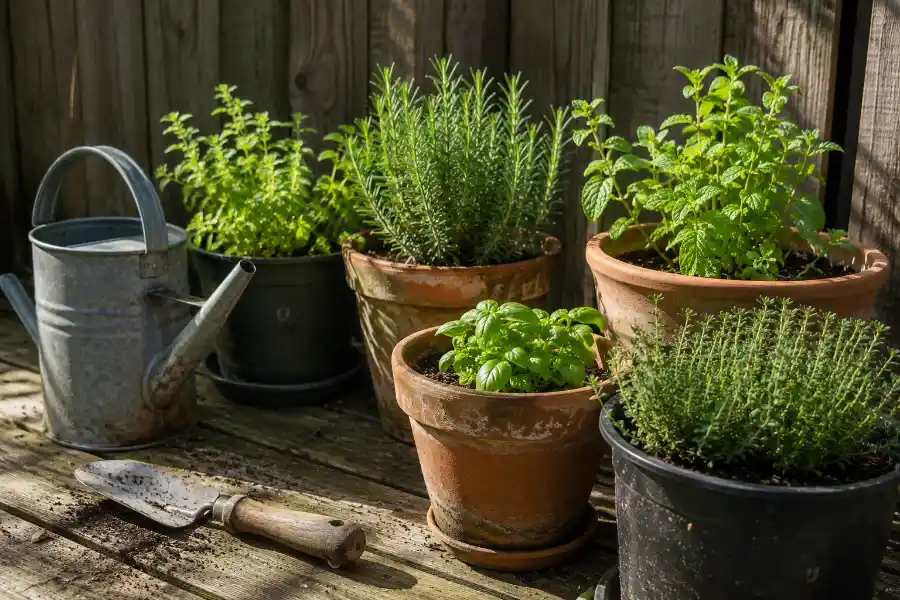
Terracotta and Clay Pots: Best for Dry-Loving Herbs
Terracotta pots are made from baked clay. Their walls have tiny holes you can’t see. Water passes through these walls and dries out in the air. That means the soil inside dries out fast too.
This is great for herbs like:
- Rosemary
- Thyme
- Sage
- Oregano
- Lavender
These herbs hate wet soil. Wet roots lead to root rot, and root rot kills the plant fast. A clay pot helps stop overwatering, even if you forget to check the soil for a few days.
One downside: clay cracks in freezing weather. If your winters get cold, bring these pots inside before the first frost.
Plastic Pots: Best for Thirsty Herbs
Plastic pots hold water inside instead of letting it escape through the walls. That makes them the better pick for thirsty herbs like:
- Basil
- Mint
- Cilantro
- Parsley
- Chives
These herbs droop and struggle if they dry out too much. A plastic pot keeps the soil damp for longer, so you won’t have to water every single day, even in summer heat.
Plastic pots are also light, cheap, and easy to move around your yard. One thing to watch: dark plastic gets hot in direct sun, and that heat can hurt the roots. Pick light colors if your outdoor herb pots sit in full sun all day. A set of white outdoor garden pots works well here, since lighter shades reflect heat instead of trapping it around the roots.
Wood, Fabric, and Metal Pots
Wood planters look great and keep roots warm in cold weather too. But wood rots over time unless you line it or treat it.
Fabric grow bags let air reach the roots and rarely lead to overwatering. That makes them a solid pick for rosemary, thyme, and sage. They dry out fast, though, so skip them for basil and mint unless you can water daily.
Metal containers look modern and last for years. But they heat up fast in the sun, so line the inside or place them in some afternoon shade.
What Size Pot Does Each Herb Need?
Many outdoor herb pots fail for one simple reason: the pot is too small. A small pot dries out fast, holds fewer nutrients, and limits how big the roots, and the plant, can grow.
Here is a simple size guide:
- Small pots, 6 to 8 inches wide: good for one chive, thyme, or oregano plant
- Medium pots, 10 to 12 inches wide: good for basil, parsley, cilantro, or sage
- Large pots, 14 inches or wider: needed for rosemary, mint, lavender, or lemongrass, since these spread out
- Extra-large pots or half barrels, 18 inches or more: best when you plant three or more herbs in one pot
If you like a rustic, farmhouse look, barrel garden pots are a great way to group several herbs in one big container without your patio feeling cluttered.
Not sure which size to buy? Go one size bigger than you think you need. Herbs almost always outgrow small pots fast.
Don’t Skip the Drainage Holes
This step gets skipped a lot. It is also the one that kills the most plants.
If a pot has no drainage holes, water has nowhere to go. It pools at the bottom, the roots sit in it, and within a week or two, the roots start to rot. Once root rot sets in, most herbs cannot be saved.
Before you plant anything, do this:
- Check that your pot has at least one hole in the bottom.
- If it does not, drill three or four holes about half an inch wide.
- Add a one-inch layer of small stones at the bottom to help drainage in heavy rain.
- Never let your pot sit in a saucer full of water for more than a few hours.
Where to Place Your Outdoor Herb Pots
Most herbs want a lot of sun. Look for a spot outdoors that gets:
- Six or more hours of direct sun for herbs like rosemary, thyme, basil, and oregano
- Four to six hours of sun for milder herbs like parsley, cilantro, and chives, since strong afternoon heat can scorch their leaves
A few more tips for placing your outdoor herb garden pots:
- Keep pots near your kitchen door if you cook with herbs a lot. You will use fresh herbs more often when they sit just a few steps away.
- Group pots close together. This raises the moisture in the air around the leaves a bit and makes watering day easier.
- Skip windy corners. Strong wind dries out soil fast and can snap soft stems like basil.
- Raise pots off the ground with pot feet or bricks, or use tall outdoor planters instead, which raise the herbs on their own and keep drainage holes clear without any extra work.
Use Potting Mix, Not Garden Soil
This trips up a lot of new gardeners. Regular garden soil is too heavy for pots. It packs down tight, blocks air, and drains poorly once it sits inside a container.
Instead, use a bagged potting mix made for pots. It is lighter, drains better, and gives roots room to breathe. Look for a mix with:
- Perlite or vermiculite, for drainage and airflow
- Compost or aged organic matter, for food
- A neutral pH, around 6.0 to 7.0, which suits most herbs
Refresh the top few inches of soil each spring, or replace it fully every two to three years. Potting mix breaks down and loses its nutrients over time.
Herbs You Should Never Plant Together
Not every herb gets along with others. Mixing the wrong herbs in one pot can stunt growth or let one herb choke out the rest.
Keep these herbs on their own:
- Mint, and its cousins like lemon balm: Mint spreads fast through roots under the soil and will take over an entire pot in one season. Always give mint its own pot.
- Fennel: Fennel puts chemicals into the soil that can slow down nearby plants. Keep it alone, away from your other herbs.
- Dill: Dill draws pests like aphids and needs more water than most herbs. Keeping it apart makes watering and pest control easier.
On the other hand, some herbs make great pot mates:
- Rosemary, thyme, sage, and oregano, since all four like dry soil and full sun
- Basil, parsley, and chives, since all three like soil that stays a bit moist
Group herbs by their needs. Then you are not trying to please two opposite personalities in one small pot.
How Often to Water Potted Herbs Outdoors
There is no single number that fits every pot. It depends on your climate, your pot, and the herb itself. But here is a simple test that always works:
Push your finger about an inch into the soil. If it feels dry, water it. If it still feels damp, wait a day and check again.
A few patterns to expect:
- Terracotta and fabric pots dry out fast and often need water every day or two in summer heat.
- Plastic pots hold water longer and may only need water every two or three days.
- Pots in full sun and wind dry out much faster than pots in some shade.
Water in the early morning when you can. This gives the soil time to soak it in before the sun burns it off, and it helps stop fungal problems that grow in damp evening air.
Protecting Outdoor Herb Pots Through Winter
Most herb garden pots outdoors need a winter plan if you live somewhere it freezes.
Annual herbs, like basil, cilantro, and dill, finish their life in one season. Let them go, and plant fresh ones in spring.
Hardy herbs, like thyme, sage, and chives, can often stay outside in their pots. Group the pots by a sheltered wall and wrap them in burlap for extra warmth.
Tender herbs, like rosemary and lavender, usually need to come inside, or into a cool garage, before the first hard frost. Their roots cannot handle freezing cold in a small pot, since a pot gives roots far less warmth than open ground does.
Common Mistakes That Kill Potted Herb Gardens
After years of trial and error, and more than a few dead basil plants, here are the mistakes that show up the most:
- Using a pot with no drainage hole
- Cramming too many herbs into one pot
- Watering on a fixed schedule instead of checking the soil first
- Using garden soil instead of potting mix
- Ignoring what sun and water each herb needs
- Forgetting to feed the soil, since pots lose nutrients faster than open ground does
Fixing even two or three of these will make a real difference in how your herbs grow.
Frequently Asked Questions
What is the best pot material for outdoor herb gardens?
There is no single best pick for every herb. Terracotta and fabric pots suit dry-loving herbs like rosemary and thyme. Plastic pots suit thirsty herbs like basil and mint. Base your pick on what you’re growing, not on which one looks nicer on the porch.
Can herbs grow in pots outdoors all year?
Annual herbs will not live past one growing season, no matter what you do. Hardy herbs can often stay outdoors all year with some winter care. Tender herbs usually need to move indoors before frost hits.
How many herbs can I fit in one pot?
It depends on the pot size and how each herb grows. As a rule, give each herb at least 6 to 8 inches of its own space, and only mix herbs that share the same sun and water needs.
Do outdoor herb pots need a saucer underneath?
A saucer helps protect decks and patios from water stains, but empty it after you water. Water sitting in the saucer defeats the whole point of drainage holes, and it can cause root rot.
Can I reuse potting soil from last year?
Yes, but refresh it first. Mix in fresh compost or potting mix to bring back the nutrients, since old soil turns dense and loses its food value over time.
None of this takes special skill. It just takes matching the right pot, soil, and spot to the herb you grow. Get those basics right, and your herb garden pots outdoors will reward you with fresh flavor all season long.